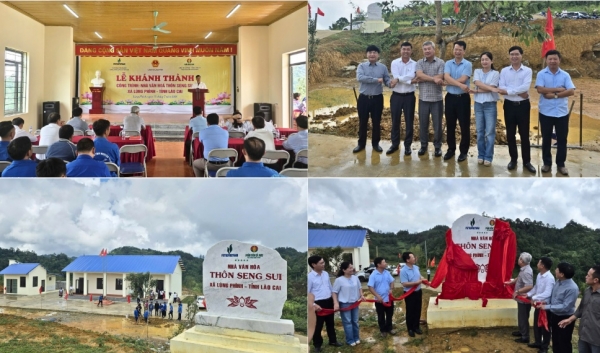
Ca Mau Fertilizer Contributes to Community Development in Highland Lao Cai
In recent years, community support initiatives in the highland areas of Lao Cai province have become an integral part of local socioeconomic development. Among these notable activities, the construction and upgrading of community houses stand out as particularly impactful. These structures serve not only as gathering places for local residents but also as vital spaces for preserving traditional cultural values. The collaborative efforts, spearheaded by organizations like Ca Mau Fertilizer, have brought about significant improvements to the quality of life for ethnic communities in these remote regions.
Community Houses: The Heartbeat of Highland Villages
In the highland villages of Lao Cai, community houses are more than just architectural structures; they represent the very soul of the community. These multi-purpose facilities serve as central hubs where villagers convene for important meetings, cultural celebrations, and various community activities. They function as gathering places for all generations, creating spaces where elders can pass down traditions to younger members while fostering a sense of belonging and shared identity.
The significance of these community houses extends beyond their physical presence. They serve as repositories of cultural memory, preserving intangible heritage that might otherwise be lost in the face of rapid modernization. In many ethnic minority communities, these houses also host traditional ceremonies, folk performances, and craft workshops that are essential to maintaining cultural continuity.
Ca Mau Fertilizer's Role in Community Development
Ca Mau Fertilizer has emerged as a key contributor to both agricultural development and community infrastructure in Lao Cai province. The company's high-quality fertilizer products have directly contributed to increased crop yields and improved soil quality in the region's challenging agricultural conditions. As a result, local farmers have experienced enhanced productivity and more stable incomes, providing them with the resources to invest in community development projects.
Through its corporate social responsibility initiatives, Ca Mau Fertilizer has channeled a portion of its resources into community development projects, including the construction and renovation of community houses in remote highland villages. These initiatives reflect the company's commitment to sustainable development that simultaneously addresses economic, social, and environmental dimensions.
The company's approach goes beyond mere financial contributions. Ca Mau Fertilizer has also provided technical expertise in sustainable agriculture, helping local communities develop farming practices that are both productive and environmentally friendly. This comprehensive support has empowered villagers to improve their livelihoods while preserving their cultural heritage.
Broader Support from Organizations and Businesses
While Ca Mau Fertilizer has played a significant role, the development of community infrastructure in Lao Cai's highland areas has been a collaborative effort involving numerous organizations and businesses. Government agencies, non-governmental organizations, and private enterprises have all contributed to this initiative, each bringing unique resources and expertise to the table.
These partnerships have created a synergistic effect, maximizing the impact of individual contributions. For example, while Ca Mau Fertilizer focuses on agricultural support and community housing, other organizations might specialize in education, healthcare, or cultural preservation. This complementary approach ensures a holistic development strategy that addresses the diverse needs of highland communities.
The collaborative nature of these initiatives has also fostered knowledge sharing and capacity building among local communities. By working together, organizations and businesses have helped create networks of support that extend beyond individual projects, contributing to long-term resilience and sustainability.
Notable Activities Centered Around Community Houses
Community houses in Lao Cai's highland areas serve as venues for a wide range of activities that strengthen social bonds and preserve cultural traditions. These activities play a crucial role in community cohesion and cultural continuity.
| Activity Type | Purpose and Significance |
|---|---|
| Village Assemblies | Democratic decision-making processes where community members discuss and resolve important issues affecting the village |
| Cultural Festivals | Celebrations of ethnic identity, featuring traditional music, dance, cuisine, and customs that strengthen cultural pride |
| Youth Activities | Educational and recreational programs that provide children and teenagers with positive development opportunities |
| Post-Harvest Gatherings | Informal meetings where farmers share experiences, exchange knowledge, and plan for future agricultural activities |
| Craft Workshops | Traditional skills training sessions that preserve artisanal techniques and create economic opportunities |
These activities not only serve immediate practical purposes but also contribute to the intangible cultural heritage of the region. They create spaces where traditional knowledge is transmitted across generations, ensuring that cultural practices continue to thrive despite external pressures.
Impact and Future Outlook
The development of community infrastructure in Lao Cai's highland areas has yielded significant positive impacts on local communities. Beyond the obvious improvements in physical infrastructure, these initiatives have strengthened social capital, enhanced cultural preservation, and created platforms for participatory development.
For many villagers, the construction of community houses has represented a tangible symbol of progress and recognition of their cultural identity. These spaces have become focal points around which community life revolves, facilitating collective action and mutual support.
Looking ahead, stakeholders in Lao Cai's development process are exploring ways to expand these successful models to other remote areas. Plans include incorporating more sustainable building techniques, integrating digital connectivity to bridge information gaps, and developing income-generating activities associated with community houses.
Additionally, there is growing recognition of the need to balance modern development with cultural preservation. Future initiatives aim to ensure that community houses remain authentic to local architectural traditions while incorporating elements that enhance functionality and comfort.
Conclusion
Community houses in the highland areas of Lao Cai province represent more than just physical structures; they embody the resilience, cultural richness, and communal spirit of ethnic minority communities. Through the collaborative efforts of organizations like Ca Mau Fertilizer and other stakeholders, these spaces have been transformed into vital centers of community life, cultural preservation, and socioeconomic development.
The success of these initiatives demonstrates the power of partnership approaches that combine agricultural development with community infrastructure. By addressing both economic and cultural dimensions, these projects have created pathways for sustainable development that respects local values while embracing progress.
As Lao Cai continues to navigate the challenges of modernization, community houses will remain essential anchors that help highland communities maintain their identity while adapting to change. The ongoing commitment of organizations like Ca Mau Fertilizer ensures that these vital community institutions will continue to serve as gathering places, cultural repositories, and symbols of unity for generations to come.