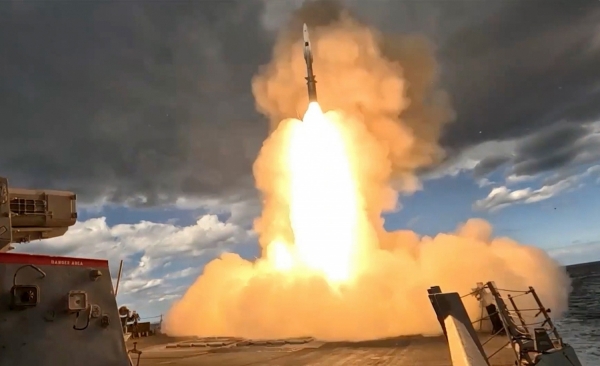
US Airstrikes on Iran: Military Technology and Maritime Systems in Focus
In a significant escalation of tensions, the United States has conducted airstrikes against Iran for three consecutive nights, just hours before reimposing a naval blockade on Iranian ports. This development not only carries profound political implications but also showcases the rapid advancement and application of modern military technology in regional conflicts.
The strategic importance of the Strait of Hormuz, through which approximately 20% of global oil trade passes, has made this region a focal point for technological competition between military powers. The recent military actions highlight how sophisticated weaponry, surveillance systems, and naval technologies are reshaping modern conflict zones.
Background of the Technological Conflict
The escalating tensions between the United States and Iran have triggered a technological arms race in military and naval domains. The recent US airstrikes demonstrate not only the use of smart weapons but also the integration of advanced surveillance, targeting, and guidance systems.
Iran, leveraging its strategic position along the Strait of Hormuz—one of the world's most critical maritime choke points—has developed sophisticated naval defense technologies to counter potential blockades. This confrontation has accelerated the development of numerous military technologies, creating a complex ecosystem of offensive and defensive systems.
Modern Airstrike Technology
The US airstrikes against Iran were executed with support from cutting-edge technologies that represent the pinnacle of modern military capabilities:
- Precision targeting systems: Utilizing GPS and satellite-based positioning to identify targets with exceptional accuracy, often within meters of the intended objective
- Smart munitions: Guided missiles and bombs capable of autonomously navigating to pre-programmed targets using multiple guidance systems including GPS, laser designation, and infrared homing
- Unmanned Aerial Vehicles (UAVs):strong> Providing persistent surveillance, target identification, and strike capabilities without risking pilot lives
- Electronic warfare systems: Capable of disrupting enemy radar, communications, and navigation networks, creating opportunities for offensive operations
- Network-centric warfare capabilities: Integrating intelligence from multiple sources to create a comprehensive operational picture
These technologies enable the US to conduct surgical strikes while minimizing civilian casualties and reducing risks to attacking forces. The precision of these systems has fundamentally changed the nature of modern aerial warfare.
Maritime Blockade Systems
The US naval blockade of Iranian ports is implemented through advanced maritime technologies that create a comprehensive monitoring and enforcement network:
| Technology | Function | Impact |
|---|---|---|
| Maritime surveillance systems | Monitoring all activities in designated waters using satellite, radar, and acoustic sensors | Prevents prohibited weapons shipments and restricted goods from entering or leaving Iranian ports |
| AIS technology | Automated Identification Systems that track vessel positions, courses, and speeds | Detects vessels attempting to disable tracking systems or follow evasive routes |
| Maritime patrol aircraft | Provides persistent aerial monitoring of large maritime areas and detects suspicious activities | |
| Naval weapon systems | Deters and prevents vessels from violating blockade boundaries through graduated response capabilities | |
| Undersea surveillance | Prevents covert naval movements and maintains comprehensive maritime domain awareness |
Impact on the Maritime Technology Industry
The heightened tensions between the US and Iran have created both challenges and opportunities for the maritime technology sector:
- Stealth submarine development: Investment in submarines with reduced acoustic and magnetic signatures to evade advanced surveillance systems
- Anti-jamming technologies: Navigation and communication systems resistant to electronic warfare disruption
- Maritime automation: Reducing human dependence in dangerous naval operations through autonomous systems
- Information encryption: Protecting sensitive communications and location data from interception
- Unmanned naval systems: Development of surface and underwater drones for extended surveillance and operations
Future Trends in Military Technology for Naval Conflict
The US-Iran confrontation illustrates emerging trends in military technology that will shape future naval conflicts:
| Technology Area | Current State | Future Trajectory |
|---|---|---|
| Artificial Intelligence in warfare | AI used for data analysis and target identification | Autonomous decision-making systems, AI-driven tactical optimization, and predictive threat analysis |
| Unmanned naval systems | Increasing use of drones for surveillance and limited strike capabilities | |
| Quantum computing | ||
| Hypersonic weapons |
Global Implications
The technological confrontation between the US and Iran has broader implications for global security and international relations:
- Arms proliferation: Advanced military technologies demonstrated in this conflict may inspire similar developments by other nations
- International law challenges: The use of autonomous weapons and cyber capabilities raises complex legal questions about accountability and proportionality
- Technological deterrence: Nations may increasingly rely on technological superiority rather than conventional military posturing
- Civilian-military technology convergence: Many military innovations have dual-use applications that may eventually benefit civilian sectors
Conclusion
The US airstrikes against Iran and the subsequent naval blockade represent more than just political maneuvers—they demonstrate the critical role of advanced military technology in modern geopolitical conflicts. This confrontation has accelerated technological innovation in both offensive and defensive systems, creating new paradigms in naval warfare.
The future of maritime conflict will increasingly depend on technological capabilities rather than traditional military superiority. Nations that invest in research and development of military technologies will likely gain significant advantages in future geopolitical confrontations. As these technologies continue to evolve, they will reshape not only how wars are fought but also how nations deter conflict and maintain security in an increasingly complex global environment.
The ongoing technological competition between major powers underscores the need for international dialogue on the responsible development and deployment of advanced military systems, particularly those with autonomous capabilities or dual-use potential.