The Age of Oil Abundance Officially Ends as Geopolitical Tensions Drive Brent Prices Above $85
The escalating tensions between the United States and Iran have pushed Brent crude prices above $85 per barrel, effectively ending the narrative of global supply surplus and reviving concerns about worldwide oil shortages. According to industry analysts, the expected wave of Liquefied Natural Gas (LNG) surplus in 2026 may not materialize, with BloombergNEF pushing the first potential surplus to 2028.
Impact of Middle East Conflicts
With Middle Eastern supply remaining constrained, this year's extreme heatwave driven by the Super El Niño phenomenon has pushed Asian LNG import demand to a high in July, with imports projected to reach 23 million tons. Asia and Europe are now competing for available LNG cargoes, creating a zero-sum game for European buyers as Asia's JKM benchmark price rose to $19.5/MMBtu on Tuesday, the highest since early June.
Global LNG Market Situation
Due to unfavorable economic conditions, Europe has been the biggest loser in the LNG competition so far, with the continent's imports likely falling to 6.90 million tons this month, the lowest in two years, as European LNG prices consistently lag behind JKM. One of the world's most gas-deficient countries, Pakistan has issued another tender to purchase spot LNG for July after Qatari LNG exports were disrupted following last week's attack on the Al Rekayyat LNG carrier.
| Market | Current Situation | Outlook |
|---|---|---|
| Asia | LNG imports reaching 23 million tons | JKM price at $19.5/MMBtu |
| Europe | LNG imports falling to 6.90 million tons | Lowest in 2 years |
| Global | Brent crude > $85/barrel | LNG surplus may come in 2028 |
Major Market Developments
US midstream giant Williams (NYSE:WMB) announced that a Blackstone-led consortium will invest $5.34 billion to acquire a 49% non-controlling stake in its Ohio generation project, providing additional capital for the company to expand its AI-focused direction. Australian gold miner Genesis Minerals (ASX:GMD) has agreed to acquire fellow miner Vault Minerals for a total consideration of $8.7 billion, in a deal that will create the country's third-largest gold producer.
London-based energy giant Shell (LON:SHEL) has agreed to sell its Indian renewable energy business Sprng Energy to local Aditya Birla for $1.8 billion, having paid $1.55 billion for it in 2022. US utility company Chesapeake Utilities (NYSE:CPK) announced it will develop, build, and operate a $1.2 billion autonomous gas pipeline in Florida, addressing regional supply constraints.
The July 2026 Hormuz Crisis
The July 2026 Hormuz crisis is unfolding with extreme tension, as US missile attacks on Iranian infrastructure have triggered Tehran's retaliation against Middle Eastern countries hosting US bases. Iran's closure of the Strait of Hormuz and the impending reimposition of a maritime blockade by the White House have jointly pushed ICE Brent prices above $85 per barrel. In recent weeks, the supply surplus narrative has immediately returned to global shortage sentiment, with all global benchmarks now in steep backwardation.
OPEC Cuts Global Demand Growth Forecast
OPEC has lowered its forecast for global oil demand growth in 2026 to 780,000 barrels per day, down from 970,000 barrels per day estimated a month prior and marking the third consecutive downward revision, with the 2027 growth outlook raised to an impressive 1.94 million barrels per day.
| Year | Demand Growth Forecast (bpd) | Change |
|---|---|---|
| 2026 | 780,000 | Down 190,000 from previous month |
| 2027 | 1,940,000 | Significant increase |
Trump Reimposes Iranian Sea Blockade
Donald Trump announced that he will reimpose a blockade on Iranian vessels transiting the Oman Gulf, calling America the "Guardian of the Strait of Hormuz" and committing to a 20% compensation rate on all goods shipping through this waterway.
Saudi-Houthi Separate War
Responsibilities of Saudi Arabia's Energy Minister Prince Abdulaziz bin Salman have been expanded after Riyadh added the industry and mineral resources portfolio to his mandate, aiming to improve coordination between raw material supply and industrial development. Yemen's Houthi rebels have accused Saudi Arabia of conducting airstrikes on Sanaa International Airport, Yemen's capital, and declared that "the period of de-escalation with Riyadh is over," stating that the attack would not go unanswered.
Related News
- US gasoline prices rise for first time since May as Iran ceasefire collapses
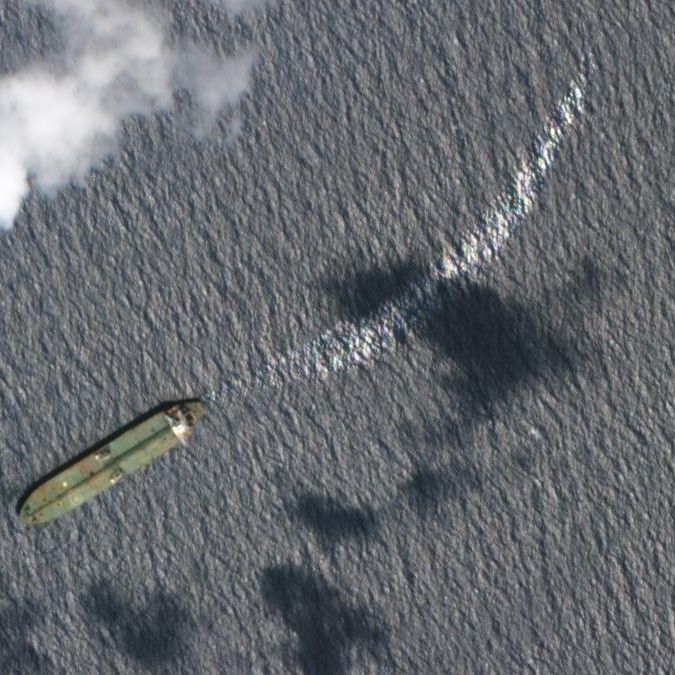
- Iran attacks two UAE-owned oil tankers in transit
- China's crude imports drop sharply
- Iran downplays impact of Trump's blockade
- Nigeria's output rises to 6-year high
- Europe "stockpiling" Russian LNG before ban
- Kazakhstan demanding billions for excess sulfur
- Iraq considering tripling oil flows to Turkey
- Shell benefits from Nigeria's oil tax credit
- South Korea returns to nuclear power for AI boom
- Mexico begins Pacific LNG era
- New York pauses data center boom
Iran's attack on two VLCC tankers chartered by UAE state-owned oil company ADNOC while they were transiting the southern lane of the Strait of Hormuz, resulting in one fatality, set the stage for increased Gulf war risk premiums. China's June oil imports fell 41% year-on-year to just 7.12 million barrels per day, the lowest since October 2016, as buyers cut purchases amid nationwide refined product export bans and weaker domestic fuel demand.
As the US maritime blockade is set to take effect on the evening of July 14, Iran's Oil Ministry stated that exports are proceeding normally despite tightened sanctions, with loading volumes averaging 1.35 million barrels per day in July. Nigeria's upstream regulator NUPRC reported that the African nation's crude oil output has risen to a six-year high, averaging 1.56 million barrels per day in June as stabilized operations and improved pipeline security allowed producers to increase production.
The European Union imported a record 9.97 million tons of LNG from Russia's Yamal in the first half of 2026, up 16% from the same period last year, as upcoming restrictions prompted European buyers to absorb over 97% of the plant's Arctic output. Kazakhstan's Justice Ministry demanded a $4.9 billion environmental penalty by July 20 from the operator of the giant Kashagan oil field, capping a 2023 investigation that found excessive sulfur being stored at the site.
Saudi Arabia's Energy Minister Prince Abdulaziz bin Salman saw his responsibilities expanded after Riyadh added the industry and mineral resources portfolio to his mandate, aiming to improve coordination between raw material supply and industrial development. Turkey's Energy Ministry said Iraq has proposed to send 750,000 barrels per day of crude oil via the Kirkuk-Ceyhan pipeline under a temporary 12-month agreement to maintain operations, which currently transports around 200,000 barrels per day of Kurdish oil.
Nigeria has granted production-related tax credits to UK energy giant Shell (LON:SHEL) for its deep-water Bonga expansion project, providing a rebate of $11.50 per barrel, more than double the standard rate. Seoul plans to build new reactors and extend the lifespan of existing fleet as electricity demand from semiconductor fabs, data centers, and electrification could rise by more than 50GW by 2040, just as the country is retiring 40.4GW of coal capacity.
The first cargo from Sempra Infrastructure's 3.25 million tons per annum Energia Costa Azul terminal is heading to South Korea, opening a new US-sourced LNG export route to Asia that circumvents the Panama Canal and shortens delivery times to key Pacific markets. New York became the first US state to impose a one-year moratorium on new data centers consuming at least 50MW, citing rising electricity costs, water supply pressures, and grid strain as over 12GW of large loads await connection.
By Tom Kool for Oilprice.com