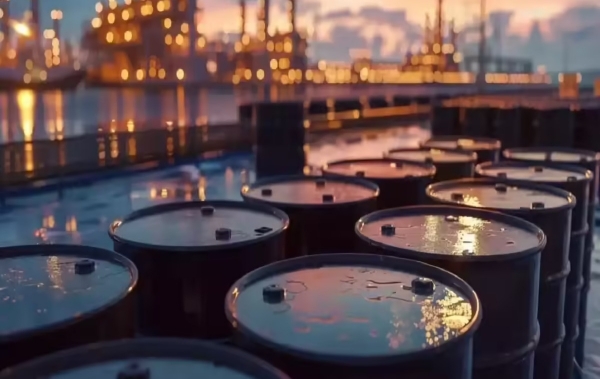
Global Oil Prices Surge to 4-Week High Amid Geopolitical Tensions
The global energy market witnessed a significant surge in oil prices on July 15th, with crude oil contracts climbing to their highest levels in four weeks. This upward trend was driven by escalating geopolitical tensions between the United States and Iran, coupled with growing concerns about maritime security in the Strait of Hormuz - the world's most critical energy transportation corridor.
Market Overview and Price Movements
West Texas Intermediate (WTI) crude for August delivery on the New York Mercantile Exchange (NYMEX) rose by 1.8% to reach $76.48 per barrel, marking the highest level since June 17th. Similarly, Brent crude for September delivery on the London exchange increased by 1.7% to $80.73 per barrel, also hitting a four-week peak.
The sharp price escalation reflects market anxiety over potential supply disruptions in one of the world's most oil-rich regions. As tensions continue to mount, traders are increasingly pricing in geopolitical risk premiums, pushing oil values above fundamental supply-demand fundamentals.
The Geopolitical Context
The escalating tensions between Washington and Tehran have created an unstable environment for the energy market. The recent reimposition of naval sanctions against Iran by the US administration has significantly increased pressure on the Middle Eastern nation's oil industry.
Iran, with an oil production of approximately 3.8 million barrels per day, faces stringent sanctions from Washington. These measures not only target Iran's oil exports but also create broader uncertainty throughout the Persian Gulf region, where other major producers operate.
The Strategic Importance of the Strait of Hormuz
The Strait of Hormuz stands as one of the world's most vital maritime chokepoints, through which approximately 30% of globally traded oil passes daily. Any instability in this region creates significant volatility in oil markets.
| Statistical Information | Data |
|---|---|
| Daily oil flow through Strait of Hormuz | Approximately 21 million barrels |
| Global oil percentage passing through Hormuz | 20-30% |
| Major oil producers in the region | Iran, Saudi Arabia, Kuwait, UAE, Iraq |
Impact of US Policy Decisions
The US reimposition of naval blockades against Iran has significantly heightened concerns about potential supply disruptions from the region. Iran, with its substantial oil production capacity, remains under intense pressure from American sanctions.
Market analysts suggest that escalating tensions could lead to more severe scenarios, including the possibility of Iran closing the Strait of Hormuz in retaliation. While such an extreme measure is considered unlikely, the mere possibility is sufficient to create psychological pressure on the market.
Market Analysis and Expert Commentary
According to analysts at energy consulting firm Rystad Energy, the current market situation can be described as "controlled instability." Despite abundant global supply, geopolitical risks are driving oil prices above their fundamental equilibrium levels.
"We're witnessing a shift in market sentiment from supply concerns to geopolitical risk concerns. This creates a higher price floor for crude oil in the short term," stated Bjørnar Tonhaugen, oil market expert at Rystad Energy.
| Oil Type | Previous Session Price | July 15th Price | Change |
|---|---|---|---|
| WTI Crude (USD/barrel) | $75.15 | $76.48 | +1.8% |
| Brent Crude (USD/barrel) | $79.42 | $80.73 | +1.7% |
| Dubai Crude (USD/barrel) | $78.90 | $80.15 | +1.6% |
Economic Implications
The rising oil prices will have multifaceted impacts on global economies:
- Oil-importing nations: Countries such as China, Japan, South Korea, and various European nations will face increased energy cost pressures, potentially affecting inflation and economic growth.
- Oil-exporting nations: Countries like Saudi Arabia, Russia, the United States, and Canada will benefit from increased revenue, though they must consider the negative effects of excessively high prices on consumption demand.
- Developing economies: Developing nations dependent on energy imports will be most severely affected, particularly when their domestic currencies weaken against the US dollar.
Short-Term Market Outlook
Based on current analysis, the oil market may continue its upward trajectory in the short term due to several factors:
- Geopolitical tensions between the US and Iran show no signs of de-escalation
- Global oil demand continues recovering post-COVID-19 pandemic
- Strategic petroleum reserves of major consuming countries have no plans for additional releases
- The oil and gas industry has not invested sufficiently to meet long-term demand
However, many experts also warn that excessively high oil prices could encourage consuming nations to enhance energy efficiency and accelerate transitions to renewable energy sources, thereby reducing long-term oil demand.
Conclusion
The rise in oil prices to a four-week high on July 15th reflects growing concerns about global energy security. In the context of escalating geopolitical tensions, the oil market is likely to experience significant volatility in the coming period. Investors and energy-consuming nations should closely monitor developments in the Persian Gulf region to make appropriate strategic adjustments.
The current situation underscores the delicate balance between physical market fundamentals and geopolitical risk premiums in determining oil prices. As the world continues to navigate complex energy security challenges, market participants must remain vigilant and adaptable to changing conditions.