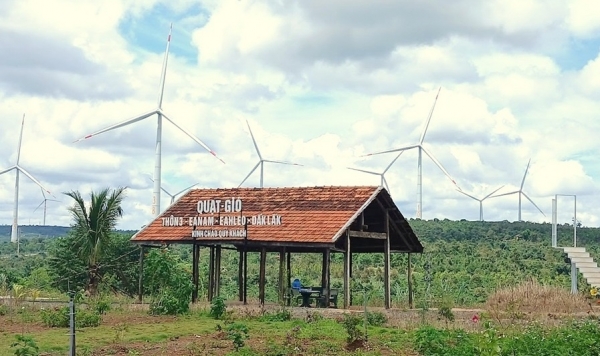
Dak Lak Launches Major Renewable Energy Projects in Alignment with Vietnam's Electricity Planning VIII
In the context of Vietnam's clean energy transition, Dak Lak Province has publicly announced a portfolio of 54 electricity projects across its territory, implementing Resolution No. 254/2025/QH15 adopted by the National Assembly. This represents a significant step in the implementation of Electricity Planning VIII, aligning with national goals for sustainable development and carbon emission reduction.
Policy Context and Planning Framework
Following the National Assembly's adoption of Resolution No. 254/2025/QH15, provinces nationwide have accelerated the implementation of renewable energy projects. Dak Lak Province's Department of Finance has officially announced the acceptance of a list of 54 electricity projects within its jurisdiction, consistent with the national clean energy development orientation.
This resolution establishes mechanisms and policies to overcome difficulties and obstacles in the implementation of the Land Law, creating favorable conditions for investors to develop renewable energy projects. It provides a crucial legal foundation for Dak Lak to leverage its potential in solar energy, biomass, and small-scale hydropower.
Renewable Energy Project Portfolio in Dak Lak
The announced portfolio of 54 projects encompasses various types of renewable energy, focusing on key sectors:
- Solar energy with a total estimated capacity of approximately 1,200 MW
- Biomass energy with a total capacity of around 500 MW
- Small-scale hydropower with a total capacity of approximately 300 MW
- Potential wind energy with a research capacity of about 200 MW
These projects are distributed across districts and cities with suitable natural conditions, including Ea Súp, Krông Búk, Krông Năng, Buôn Ma Thuột, Cư M'gar, and Ea H'leo.
Key Project Details
| Project Name | Type | Location | Capacity (MW) | Completion Timeline |
|---|---|---|---|---|
| Krông Búk Solar Power Project | Solar | Krông Búk District | 150 | 2026 |
| Ea Súp Biomass Power Project | Biomass | Ea Súp District | 100 | 2027 |
| Krông Năng Small Hydropower Project | Hydropower | Krông Năng District | 50 | 2025 |
| Buôn Ma Thuột Solar Power Project | Solar | Buôn Ma Thuột City | 200 | 2026 |
Analysis of Electricity Planning VIII
Electricity Planning VIII, approved with a vision through 2030 and orientation to 2050, aims to develop sustainable energy, gradually reduce dependence on fossil fuels, and increase the share of renewable energy. According to this plan, the share of renewable energy in total installed capacity is expected to reach 20-25% by 2030, increasing to 35-40% by 2050.
Dak Lak, with its vast area and favorable natural conditions, has been identified as a key region for renewable energy development in the Central Highlands region.
Significance and Impact of the Projects
The implementation of 54 renewable energy projects in Dak Lak carries several important implications:
- Economic Development: The projects will create jobs, promote infrastructure development, and attract investment to the region.
- Environmental Protection: They will reduce greenhouse gas emissions, decrease air pollution, and contribute to carbon neutrality goals.
- Energy Security: The projects will diversify energy supply, reducing dependence on imported coal and oil.
- Sustainable Development: By leveraging natural advantages, the province will generate clean energy, contributing to sustainable socio-economic development.
Challenges and Opportunities
However, the implementation of renewable energy projects in Dak Lak also faces several challenges:
- Complex and lengthy administrative procedures
- Difficulties in land acquisition and clearance
- Inadequate transmission infrastructure to meet demand
- Climate change impacts on production efficiency
At the same time, these projects present numerous opportunities:
- Collaboration with domestic and international investors
- Technology transfer of advanced technologies
- Development of high-quality human resources
- Creation of a green economic development model for other localities
Future Prospects
The renewable energy projects in Dak Lak will be implemented in phases, with Phase 1 (2024-2026) focusing on small-scale projects with mature and highly feasible technologies. Phase 2 (2027-2030) will expand scale and apply more advanced technologies.
By 2030, Dak Lak is expected to become a renewable energy center in the Central Highlands region, making significant contributions to the national power system and helping implement Vietnam's COP26 commitment to emission reduction.
Conclusion
The announcement of 54 renewable energy projects in Dak Lak marks an important step in realizing Electricity Planning VIII. With policy support and natural advantages, these projects will not only contribute to energy security but also promote sustainable socio-economic development, environmental protection, and improved living standards for local residents.
However, success requires close coordination among government agencies, businesses, and communities, along with timely resolution of legal, technical, and social challenges. Only through such collaboration can Dak Lak fully maximize its renewable energy potential, becoming a shining example in Vietnam's clean energy transition.
Keywords: #RenewableEnergy #DakLak #ElectricityPlanningVIII #SolarEnergy #BiomassEnergy #EnergyTransition #SustainableDevelopment