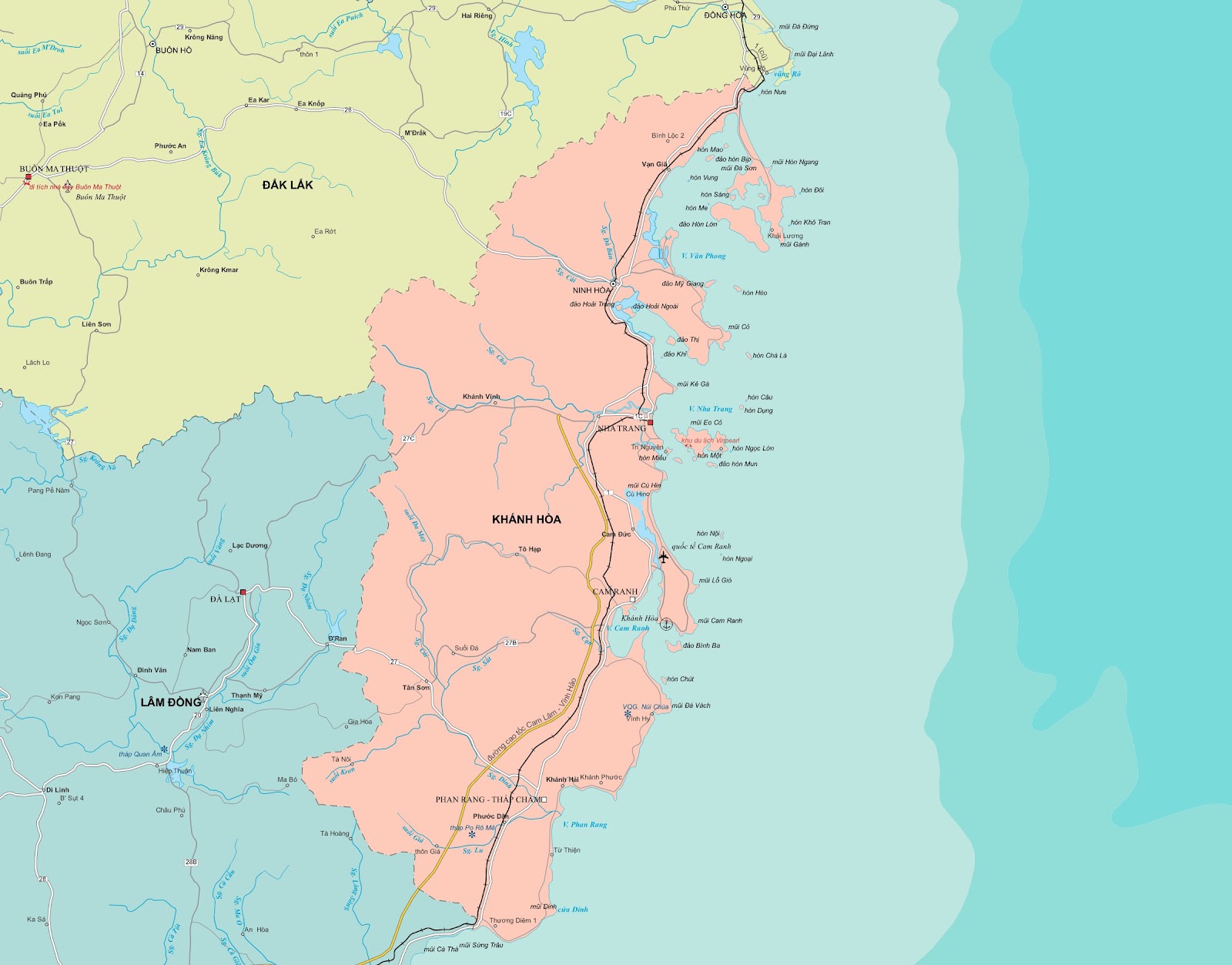
Khanh Hoa Officially Launches Renewable Energy Services Industrial Center Initiative
In a significant development for Vietnam's renewable energy sector, Khanh Hoa province has officially launched the initiative to establish a Renewable Energy Services Industrial Center. This groundbreaking project marks a new direction for renewable energy development in the South Central Coastal region of Vietnam. According to information from the Energy Institute under the Ministry of Industry and Trade, the center will function as an industrial service complex focused on research and training, serving as the hub for the renewable energy value chain in the region.
Background and Significance of the Initiative
Across Vietnam, the transition to renewable energy is gaining momentum, particularly following the commitment made at COP26 to achieve net-zero emissions by 2050. Khanh Hoa province, with its abundant solar and wind energy resources, has been identified as one of the localities with favorable conditions for developing large-scale renewable energy projects.
The establishment of the Khanh Hoa Renewable Energy Services Industrial Center not only meets the demand for clean energy development but also contributes to the province's sustainable socio-economic development strategy. The center will serve as a bridge between investors, businesses, and local communities, accelerating the transition toward green and sustainable energy.
Specific Objectives of the Initiative
The initiative sets clear and specific objectives:
- Establish a specialized industrial service complex for research and training in renewable energy
- Act as the hub for the renewable energy value chain in the region
- Develop supporting industries for renewable energy
- Increase the localization rate in the clean energy sector
- Create employment opportunities for local workers
- Promote a transition to green and sustainable energy
Scale and Expected Content
According to the plan, the Khanh Hoa Renewable Energy Services Industrial Center will be constructed on a large site within one of the province's industrial parks. The center will include several main functional areas:
| Functional Area | Description | Estimated Area |
|---|---|---|
| Research and Development Zone | Training center, research on new technologies, model testing | 20-30 ha |
| Industrial Production Zone | Manufacturing of renewable energy equipment, assembly, maintenance | 50-70 ha |
| Support Services Zone | Financial, legal, logistics, and commercial services | 15-20 ha |
| Demonstration and Exhibition Zone | Showcase of renewable energy products and models | 10-15 ha |
Economic and Social Benefits
The successful implementation of this initiative is expected to bring numerous practical benefits:
- Economic Development: Attracting both foreign direct investment (FDI) and domestic investment in the renewable energy sector, creating economic growth momentum for the province.
- Job Creation: Projected to create thousands of direct jobs and tens of thousands of indirect jobs for local workers, particularly for technically skilled labor.
- Technology Transfer: Attracting and adopting advanced technologies from developed countries, enhancing the country's industrial capabilities.
- Environmental Protection: Reducing greenhouse gas emissions, contributing to the fulfillment of international climate change commitments.
- Energy Security: Diversifying energy sources, reducing dependence on imported fossil fuels.
Challenges and Solutions
Despite its significant potential, the initiative also faces numerous challenges:
- Investment Capital: The substantial capital requirement for infrastructure development and industrial growth.
- Human Resources: The shortage of highly qualified personnel in the renewable energy sector.
- Technology: The need to access and master advanced technologies.
- Policy Framework: The necessity of improving the legal framework to attract investment.
To address these challenges, the initiative has proposed comprehensive solutions:
- Attract investment from multiple sources: state budget, enterprises, and ODA funds.
- Collaborate with universities and research institutions to train high-quality human resources.
- Create attractive incentive mechanisms for businesses investing in the center.
- Develop a clear development roadmap suitable for the province's actual conditions.
Implementation Timeline and Next Steps
According to the plan, the initiative will be implemented in three main phases:
| Phase | Timeline | Key Tasks |
|---|---|---|
| Phase 1 | 2023-2025 | Complete planning, attract initial investment, build basic infrastructure |
| Phase 2 | 2026-2030 | Develop technical infrastructure, attract businesses, train human resources |
| Phase 3 | 2031-2035 | Complete the center, operate efficiently, expand scale |
Expectations and Reactions from Stakeholders
The launch of the initiative has received attention and support from various quarters:
- Investors: View this as an attractive investment opportunity in a high-growth potential sector.
- Business Community: Expect to participate in the renewable energy value chain, particularly supporting industries.
- Research Institutions: Propose cooperation in training and research on new technology development.
- Local Communities: Hope to benefit from new employment opportunities and sustainable socio-economic development.
Conclusion
The launch of the Khanh Hoa Renewable Energy Services Industrial Center initiative marks a significant step in Vietnam's renewable energy development strategy. With thorough preparation and a clear roadmap, the center is poised to become a beacon in the development of renewable energy services industrial complexes in the South Central Coastal region, contributing to the country's green and sustainable economic development goals.
This represents not only an opportunity for Khanh Hoa to leverage its renewable energy potential but also serves as a valuable case study for other localities across Vietnam in the clean energy transition. The success of the initiative will depend on the coordinated cooperation between government authorities, businesses, and communities, along with support from research institutes and training centers.