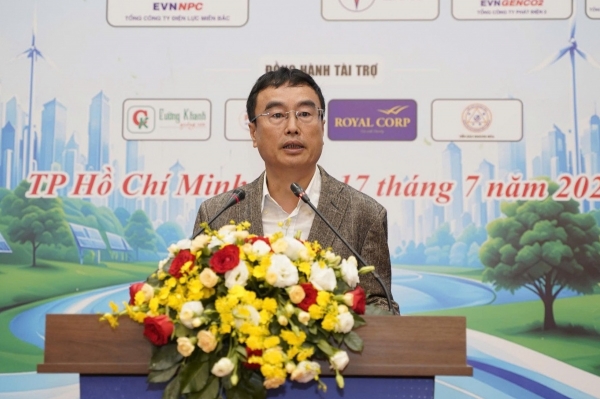
Removing Three Key Bottlenecks to Unleash Resources for Energy Security
Energy security stands as a crucial pillar for Vietnam's socioeconomic development. According to Professor Dr. Vo Xuan Vinh, Director of the Business Research Institute, Ho Chi Minh City University of Economics, Vietnam's energy security challenge by 2030 is not merely about supplementing electricity supply but more critically about addressing bottlenecks in market, institutional, and infrastructure systems.
To unlock investment resources for Vietnam's energy sector, it is essential to advance electricity market reform, diversify energy sources, and modernize the power grid system. These core solutions were presented by experts at the latest seminar on sustainable energy development.
Background of Vietnam's Energy Security
Vietnam faces significant challenges in ensuring energy security as electricity consumption grows rapidly. Projections indicate Vietnam's electricity demand will increase by approximately 8-10% annually during the 2023-2030 period, requiring massive investment resources.
However, growing dependence on imported fossil fuels, while renewable energy sources still face limitations in technology and cost, presents an urgent need for a comprehensive strategy to ensure national energy security.
Three Main Bottlenecks to Address
1. Market Bottlenecks
Vietnam's electricity market still contains numerous shortcomings, particularly the pricing mechanism that fails to accurately reflect the economic and environmental value of different energy sources. The bidding mechanism for electricity purchasing and selling remains complex, failing to attract sufficient private investment in large-scale renewable energy projects.
The lack of a transparent, competitive electricity market has limited the ability to attract private investment, particularly in large-scale renewable energy projects.
2. Institutional Bottlenecks
The legal framework for energy suffers from overlapping regulations, lack of coherence, and failure to keep pace with new technological developments. Land use, environmental, and investment regulations for energy projects create numerous barriers, increasing project costs and implementation time.
Additionally, coordination mechanisms between ministries, sectors, and localities in energy development management remain inefficient, leading to overlapping solutions or omission of comprehensive approaches.
3. Infrastructure Bottlenecks
Vietnam's traditional power grid system is overloaded in many areas, particularly in the southern region and newly developed industrial zones. Investment in new construction and grid upgrades has not kept pace with the development of distributed energy sources like solar and wind power.
Furthermore, transmission and distribution infrastructure for renewable energy remains limited, particularly energy storage solutions and smart systems for effective grid management.
Solutions to Address the Bottlenecks
1. Electricity Market Reform
To promote a competitive electricity market, it is necessary to improve market-based pricing mechanisms ensuring transparency and efficiency. Specifically:
- Develop flexible pricing frameworks that accurately reflect the costs and economic value of each energy source
- Simplify electricity bidding procedures to attract more investors
- Develop a competitive electricity market with participation from various stakeholders
- Create incentive mechanisms for renewable energy investment with reasonable pricing
2. Improving Energy Management Institutions
A comprehensive, transparent, and effective legal framework for the energy sector needs to be established:
- Complete the legal framework for renewable energy development, particularly incentive and support mechanisms
- Simplify investment procedures and reduce administrative barriers
- Create effective coordination mechanisms between ministries, sectors, and localities
- Develop long-term, stable policies to attract private investment
3. Modernizing Infrastructure Systems
Significant investment in power grid infrastructure and energy management technology is needed:
- Invest in new construction and upgrades of transmission grid systems
- Develop smart transmission infrastructure to effectively integrate renewable energy sources
- Build large-scale energy storage solutions
- Invest in smart grid management technology
Prospects for 2030
According to experts, if the three main bottlenecks are addressed, Vietnam can achieve its energy security goals by 2030:
| Indicator | 2023 | 2030 Target | Growth |
|---|---|---|---|
| Total installed capacity (MW) | 69,000 | 129,000 | 87% |
| Renewable energy in structure (%) | 20 | 30 | 10% |
| Investment in energy (billion USD) | 10 | 25 | 150% |
Particularly, diversifying energy supply will help reduce dependence on imported fossil fuels while simultaneously reducing greenhouse gas emissions, contributing to Vietnam's commitments at COP26.
Conclusion
Energy security is vital for Vietnam's sustainable development. Addressing the three bottlenecks in markets, institutions, and infrastructure is the key to unlocking investment resources for the energy sector.
This comprehensive solution requires the unity of the entire political system, active participation from the private sector, and public support. Only then can Vietnam establish a sustainable energy security system that ensures adequate electricity supply for socioeconomic development and improved living standards for its people.
According to Professor Dr. Vo Xuan Vinh, "Vietnam has significant potential in renewable energy and high-quality human resources. By leveraging these advantages and addressing the bottlenecks, Vietnam can certainly become a regional model for sustainable energy development."
Keywords
#EnergySecurity #VietnamEnergy #ElectricityMarketReform #RenewableEnergy #SustainableDevelopment