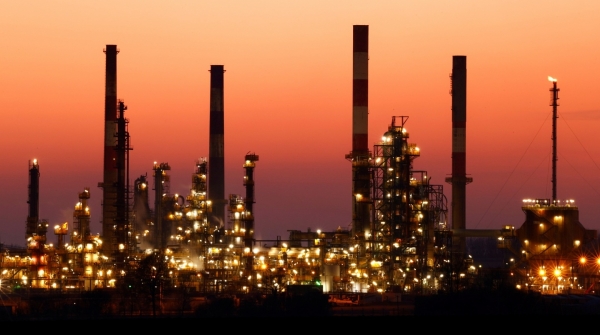
Asian Refining Industry Capitalizing on Global Supply Chain Disruptions
In the context of resurfacing geopolitical conflicts in the Middle East and Russia's diesel export ban, Asian refineries are strategically positioned to capitalize on opportunities arising from global supply chain disruptions. These shifts in oil trade flows have created a significant boost for the refining industry in the region, opening up attractive growth prospects and profit margins.
Geopolitical Context Impacting Global Oil Supply
The world is witnessing complex fluctuations in oil supply, stemming from two primary factors: escalating tensions in the Middle East and trade sanctions against Russia. Conflicts in this oil-rich region have disrupted critical transportation routes, while Russia's restrictions on diesel exports due to Western sanctions have significantly reduced the supply of refined products in the global market.
According to energy market analysts, these disruptions have created a supply gap that Asian refineries can quickly fill thanks to their geographical advantages and substantial production capacities.
The Advantageous Position of Asia's Refining Industry
Asia, with its network of modern refineries and large processing capacities, is becoming the premier destination for global oil importers. Countries such as China, India, South Korea, Singapore, and Japan are maximizing this opportunity to increase exports of refined petroleum products.
"Asian refineries hold a competitive advantage through modern technology, efficient operational costs, and access to diverse raw materials. When supplies from other regions are disrupted, they can rapidly adjust production to meet market demand," said Mr. Nguyen Van Minh, an analyst from the International Energy Institute.
Specific Economic Impacts
The increased demand for refined petroleum products from Asia has generated substantial profits for regional refineries. The refining margin - the metric measuring the difference between crude oil prices and refined product prices - has risen to high levels over recent months, creating record profits for many enterprises.
Additionally, Asian refining companies are expanding their market share in traditional markets such as Africa, South America, and certain European regions, which previously relied heavily on supplies from the Middle East and Russia.
Detailed Market Analysis
Market analysis data shows a clear trend: Asian refineries are increasing production of high-value products such as diesel, gasoline, and jet fuel to meet demand from markets experiencing supply shortages.
Energy experts forecast that this situation may continue for several months, especially if tensions in the Middle East continue to escalate and sanctions against Russia are not relaxed. This promises to bring sustainable profits for Asia's refining industry in the short to medium term.
Market Data and Forecasts
The following table summarizes oil refining output in Asian countries and projected growth over the next 6 months:
| Country | Current Output (thousand barrels/day) | Expected Growth (%) | Export Market Share Increase (%) |
|---|---|---|---|
| China | 15,200 | 8.5 | 12.3 |
| India | 5,100 | 7.2 | 9.8 |
| South Korea | 3,200 | 6.5 | 15.2 |
| Singapore | 1,600 | 5.8 | 18.7 |
| Japan | 3,800 | 4.3 | 7.6 |
Furthermore, a comparison of diesel prices in major markets also reveals significant differentials creating opportunities for Asian exporters:
| Market | Diesel Price (USD/barrel) | Differential vs Asia (%) |
|---|---|---|
| Asia | 82.50 | 0 |
| Europe | 95.30 | 15.5 |
| Americas | 89.75 | 8.8 |
| Africa | 88.20 | 6.9 |
Challenges and Future Opportunities
Despite being in a favorable phase, Asia's refining industry also faces several challenges. Increasing environmental pressure from carbon emission reduction policies may impact the long-term outlook. Additionally, the global energy transition toward renewable energy sources raises questions about the sustainability of the refining industry in the future.
However, in the short to medium term, industry experts forecast that Asian refineries will continue to capitalize on geopolitical disruptions to strengthen their position in the global market. Investment in modern refining technology and flexible production capabilities will be key to maintaining competitive advantage.
Conclusion
Global geopolitical disruptions have created an unexpected but valuable boost for Asia's refining industry. With favorable positioning and strong production capabilities, refineries in the region are seizing opportunities to increase profitability and expand market share. While environmental challenges and energy transition concerns remain, the outlook for the industry in the short to medium term remains bright, especially as global oil supply continues to be affected by unstable geopolitical factors.
#refining #asia #supplychain #geopolitics #trade #energy #economy