US Launches Airstrike on Iranian Nuclear Facility Amid Hormuz Crisis
In a significant escalation of tensions in the Middle East, the United States has conducted an airstrike targeting the Darkhovin nuclear power plant under construction in Iran's Khuzestan province. This military operation represents a dramatic development in the ongoing geopolitical standoff between Washington and Tehran, occurring at a particularly volatile moment in the Strait of Hormuz.
The strike, which took place in the early morning hours, marks one of the most direct military confrontations between the two nations in recent years and comes as diplomatic efforts to salvage the Iran nuclear deal appear increasingly fragile.
Operational Details of the Strike
The precision airstrike targeted the Darkhovin nuclear facility, a power plant that Iran has maintained is designed for peaceful energy production. According to preliminary reports:
- Timing: The operation was conducted under the cover of darkness, with sources indicating it began at approximately 2:30 AM local time.
- Location: The facility is situated near the coastline of the Persian Gulf in Khuzestan province, approximately 75 kilometers from the strategic Strait of Hormuz.
- Strategic Significance: The location places the facility within one of the world's most critical maritime chokepoints, through which approximately 20% of global oil trade passes.
- Military Assets Involved: Multiple reports suggest the strike was executed by a combination of drone aircraft and conventional fighter jets operating from both naval and land bases in the region.
Geopolitical Context
The strike against the Iranian nuclear facility cannot be understood in isolation from the broader geopolitical landscape that has shaped US-Iran relations for decades:
Since the unilateral US withdrawal from the Joint Comprehensive Plan of Action (JCPOA) in 2018, tensions have steadily escalated. The Trump administration's "maximum pressure" campaign imposed severe economic sanctions on Iran, while the Biden administration has attempted to revive negotiations with limited success.
The Strait of Hormuz has been a particular flashpoint, with both nations engaging in regular naval maneuvers and occasional confrontations. In recent months, Iran has increased its military presence in the region, while the US has bolstered its carrier strike groups and maritime patrol capabilities.
| Key Developments in US-Iran Relations (2018-Present) | Timeline |
|---|---|
| US withdrawal from JCPOA | May 2018 |
| Reimposition of sanctions | August 2018 |
| Attack on Saudi oil facilities | September 2019 |
| Killing of Qasem Soleimani | January 2020 |
| Iran's nuclear program advancement | 2021-2023 |
| Current airstrike on Darkhovin | Recent |
Iran's Response and Official Position
In the immediate aftermath of the strike, Iranian officials issued a swift and forceful condemnation. The Foreign Ministry released a statement describing the action as "a blatant violation of international law and national sovereignty."
"Such aggressive actions only demonstrate the United States' disregard for diplomatic solutions and international norms," read the official statement. "The Islamic Republic of Iran reserves its right to respond proportionally to defend its territorial integrity and national interests."
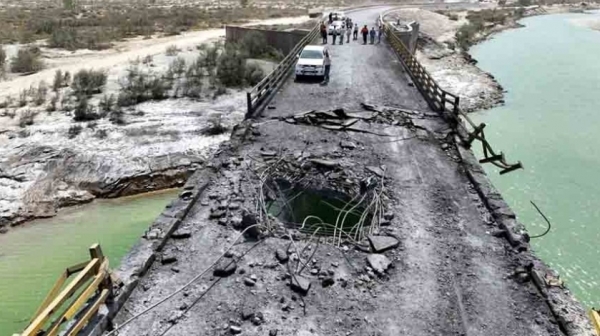
Iranian state television broadcast images of what it claimed was damage to the facility, though independent verification remains challenging due to restricted access to the area. Iranian officials maintained that the Darkhovin plant was exclusively for civilian energy production, a claim that has been met with skepticism by Western intelligence agencies.
International Reactions
The international community has reacted with alarm to the escalation:
- European Allies: Several key European nations expressed concern over the potential for wider conflict. A spokesperson for the European Union stated, "We urge maximum restraint from all parties to prevent further destabilization of the region."
- United Nations: The Security Council has called an emergency session to address the situation, though diplomatic sources indicate divisions among permanent members regarding appropriate responses.
- Regional Powers: Saudi Arabia and Israel, both regional rivals of Iran, have issued statements implicitly supporting the US action, while Russia and China have condemned the strike as a dangerous escalation.
- International Atomic Energy Agency (IAEA): The nuclear watchdog has requested access to assess the situation at the facility, though it remains unclear whether Iran will grant such access.
Strategic Implications
The airstrike on the Darkhovin facility carries significant strategic implications for regional and global security:
From a military perspective, the strike demonstrates the US's willingness to directly target Iranian infrastructure, potentially setting a precedent for future operations. It also highlights the growing sophistication of Iran's nuclear program, which has advanced beyond the parameters outlined in the original JCPOA.
Economically, the situation threatens to disrupt global energy markets. Any sustained conflict in the Strait of Hormuz could trigger a spike in oil prices, affecting economies worldwide. The potential for asymmetric responses from Iran, including attacks on shipping or interference with oil exports, remains a significant concern.
| Stakeholder Positions | Primary Objectives | Potential Actions |
|---|---|---|
| United States | Contain Iran's nuclear program | Further sanctions, military pressure |
| Iran | Preserve nuclear development | Retaliation, program acceleration |
| European Union | Diplomatic solution | Mediation, economic incentives |
| Regional Allies | Regional security | Defensive posturing, alliances |
Future Scenarios
Analysts are considering several potential pathways for the evolving situation:
The most immediate concern is the possibility of Iranian retaliation. History suggests that Iran typically responds to perceived provocations, though the nature and scale of such responses vary. Possible targets could include US military personnel in the region, allied shipping in the Strait of Hormuz, or Israeli interests.
Diplomatically, the strike has likely complicated efforts to revive the JCPOA. Iranian officials have indicated that any future agreement would need to address the "aggression" demonstrated by the airstrike, potentially introducing new demands to the negotiation process.
Militarily, the situation could lead to an escalation cycle where each side responds to the other's actions, potentially drawing in additional regional powers and international actors.
Expert Analysis
International relations experts have offered varied interpretations of the strike's significance:
"This action represents a significant departure from previous US approaches to Iran's nuclear program," noted Dr. Sarah Jenkins, a Middle East policy analyst at the Brookings Institution. "While past administrations have employed sanctions and diplomatic pressure, a direct military strike on a nuclear facility dramatically raises the stakes."
Others suggest the strike may be calculated to force Iran back to the negotiating table from a position of weakness. "The timing coincides with reports of internal divisions within Iran regarding its nuclear strategy," explained Professor Michael Rahman of Georgetown University. "The US may be attempting to exploit these divisions to secure more favorable terms in any future agreement."
However, critics warn that such actions could have the opposite effect, hardening Iranian resolve and accelerating nuclear development as a matter of national pride and security.
Conclusion
The airstrike on Iran's Darkhovin nuclear facility represents a dangerous escalation in an already volatile region. As the international community grapples with the implications, the potential for miscalculation and unintended consequences remains high.
The coming days and weeks will be critical in determining whether this incident leads to a broader conflict or serves as a catalyst for renewed diplomatic efforts. In the meantime, the people of the Middle East and the world at large watch with growing concern as the situation continues to unfold.
Further developments in this unfolding crisis will be monitored closely by global security agencies and reported as additional information becomes available.