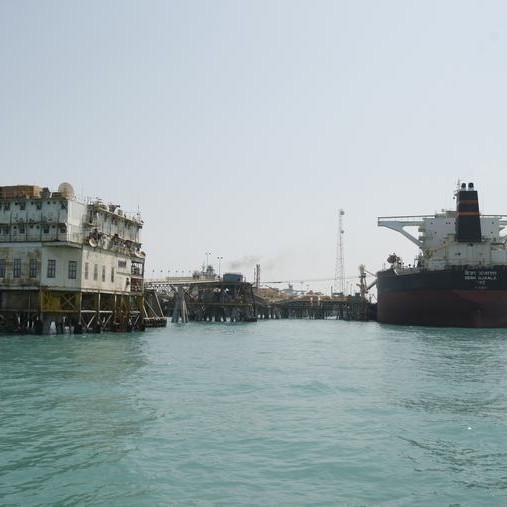
India's Exit from the Strait of Hormuz: The Middle East Oil Crisis and its Global Impact
India's largest oil refiners are facing a landmark decision as they abandon the world's most dangerous waterway - the Strait of Hormuz. Indian Oil Corporation (IOC) and Mangalore Refinery & Petrochemicals Ltd (MRPL) have suspended crude oil loading from Iraq following a string of attacks on commercial tankers, turning the world's most important strait into an increasingly costly and dangerous place to do business.
Stop loading oil from Iraq: A vital decision
According to sources from Bloomberg, IOC has abandoned plans to load the VLCC Lila Jamnagar, concluding that sending a fully loaded tanker with 2 million barrels of oil through Hormuz is no longer worth the risk. MRPL has also stopped importing oil from Iraq as the regional security situation continues to deteriorate.
The decision reflects the new reality that oil importers are facing: Who still wants to go through Hormuz to get oil, especially when the supply is uncertain in the first place.
The situation depends on India's oil
India depends on imports for more than 85% of the oil it consumes, and before the conflict escalated with Iran, about n of this oil came from the Middle East. Iraq has traditionally been one of India's largest suppliers under long-term contracts in which Indian refiners are responsible for arranging transportation.
This becomes less attractive when tankers are repeatedly subjected to ballistic attacks. The Indian Ministry of Transport has instructed ship owners and recruitment companies not to deploy Indian sailors on ships passing through Hormuz until further notice.
India turned to finding alternative sources of supply
This withdrawal is accelerating India's search for alternative sources of supply. Russian oil continued to flow into India at a record level of nearly 2.45 million barrels per day this month, according to data from Kpler. Supply from the UAE and Saudi Arabia is also relatively stable because both countries can export part of their oil through pipelines to Fujairah and Yanbu, avoiding the dangerous Strait of Hormuz.
However, Iraq does not have a similar alternative. The country depends entirely on shipping through Hormuz to export oil.
Impact on the global oil market
The new disruption comes as Brent crude prices have rebounded above $90 a barrel following another attack on ships in the strait and a Houthi naval blockade of Saudi shipping in the Red Sea.
Below is a summary of the current situation:
| Element | Situation | Impact |
|---|---|---|
| Import Indian oil | Discontinued from Iraq | Reduced Middle East supply |
| Alternative supply | Increase from Russia | 2.45 million barrels/day |
| Brent oil price | Over 90 USD/barrel | Continuous growth |
| Hormuz Security | Severe deterioration | Increased shipping risks |
In-depth analysis
Although India is not currently short of oil, if buyers cannot safely move Iraqi oil, another portion of Middle East supply will be stuck without a single oil rig being shut down. This could lead to supply shortages in the global market.
The change in India's oil import strategy also shows the country's tendency to diversify its energy supply. Reducing dependence on the Middle East could be part of a long-term strategy to ensure energy security.
Geopolitical impact
A change in oil transport routes could create major changes in regional geopolitics. Growing dependence on Russian oil could change India's diplomatic relations, while putting pressure on traditional Middle Eastern nations.
The UAE and Saudi Arabia maintaining the ability to export oil through pipelines could also strengthen their strategic position in the global energy market.
Conclusion and outlook
The move by India's largest oil refiners to stop using the Strait of Hormuz marks an important turning point in the global energy industry. The unstable security situation in this region is forcing countries to look for alternative sources of supply, which could permanently change the map of world oil trade.
In the short term, oil prices may continue to increase due to supply concerns. In the long term, the trend toward supply diversification and investment in alternative transportation infrastructure could reshape the global oil industry.
The fact that India faces an energy security challenge is also a reminder of the fragility of the global energy supply chain in an increasingly complex geopolitical context.
#DauMoi #AnNangLuong #EoBienHormuz #ThuongMaiToanCau #India #MiddleEast #Energy