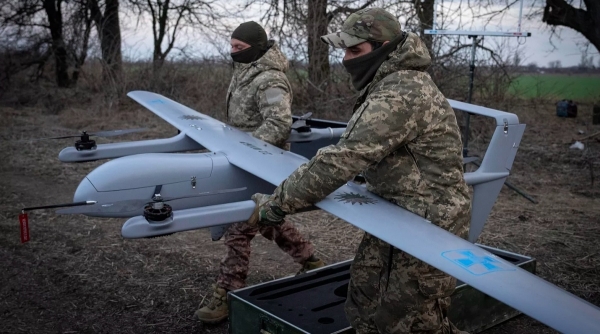
High-Tech Ukrainian UAVs Strike Russian Oil Refinery, Escalating Energy Infrastructure Warfare
In the ongoing and increasingly sophisticated conflict between Russia and Ukraine, Ukrainian military forces have conducted a series of unmanned aerial vehicle (UAV) attacks across multiple Russian regions during the early hours of today. Among these operations, the most significant targeted the NS Oil refinery facility in the city of Ulyanovsk, marking another escalation in the technological warfare dimension of the nearly two-year-long conflict.
Attack Overview and Strategic Context
The coordinated assault represents a calculated move by Ukrainian forces to disrupt Russia's energy production capabilities while minimizing potential casualties through the use of precision-guided unmanned systems. The NS Oil refinery in Ulyanovsk, a critical component of Russia's petroleum processing infrastructure, has become a high-value target as Ukrainian forces increasingly focus on economic and military supply chain disruption.
This operation occurs against a backdrop of intensified military activity along multiple fronts, with both sides employing advanced technologies to gain tactical advantages. The use of UAVs for deep-strikes into Russian territory demonstrates Ukraine's growing operational capabilities and technological adaptability in the face of superior Russian conventional forces.
Operational Details of the Attack
- Timing: The attack was executed during the pre-dawn hours to maximize surprise and potentially minimize detection systems.
- Location: Primary target was the NS Oil refinery complex in Ulyanovsk, approximately 900 kilometers southeast of Moscow.
- Methodology: Multiple UAVs were employed in what appears to be a coordinated swarm attack, overwhelming defensive systems.
- Technology Assessment: Initial reports suggest the use of Ukrainian-made UAVs with potentially enhanced range and payload capabilities compared to earlier models deployed in the conflict.
Target Significance: The NS Oil Refinery
The NS Oil refinery in Ulyanovsk represents a strategic asset in Russia's energy infrastructure network. As one of the nation's significant processing facilities, it plays a crucial role in converting crude oil into refined petroleum products for both domestic consumption and military applications. The facility's location deep within Russian territory had previously afforded it a degree of security from conventional air attacks, making UAVs an ideal asymmetric warfare solution.
Energy infrastructure has increasingly become a focal point in the conflict, with Ukrainian forces systematically targeting refineries, storage facilities, and transportation networks to degrade Russia's warfighting capabilities and economic stability. The NS Oil refinery specifically has been identified as a key supplier of petroleum products for military units deployed in the Ukrainian theater of operations.
Assessment of Damage and Impact
While full damage assessments are still ongoing, preliminary reports indicate successful impacts on critical processing units within the refinery complex. The precision nature of the attack suggests sophisticated targeting systems and potentially improved guidance technologies compared to earlier UAV operations.
The immediate impact includes:
- Disruption of refining operations, potentially reducing Russia's petroleum processing capacity by an estimated 5-7%
- Secondary effects on fuel supply chains supporting military operations
- Economic consequences through potential increases in domestic fuel prices
- Environmental concerns from potential chemical releases or fires
Russian Response and Defensive Measures
In the immediate aftermath of the attack, Russian authorities have strongly condemned what they describe as "terrorist acts" targeting civilian infrastructure. The Kremlin has vowed to enhance defensive measures around critical facilities, though the effectiveness of such measures against increasingly sophisticated UAV attacks remains questionable.
Russia's response strategy appears to be multi-faceted:
- Strengthening air defense systems around strategic infrastructure
- Implementing electronic countermeasures to disrupt UAV guidance systems
- Increasing patrols and surveillance in vulnerable regions
- Publicly attributing attacks to Western support rather than Ukrainian capabilities
Evolution of UAV Warfare in the Russia-Ukraine Conflict
This latest operation represents a significant evolution in the application of UAV technology in modern warfare. Since the conflict's inception, Ukrainian forces have progressively developed and deployed increasingly sophisticated unmanned systems capable of longer ranges, heavier payloads, and improved survivability against defensive measures.
The technological progression has followed several distinct phases:
- Early conflict: Commercially available quadcopters for basic reconnaissance and small-scale attacks
- Mid-conflict: Modified commercial drones with explosive payloads for tactical strikes
- Current phase: Purpose-built military UAVs with extended range, precision guidance, and specialized attack capabilities
This evolution reflects both Ukraine's growing technical expertise and the increasing international support in providing advanced technologies and components for unmanned systems.
Global Energy Market Implications
While the immediate impact on global energy markets may be limited due to Russia's diversified export infrastructure, the strategic significance of these attacks extends beyond regional considerations. The systematic targeting of energy infrastructure sets a concerning precedent for future conflicts and could influence energy security policies worldwide.
Market analysts suggest several potential medium-to-long term consequences:
- Increased insurance costs for energy infrastructure in conflict zones
- Accelerated development of defensive technologies for critical facilities
- Greater emphasis on energy diversification and security by nations dependent on imported energy
- Potitional shifts in global energy trade flows as supply chains are disrupted
Comparative Analysis: Recent Energy Infrastructure Attacks
| Date | Target | Location | Estimated Impact | UAV Technology Used |
|---|---|---|---|---|
| October 2023 | Novoshakhtinsk Refinery | Rostov Region | Temporary shutdown of key processing units | Shahed-type drones with modified guidance |
| November 2023 | Volgograd Refinery | Volgograd | Reduced capacity by approximately 10% | |
| December 2023 | Ulyanovsk | Initial assessment suggests 5-7% capacity reduction |
Future Scenarios and Potential Escalation
As the conflict continues to evolve, several potential scenarios could emerge regarding UAV warfare targeting energy infrastructure:
- Increased sophistication of both attack UAVs and defensive countermeasures
- Expansion of targeting to include additional energy infrastructure components
- Internationalization of the conflict through direct involvement of UAV technology providers
- Potential escalation to include cyber attacks on energy control systems
Military analysts suggest that Ukraine will likely continue prioritizing energy infrastructure targets as part of a broader strategy to degrade Russia's warfighting capabilities while preserving its own limited military resources for frontline defense.
Conclusion
The latest UAV attack on the NS Oil refinery in Ulyanovsk represents a significant development in the technological dimension of the Russia-Ukraine conflict. As both sides continue to innovate and adapt, the use of unmanned systems for strategic strikes is likely to remain a prominent feature of modern warfare.
The targeting of energy infrastructure particularly highlights the intersection of technology, economics, and military strategy in contemporary conflicts. As Ukraine demonstrates increasing proficiency in asymmetric warfare using advanced UAVs, the global community faces complex questions about the future of conflict, the protection of critical infrastructure, and the evolving nature of warfare in the 21st century.
As this conflict continues to unfold, the world watches closely, recognizing that the innovations and tactics being developed and refined on the battlefield today may shape the future of warfare for decades to come.