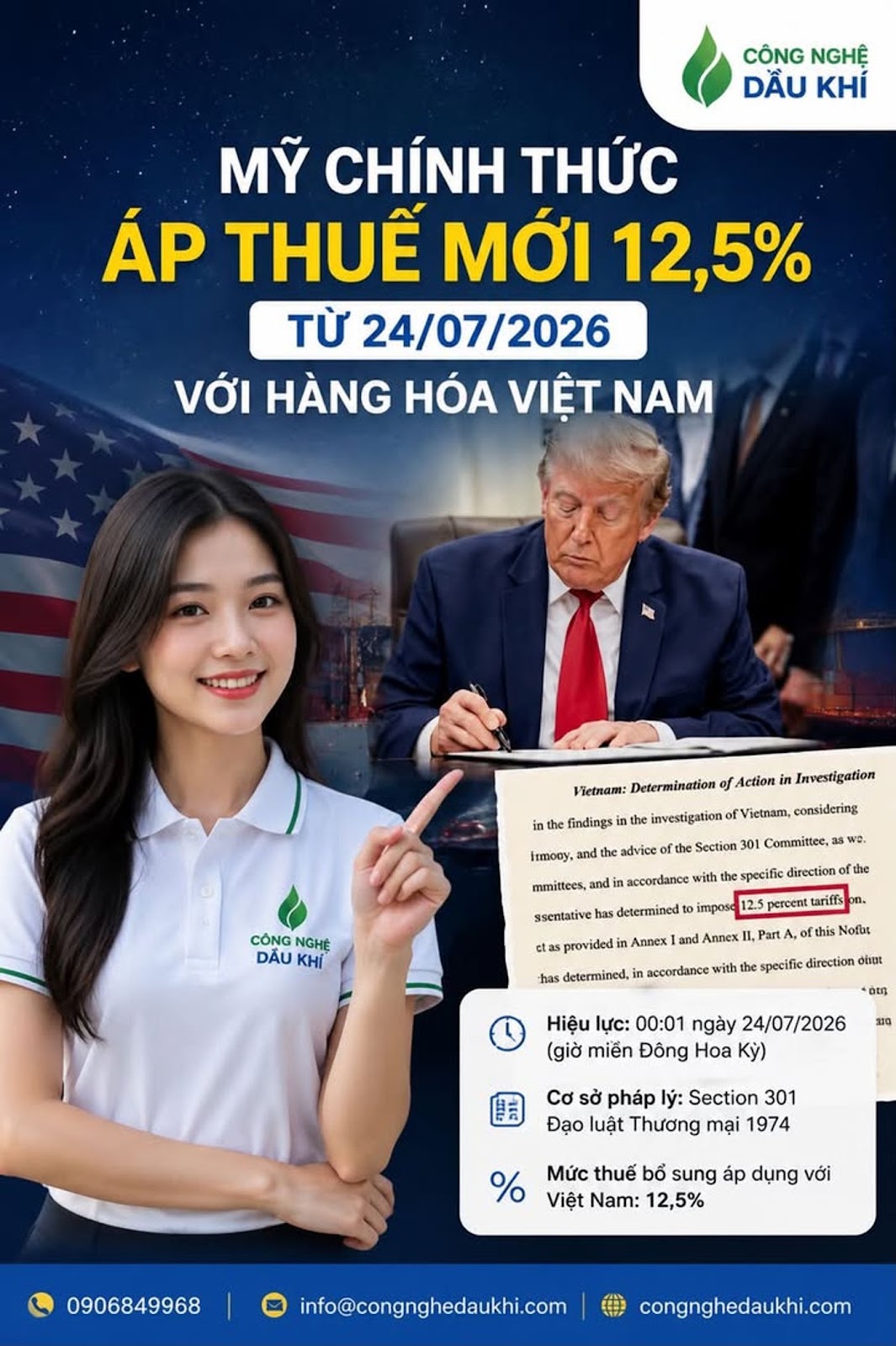
Will the additional tax of 12.5% create great pressure on Vietnamese exports to the US or can businesses still maintain competitiveness by restructuring the supply chain and improving production standards?
On July 23, 2026, the Office of the United States Trade Representative USTR announced the final decision in a series of investigations under Section 301 of the Trade Act of 1974 related to the failure of trading partners to apply or effectively enforce bans on imports of goods produced with forced labor. According to this decision, the additional tax rate will take effect from 00:01 on July 24, 2026 US Eastern time.
According to the official announcement of USTR, Vietnam belongs to the group of economies subject to an additional tax rate of 12.5%. This level applies to economies that USTR determines have not met the requirements for promulgating and effectively enforcing regulations prohibiting the import of goods produced with forced labor according to the agency's investigation conclusions.
Things to note lWell, this is an additional tax under Section 301, not a basic import tax that applies to all goods. The actual tax rate of each product when imported into the United States depends on the HS code, current MFN tax rate, exemptions and specific regulations stated in the USTR notice. Some groups of goods are not covered or exempted according to the official list.
Decision summary table
Content Information
The agency announced the Office of the United States Trade Representative USTR
Announcement date July 23, 2026
Effective date: July 24, 2026 US Eastern Time
Legal basis Section 301 Commerce Act of 1974
The tax rate applied to Vietnam is 12.5% additional tax according to the decision of USTR
Reason for investigation Related to the application and enforcement of the ban on importing goods produced with forced labor according to USTR's conclusion
For Vietnamese businesses, the impact will vary depending on the industry, the ability to shift the supply chain, the level of dependence on the US market and whether the product is exempt or not. Businesses that export heavily to the US will need to review contracts, costs, rules of origin and supply chain compliance requirements to fully assess the impact.from the new policy.
The important point is that information about the current 12.5% level has appeared in the official decision announced by USTR on July 23, 2026, no longer just a proposal for comments like in the period of June and early July 2026.
#United States #Vietnam #USTR #Section301 #Tariffs #Exports #Economy #Trade #SupplyChain #Business #Investment #Logistics