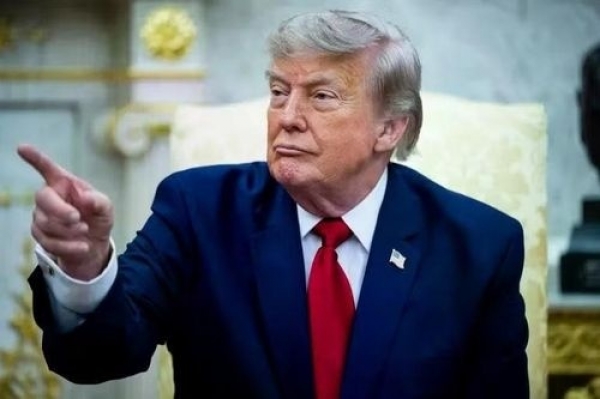
President Trump Threatens Iran Following Houthi Attacks on Oil Tankers
In an escalating geopolitical crisis in the Middle East, President Donald Trump has issued stern warnings to Iran following attacks by Houthi forces on oil tankers in the Bab el Mandeb strait. These developments not only pose significant threats to maritime security but also risk intensifying international tensions in an already volatile region. The incident underscores the fragile balance of power in strategic waterways that are critical to global energy supplies.
Details of the Oil Tanker Attacks
Houthi forces have conducted a series of attacks targeting commercial vessels in the Bab el Mandeb strait, one of the world's most critical maritime chokepoints. The strategically vital waterway connects the Red Sea to the Gulf of Aden and serves as a crucial passage for oil tankers traveling from the Persian Gulf to Europe and North America. These attacks have raised serious concerns about maritime safety and the potential disruption of global oil transportation networks that could have far-reaching economic implications.
The Bab el Mandeb strait, approximately 20 miles wide at its narrowest point, sees an estimated 4.8 million barrels of oil pass through it daily, accounting for about 9% of global seaborne oil trade. Any sustained disruption to this route could trigger significant price volatility in global energy markets.
President Trump's Response
In a strongly worded statement, President Trump announced that the United States would consider implementing new sanctions against Iran, alleging that Tehran's government has provided support to Houthi forces in carrying out these attacks. The President emphasized that America would not remain passive in the face of actions that threaten national security and global maritime safety.
"We cannot and will not tolerate threats to freedom of navigation or attacks on international shipping," Trump stated during a press conference at the White House. "Those responsible for these acts will face severe consequences, and we hold Iran fully accountable for any support they have provided to the perpetrators."
Assessment of Current Situation
Tensions between the United States and Iran have escalated significantly since the U.S. withdrawal from the 2015 nuclear agreement in 2018. The recent attacks by Houthi forces are believed to be part of Iran's strategy to expand its regional influence while demonstrating military capabilities of its proxy forces.
Intelligence reports suggest that Iran has been providing advanced weaponry, including missiles and drones, to Houthi rebels in Yemen. These capabilities have enabled the group to launch increasingly sophisticated attacks on commercial vessels in the region. The United States has previously presented evidence of Iranian involvement in similar incidents, including the downing of a U.S. drone in 2019 and attacks on Saudi oil facilities in 2019.
Impact on the Oil Market
The recent developments could have substantial implications for the global oil market. The following table summarizes key factors related to this situation:
| Factor | Potential Impact |
|---|---|
| US-Iran tensions | Increased risk premium in oil prices |
| Attacks on oil tankers | Short-term price spikes, potential supply disruptions |
| US response | Additional sanctions may affect Iranian oil exports |
| Insurance costs | Higher premiums for vessels transiting high-risk areas |
| Alternative routes | Longer voyages, increased transportation costs |
Energy analysts warn that if the attacks continue, oil prices could experience significant volatility. Brent crude, which serves as a global benchmark, has already shown increased sensitivity to developments in the region, with prices fluctuating by several dollars per barrel in response to news of the attacks.
International Reactions
The international community has expressed concern over the escalating situation. The United Nations Security Council has scheduled an emergency meeting to discuss the attacks, with several member nations calling for de-escalation and adherence to international maritime law.
"Freedom of navigation is a fundamental principle of international law," stated the UN Secretary-General in a formal statement. "We urge all parties to exercise maximum restraint and avoid any actions that could further destabilize the region."
European powers have also voiced concerns, with the European Union issuing a statement condemning the attacks and calling for a diplomatic resolution to the tensions. Meanwhile, key Gulf allies of the United States, including Saudi Arabia and the United Arab Emirates, have expressed support for the American position while urging restraint to prevent further escalation.
Geopolitical Implications
The current situation represents a complex web of geopolitical interests in the Middle East. Beyond the immediate concerns about maritime security, the incident highlights broader strategic competition between regional powers and their international allies.
Iran has been working to establish a network of proxy forces across the Middle East, including Houthi rebels in Yemen, Hezbollah in Lebanon, and various Shia militias in Iraq and Syria. This strategy, often referred to as the "Shia Crescent," aims to counter Saudi and Israeli influence in the region.
Conversely, the United States has maintained a military presence in the region to deter Iranian aggression and protect allied nations. The recent attacks test this commitment and may force the administration to consider its options, which could range from additional sanctions to military action.
Historical Context
The current tensions build upon a long history of conflicts in the region. The Strait of Hormuz, another critical chokepoint in the Persian Gulf, has previously been the site of confrontations between Iranian and American forces. In 1988, the U.S. Navy shot down an Iranian civilian airliner, killing all 290 people on board, in an incident that further strained relations between the two nations.
More recently, in 2019, attacks on oil tankers in the Gulf of Oman and the sabotage of Saudi oil facilities were attributed to Iran, though Tehran denied involvement. These incidents, along with the current situation, demonstrate the vulnerability of global energy infrastructure to regional conflicts.
Economic Consequences
Beyond the immediate impact on oil prices, the current situation could have broader economic consequences. Disruptions to maritime trade could affect the delivery of not only oil but also other commodities, including grain and manufactured goods, potentially leading to increased costs for consumers worldwide.
The insurance industry has already begun to reassess risk profiles for vessels transiting the region, with some companies imposing additional premiums or restricting coverage for certain areas. These costs are ultimately passed on to consumers through higher prices for goods and services.
Additionally, continued instability in the region could affect investment in energy infrastructure, potentially leading to long-term supply constraints as companies delay or cancel development projects in high-risk areas.
Conclusion
With the current escalation of tensions in the Middle East, the situation in the region has become increasingly complex. President Trump's threats of sanctions against Iran not only reflect concerns about maritime security but also highlight the significant challenges facing the international community in maintaining peace and stability in this strategically vital region.
The outcome of this crisis will likely depend on multiple factors, including the international response, Iran's calculations about the costs and benefits of further escalation, and the United States' willingness to follow through on its threats. As the situation continues to evolve, the world watches with concern, aware that the stability of global energy markets and international security hangs in the balance.