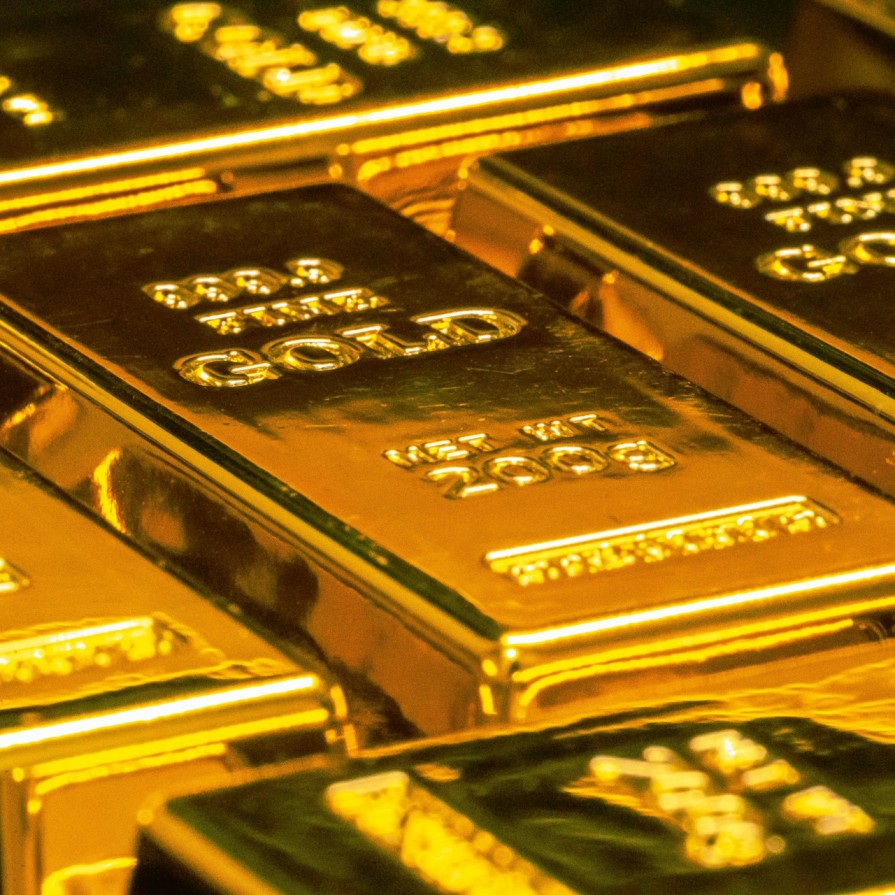
Gold Surge to $4,000 per Ounce: Transforming Central Asian Economies
In recent weeks, gold prices have hovered around the unprecedented mark of $4,000 per ounce, causing small-scale miners in the northern village of Soykechar, Uzbekistan, to monitor every fluctuation. These miners frequently check applications on their mobile devices for price updates while local television channels broadcast gold valuations. Information from black market trading also circulates orally throughout the communities.
"We're trying to improve our lives, buy better clothes for our children, access nicer food, and perhaps visit private hospitals," said Doniyor, a 34-year-old machinery supervisor.
Economic Transformation Through Rising Gold Prices
The dramatic increase in gold prices has reshaped the landscape of Central Asia, a region heavily dependent on gold. While governments in the region often attribute rising living standards and economic development to policy reforms, the reality is that these gains are largely supported by soaring gold prices. This gold boom has benefited ordinary citizens, from increased government spending to a 20% wage increase for miners in Soykechar over the past year.
However, alongside the price surge, concerns are mounting regarding high inflation, growing public and private debt, and over-reliance on a single commodity. "We're returning to the situation of the early 1990s, when one commodity dominated the dollar economy," noted Franco Galdini, an economist at the University of Birmingham in the United Kingdom. "Back then, it was cotton; now it's gold."
| Year | Gold Price (USD/ounce) |
|---|---|
| 2014 | 1,300 |
| 2024 | 2,050 |
| 2025 | 5,200 |
| 2026 (Summer) | 4,100 |
Economic Benefits of the Gold Boom
Central Asian nations have reaped significant benefits from rising gold prices. Uzbekistan achieved a record export figure of $33 billion in 2025, with approximately 30%—equivalent to $9.9 billion—coming from gold. Kyrgyzstan and Tajikistan also list gold as their most valuable export, with the Kumtor mine contributing around 10% of Kyrgyzstan's GDP. Kazakhstan, despite being the world's largest uranium producer, still ranks gold as its second most valuable export after crude oil.
Only Turkmenistan lacks significant gold production.
Gold Prices and Public Debt Situation
The rising gold prices have helped increase the value of national reserves, thereby boosting investor confidence and reducing borrowing costs. Kyrgyzstan's reserves, of which approximately 75% is gold, have grown from $5.1 billion at the end of 2024 to $8.6 billion. Uzbekistan, Kyrgyzstan, and Kazakhstan have all leveraged the advantage of cheap credit, leading to debt accumulation in recent years.
"There is no danger to the economy. We could pay off foreign debt in one day," stated Kyrgyz President Sadyr Japarov during a parliamentary session in December.
| Entity | Tax Revenue (USD) |
|---|---|
| Navoi Mining and Metallurgical Co. | 2.64 billion |
| Total Uzbekistan Budget Revenue | 22.3 billion |
Challenges and Risks
While governments seek to capture a larger share of gold profits, miners in Soykechar are also seeing benefits, albeit on a smaller scale. These miners work 8 to 12 hours daily, six or seven days a week in small-scale mines. Uzbekistan legalized small-scale gold mining in 2018, and the government regularly auctions mining plots.
"My monthly salary has increased from $500 to $650 in the past year, but it's still not enough for my family to live comfortably," said Gulum, a 48-year-old excavator operator.
As gold prices rise, concerns about Chinese economic penetration are growing. Chinese companies have dominated gold mining in Tajikistan, and in February 2025, Chinese-owned companies bid for 31 mining plots in Uzbekistan's Navoi region.
While authorities in Uzbekistan have dismantled numerous illegal mining groups, residents continue to mine gold clandestinely due to pressure from local authorities.
Future Economic Outlook
Dependence on a single commodity like gold could make economies such as Uzbekistan and Kyrgyzstan vulnerable if gold prices decline sharply. However, Galdini believes that structural factors such as rising gold mining costs and demand from central banks will keep prices stable in the near future.
"The industrial sector is not developing strongly with gold profits," Galdini concluded. "The fundamental factors remain unchanged."
Doniyor noted that with an extra $100 monthly surplus from gold mining, he had purchased livestock and begun planning to build a new house. Nevertheless, the gold price boom has yet to truly transform living conditions in his village.
"The company is using the money for itself," he said.