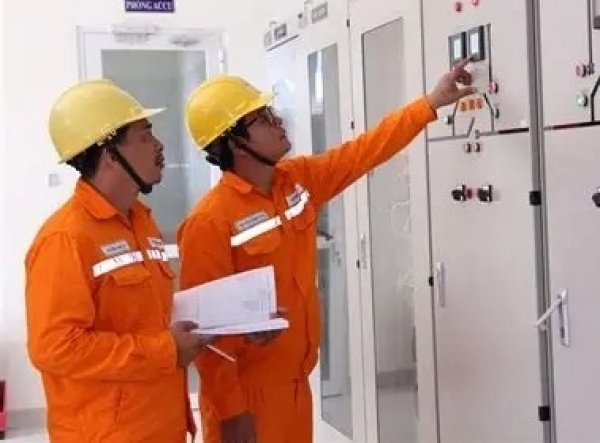
Southern Vietnam Saves Nearly 4.3 Billion kWh of Electricity During Peak Season
In the context of continuously increasing electricity demand in Southern Vietnam, power units have implemented comprehensive solutions for electricity conservation, load adjustment, and improved operational efficiency of the power system. As a result, nearly 4.3 billion kWh of electricity has been saved in the first half of 2026, significantly contributing to stable power supply.
Challenges in Power Supply Context
The Southern region, particularly provinces and cities such as Ho Chi Minh City, Dong Nai, Binh Duong, and Long An, has been facing substantial pressure in ensuring power supply due to rapid urbanization and industrialization. The electricity consumption demand in this region accounts for a significant portion of the national total, especially during peak season months.
According to a report from Vietnam Electricity (EVN), electricity consumption demand in Southern Vietnam during the first half of 2026 increased by approximately 7.5% compared to the same period last year, presenting numerous challenges for power system operations.
Comprehensive Solutions Implemented
To address this situation, power units in Southern Vietnam have implemented various integrated electricity conservation and operational efficiency improvement measures:
- Optimization of power system operation: Application of smart management technology to reduce energy losses in transmission and distribution.
- Flexible load adjustment: Scheduling of production at large industrial factories to avoid concentrated electricity consumption during peak hours.
- Encouragement of energy-efficient equipment: Supporting businesses and households to transition to using high-efficiency electrical appliances.
- Power grid upgrading: Investment in upgrading and modernizing the power grid to reduce losses and increase supply capacity.
- Renewable energy development: Promoting rooftop solar panel installation and other on-site renewable energy sources.
Impressive Results
In the first half of 2026, the above solutions helped Southern Vietnam save nearly 4.3 billion kWh of electricity, equivalent to approximately 8.7% of the region's total electricity consumption in the same period. This is a remarkable figure that demonstrates the effectiveness of the implemented electricity conservation programs.
The electricity saved not only helps reduce pressure on the power system during peak season but also contributes to reducing approximately 4.3 million tons of CO2 emissions, equivalent to planting about 7 million trees.
| Indicator | 6/2025 | 6/2026 | Change |
|---|---|---|---|
| Total electricity consumption (billion kWh) | 49.2 | 52.9 | +7.5% |
| Electricity saved (billion kWh) | 3.1 | 4.3 | +38.7% |
| Electricity savings ratio (%) | 6.3 | 8.1 | +1.8% |
| CO2 emission reduction (million tons) | 3.1 | 4.3 | +38.7% |
Future Directions
To continue maintaining and enhancing electricity conservation efficiency, power units in Southern Vietnam are developing long-term action plans with the following key focuses:
- Strengthening the application of digital technology in power system management and operation.
- Expanding electricity conservation programs to communities and businesses.
- Significant investment in renewable energy to reduce dependence on traditional power sources.
- Improving electricity pricing policies to encourage efficient electricity use.
Conclusion
The achievement of saving nearly 4.3 billion kWh of electricity in the first half of 2026 is clear evidence of the efforts made by power units in Southern Vietnam to ensure stable and sustainable power supply. The implemented solutions not only help reduce pressure on the power system during peak season but also significantly contribute to environmental protection and sustainable socio-economic development in the region.
However, given the trend of rapid economic development and continuously increasing electricity demand, electricity conservation needs to be maintained and further strengthened in the coming time.
#ElectricityConservation #PowerSector #RenewableEnergy #EnvironmentalProtection #SustainableDevelopment