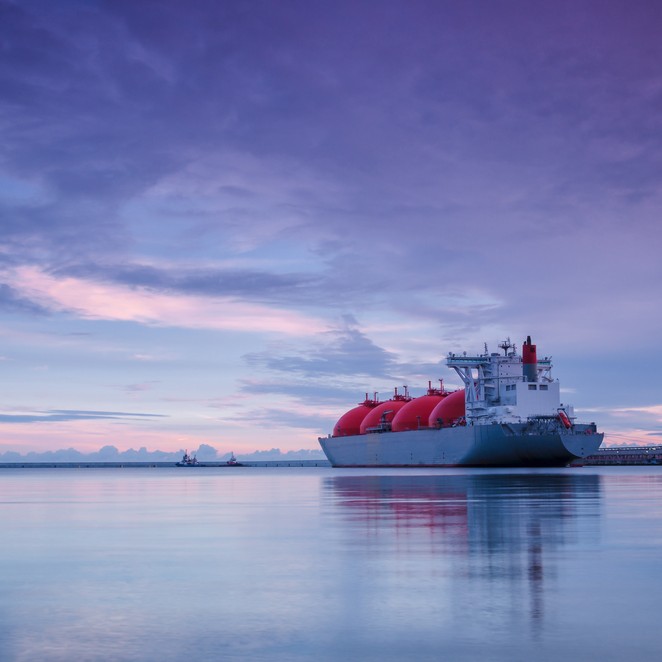
Strike at Australian LNG Facilities Escalates, Intensifying Global Supply Concerns
On October 3rd, ongoing industrial action at Inpex's liquefied natural gas (LNG) facilities in Australia has escalated significantly, causing substantial disruptions to production operations, according to a senior official from the Japanese energy company. Workers at Inpex's Ichthys LNG facility have voted to escalate strike action across all three sites to eight hours daily, doubling the previous four-hour work stoppages.
Current Situation and Projected Impacts
"We anticipate immediate disruptions to production at both onshore and offshore Ichthys LNG facilities," stated Bill Townsend, Inpex's senior vice president, in a message communicated to Bloomberg. He emphasized that "in the current context of global fuel supply constraints, these disruptions are expected to be particularly severe."
Since industrial action commenced on June 3rd, there have been intermittent disruptions to LNG loading at the Ichthys project, raising concerns in the market that supply from Australia—the world's second-largest LNG exporter—could decrease in the coming days and weeks.
Australian Fair Work Commission Decision
Earlier this week, Australia's Fair Work Commission rejected Inpex's application to halt the strike action at the Ichthys facility, which has the capacity to produce 9.2 million tons annually. The disruption to global LNG supply from Australia could increase pricing pressure on energy importers in Asia, the world's largest LNG market.
Global LNG Market Developments and Qatar's Position
European and Asian benchmark gas prices fell sharply at the beginning of this week following news of an agreement between the United States and Iran. However, gas flows from Qatar remain suspended pending the safe reopening of the Strait of Hormuz. This reopening could begin as early as Friday, when the US and Iran are expected to sign an agreement in Switzerland. Nevertheless, LNG supplies from the Middle East will likely resume flowing in the coming weeks, assuming the agreement holds and the Strait of Hormuz safely reopens for transit.
State-owned QatarEnergy, which suspended LNG production in early March, has informed customers that it could restore approximately 50% of production capacity within one month after safe transit through the Strait of Hormuz is restored. According to sources, within two months, Qatar could return to 80% of its operational capacity.
| Detail | Information |
|---|---|
| Strike commencement date | June 3 |
| Affected facilities | Ichthys LNG (onshore and offshore) |
| Ichthys LNG capacity | 9.2 million tons annually |
| Expected capacity recovery from Qatar | 50% within 1 month, 80% within 2 months |
This crisis not only affects Australian LNG supply but also has profound implications for the global energy market amid increasing volatility. Investors and analysts will need to closely monitor developments as they navigate this uncertain landscape, with potential ripple effects across energy markets worldwide that could impact pricing and supply security for months to come.