US-Iran Deal Pushes Oil Prices Below $80 as China Significantly Cuts Refining Output
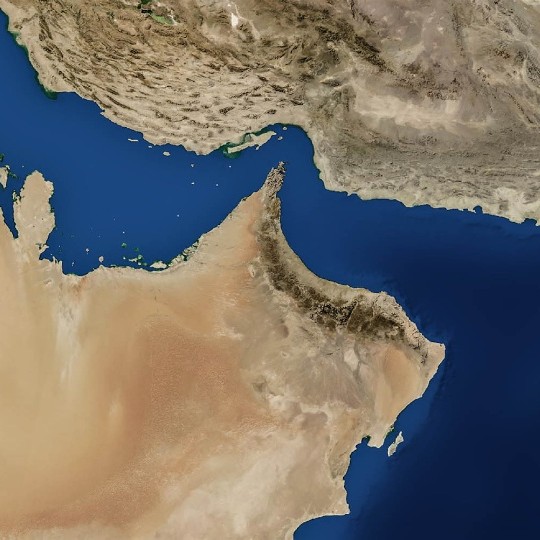
The agreement between the United States and Iran regarding the immediate reopening of the Strait of Hormuz and the lifting of the maritime blockade has pushed oil prices below $80 per barrel, marking the lowest level in over four months. However, risks remain if tensions in Lebanon escalate. Meanwhile, China has significantly reduced its oil refining output, marking one of the most significant cases of demand destruction following the US-Iran conflict.
Impact of the US-Iran Agreement on the Oil Market
The US-Iran agreement to immediately reopen the Strait of Hormuz and lift the US maritime blockade against Iran was signed by President Trump, Vice President Vance, and Iranian Parliament Speaker Qalibaf, causing Brent futures to fall below $80 per barrel - the lowest level in over four months.
However, the market could reverse if there is another Israeli attack on Lebanon. Otherwise, the oil market may eventually move away from the conflict and allow oil to "flow freely."
| Indicator | Before Agreement | After Agreement | Change |
|---|---|---|---|
| Brent Oil Price (USD/barrel) | > 80 | < 80 | Significant Decrease |
| Time Period | Over 4 months | Current | Reached New Low |
At the G7 meeting in France, President Trump announced that the US would not invest in Iran as part of the temporary peace agreement, but noted there could be "big opportunities" in Iran after a complete peace deal is finalized.
China Significantly Reduces Oil Refining Output
China has witnessed a sharp 9.1% decrease in oil refining output compared to the same period last year, falling to 12.7 million barrels per day, according to data from the country's National Bureau of Statistics. This represents one of the most significant cases of demand destruction following the US-Iran conflict.
Refining output in China dropped to its lowest level since April 2022, due to negative refining margins and ongoing export bans on products, despite Beijing having attracted downstream industries with new product export licenses last week.
| Indicator | Value | Comparison |
|---|---|---|
| Oil Refining Output | 12.7 million barrels/day | Decrease of 9.1% year-on-year |
| Seaborne Crude Oil Imports | 6 million barrels/day | Decrease of 600,000 barrels/day from previous month |
| Crude Oil Inventories | 1.3 billion barrels | Decrease of 20 million barrels from 2 months ago |
China's seaborne crude oil imports in June suggest that the multi-year low seen in May may not be the bottom, as oil flows into Chinese ports decreased further by 600,000 barrels/day from the previous month to 6 million barrels/day.
Although at a relatively slow pace, China has finally begun to reduce its massive crude oil inventories of 1.3 billion barrels, with Kpler data showing current levels are about 20 million barrels lower than two months ago.
Meanwhile, China's retail sales declined for the first time since the COVID-19 pandemic, falling 0.6% compared to the same year prior, indicating that Chinese consumer spending is sensitive to energy price increases.
Market Moves: News from Oil and Energy Companies
Developments in the United States
American LNG company Venture Global (NYSE:VG) has filed with the US Federal Energy Commission to build an 11.7 million tons/year expansion at the 28 million tons/year Calcasieu Pass 2 plant in Louisiana.
American oil giant Chevron (NYSE:CVX) has reached an agreement with Helleniq Energy to acquire a 70% stake in the offshore hydrocarbon Block 10 of Greece, west of the Peloponnese peninsula.
Oil stored in the US Strategic Petroleum Reserve has fallen to its lowest level since 1983, reaching 340.2 million barrels as of June 12, creating difficulties for the White House as it needs to sell an additional 88 million barrels in fiscal years 2028-2031.
Developments in Europe
Norwegian oil company Naftogaz has committed to doubling its share buybacks thanks to extraordinary profits from the US-Iran conflict, increasing them from the $1.5 billion forecast in February to a target of $3 billion by 2026.
Türkiye has indicated it does not want to extend the Kirkuk-Ceyhan pipeline, which transports Kurdish oil to the Mediterranean, under current conditions as its terms have been put to arbitration, with the contract expiring on July 27.
Developments in the Middle East and Africa
Libya's national oil company has completed three upstream agreements with Spain's Repsol (NYSE:REP) and Italy's ENI (NYSE:ENI), promoting exploration in offshore block 07 as well as onshore blocks 01 and 07.
UAE's national oil company ADNOC has sold at least 30 million barrels of spot crude oil to Asian refiners and traders in June this month, increasing Middle Eastern supply at a time when Gulf tankers were getting stuck again, leading to regional oil spills.
Developments in Asia-Pacific
Hungary's national oil company MOL (NYSE:MOL) said it has agreed with Serbia to buy the national oil company NIS, receiving a 15-day extension of approval from OFAC to complete the deal with Russia's Gazprom Neft.
Australia's leading oil and gas company Woodside (ASX:WDS) announced that it is not aware of any proposals related to giant US oil company ExxonMobil (NYSE:XOM) after rumors began circulating that it could become a potential target for acquisition by the Texas-based corporation.
The Japanese government is assessing the physical impact of the ongoing Ichthys LNG industrial strike that could paralyze exports from Australia's LNG plant after a court rejected Inpex's request to block the workers' strike, which has been extended until July 6.
Other Oil and Energy Related News
Coal and Energy
China's coal output decreased by 1.7% compared to the same year prior to 397.22 million metric tons, due to widespread safety crackdowns in mines after the May 22 disaster at the Liushenyu mine that killed 82 miners.
QatarEnergy has expressed readiness to restart LNG production at the Ras Laffan LNG plant, stating it could achieve full capacity at undamaged vessels by next month after 12/14 were damaged by Iranian drone attacks in April.
Aviation and Fuel
The UK is about to receive its first Indian jet fuel tanker since January, following a government decision in May to temporarily lift the ban on fuel produced from Russian crude, with the Solo vessel carrying 500,000 barrels of kerosene from Reliance's Jamnagar refinery.
India's government has increased export taxes on intermediate products despite hopes of reopening the Strait of Hormuz, raising them to $24/barrel for diesel and $21/barrel for jet fuel as domestic transportation fuel demand continues to rise.
Natural Gas and Metals
West Texas natural gas at the Waha hub turned positive for the first time since early February 2026 as cooling demand increased and spring pipeline maintenance ended, pushing them up to $0.42/MMBtu.
Aluminum fell to a 2-month low after news of the preliminary US-Iran agreement, with LME standard 3-month contracts down 5% to $3,350/metric ton as aluminum from Bahrain and UAE could find its way back to the global market.
Market Forecasts
Global banks have reacted immediately to the prospect of a US-Iran peace deal, with Goldman Sachs now expecting Brent to average $80/barrel in Q4/2026, down $10/barrel from its previous forecast, a prediction reflected by Morgan Stanley.
| Bank | Brent Price Forecast Q4/2026 | Change from Previous |
|---|---|---|
| Goldman Sachs | $80/barrel | Decrease of $10/barrel |
| Morgan Stanley | $80/barrel | Similar decrease |
Exports and Production
Russia's average 4-week seaborne crude oil exports rose to 3.83 million barrels/day, the highest rate this year, as Ukraine attacked 6 refineries in June this month, pushing more oil to the country's crude oil export ports.
The average 4-week seaborne crude oil exports of Russia surged to 3.83 million barrels/day, the highest rate this year, as Ukraine attacked 6 refineries in June this month, pushing more oil to the country's crude oil export ports.
The struggling refineries have kept Russian exports at record levels, with the average 4-week seaborne crude oil exports of Russia surging to 3.83 million barrels/day, the highest rate this year.
Conclusion
The US-Iran agreement to reopen the Strait of Hormuz and lift the maritime blockade has created significant changes in the global energy market. The drop in oil prices below $80 per barrel and the sharp reduction in oil refining output in China are reshaping the global energy landscape.
However, the market still faces numerous risks, including escalating tensions in Lebanon, energy security concerns, and uncertainty about consumer demand. Energy companies worldwide continue to adjust their strategies to adapt to this new context.
The development of new energy projects, from LNG in the US to exploration deals in Africa and Asia, indicates that the global energy market is undergoing deep restructuring, which could shape the future of the industry for many years to come.