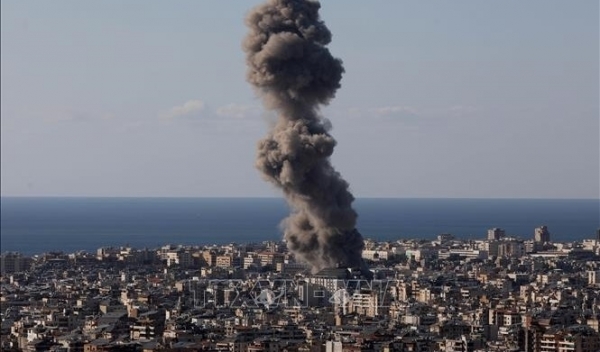
Israel Maintains Military Presence in Lebanon Despite Ceasefire Implementation
Amidst escalating tensions across the Middle East, the situation along the Israel-Lebanon border remains one of the most concerning hotspots. According to the latest reports, Israel continues to maintain a significant military presence in Lebanese territory despite the ceasefire agreement implemented on June 23, creating an unstable situation that risks further regional conflict.
The Current Situation at the Israel-Lebanon Border
Tensions along Israel's northern border have intensified in recent weeks as Israeli forces and Lebanon's Hezbollah have engaged in mutual artillery exchanges. Despite the announced ceasefire on June 23, international observers and local media have documented that Israel maintains a substantial military presence in border-adjacent areas of Lebanon.
According to sources from the United Nations Interim Force in Lebanon (UNIFIL), Israel has deployed tanks, armored vehicles, and infantry units within Lebanese territory, constituting serious violations of Lebanon's national sovereignty and previous ceasefire agreements.
Lebanon's Response
The Lebanese government has strongly condemned Israel's actions, characterizing them as blatant violations of national sovereignty. Lebanon's Ministry of Foreign Affairs has delivered diplomatic protests to the United Nations and other international bodies, calling for intervention to halt Israel's military activities.
"The presence of Israeli military forces on Lebanese soil is an unacceptable act of aggression," a spokesperson for Lebanon's Ministry of Foreign Affairs stated during a press conference. "We demand that Israel immediately withdraw its forces from Lebanese territory and respect the resolutions of the United Nations Security Council."
Israel's Position
Israeli authorities assert that their military operations are necessary to prevent attacks from Hezbollah. "We are acting to protect Israeli citizens from threats emanating from Hezbollah," an Israeli military spokesperson stated. "Our operations are defensive in nature and limited, targeting specific sites involved in Hezbollah's anti-Israel activities."
Israel also accuses Hezbollah of using civilian areas as cover for military operations, thereby increasing risks for Lebanese civilians.
International Reactions
The international community has expressed deep concern over the escalating situation at the Israel-Lebanon border. The United Nations Special Coordinator for the Middle East has called on both parties to respect the ceasefire and return to negotiation tables.
The UN Security Council has held an emergency session to discuss the situation. Many countries, including regional powers and Western nations, have called for restraint and avoidance of actions that could escalate the conflict.
| Party Involved | Primary Position | Actions Taken |
|---|---|---|
| Israel | Necessary defensive measures | Maintaining military presence, conducting selective airstrikes |
| Lebanon/Hezbollah | Opposing aggression | Counter-artillery fire, calling for international intervention |
| United Nations | Ceasefire advocacy | Emergency meetings, deploying observers |
| Major Powers | Concern about escalation | Promoting dialogue, applying diplomatic pressure |
Risk of Escalating Conflict
Regional analysts warn that the current situation at the Israel-Lebanon border risks escalating into a larger-scale conflict. Israel's continued presence in Lebanon, despite the ceasefire, could trigger stronger responses from Hezbollah and supporting forces.
"We are in a very dangerous situation," Dr. Maria Gavouneli, a Middle East international relations expert, commented. "Any incident, no matter how small, could become a trigger for a much broader conflict that might involve multiple parties."
Impact on Civilians
The border conflict has had severe consequences for civilians on both sides. Thousands have been evacuated from border areas, while numerous civilian infrastructure facilities have been destroyed.
The International Committee of the Red Cross reports that relief teams are facing significant challenges in accessing affected areas and providing humanitarian assistance to those impacted by the conflict.
Regional Future Outlook
The situation in the Middle East continues to evolve with multiple potential scenarios. While some analysts predict that international pressure may force Israel to withdraw its forces from Lebanon, others fear that the conflict may further escalate, leading to more severe consequences for the region.
The United Nations and involved parties are actively promoting dialogue and seeking a long-term political solution to the Middle East conflict, though these efforts face substantial challenges.
In this context, the international community continues to closely monitor the Israel-Lebanon hotspot, hoping that a sustainable ceasefire agreement can be reached before the situation deteriorates further.