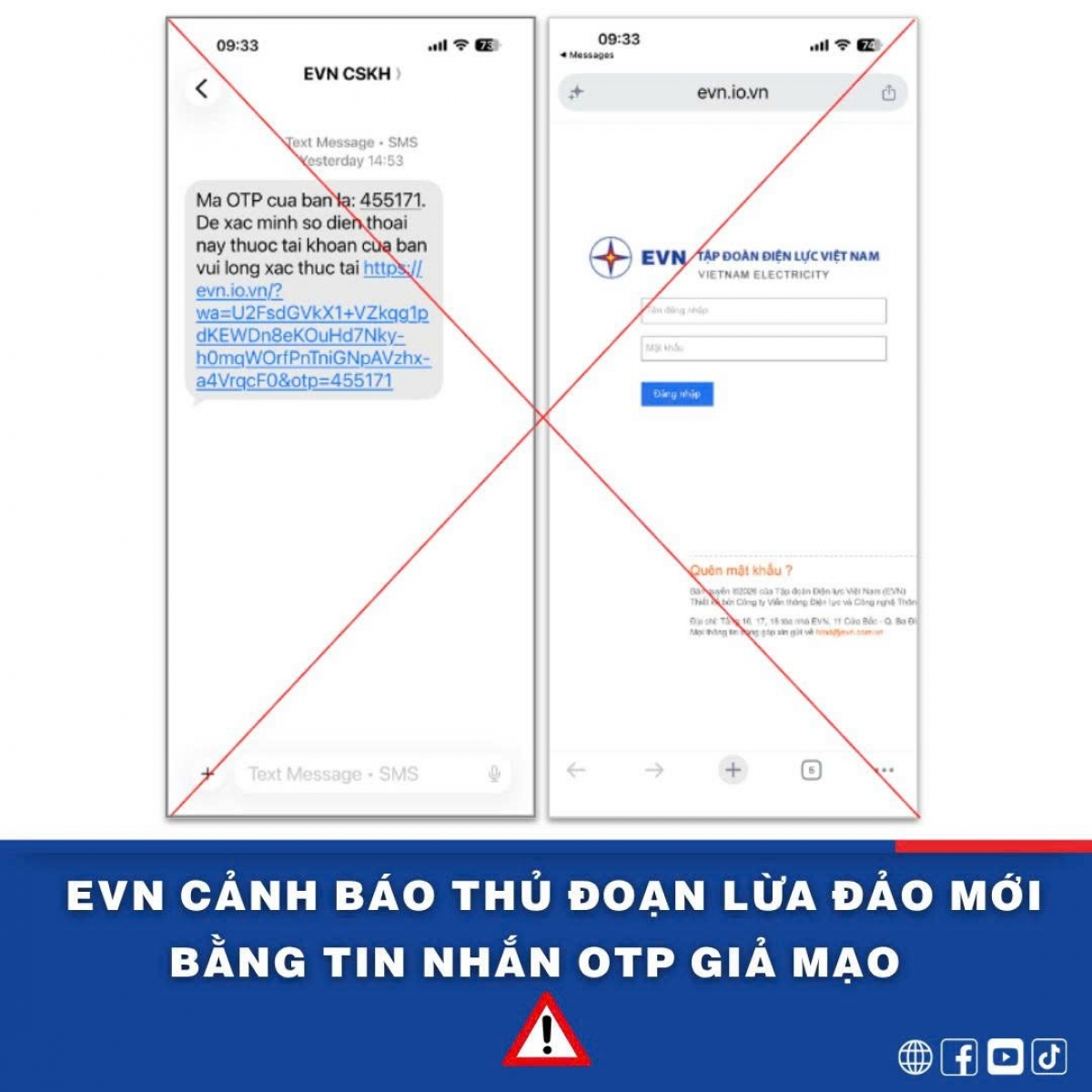
EVN Warns of New Fraud Tricks Using Fake OTP Messages
Recently, Vietnam Electricity Group (EVN) has issued a warning notice about a new form of fraud taking place, related to sending fake OTP (One Time Password) messages. This tactic not only affects EVN's reputation but also threatens the safety of users' personal information.
Details About Fraud Tricks
Fraudsters use the method of sending fake messages from EVN, which contain OTP codes. These messages are often designed in a sophisticated way, making it easy for the recipient to confuse and believe that this is an official announcement from EVN.
- Target:Stealing users' personal information and bank accounts.
- Form:Sending fake SMS messages, often with content related to transaction confirmations or requests for personal information.
- Risk:Recipients may be tricked into providing sensitive information, resulting in the loss of assets and personal information.
How to Identify Fake Messages
To protect themselves from scams, users need to pay attention to the signs of fake messages:
- Unofficial signature and logo of EVN.
- The message content is unclear and contains many spelling errors.
- Unusual calls for personal information.
Recommendation from EVN
EVN recommends that people be careful and not provide personal information via text message or phone call. Below are some protective measures that EVN advises users to take:
- Don't click on strange links in messages.
- Contact EVN or the bank directly to verify the submitted information.
- Regularly update security measures for bank accounts.
Fraud Information Summary Table
| Information | Detail |
|---|---|
| Target | Stealing personal information and bank accounts |
| Form | Fake SMS messages from EVN |
| Risk | Loss of property and personal information |
| How to recognize | Wrong logo, unclear content, request for sensitive information |
Users need to increase vigilance and share this information with relatives and friends to together prevent unnecessary risks. Personal information security is everyone's responsibility.