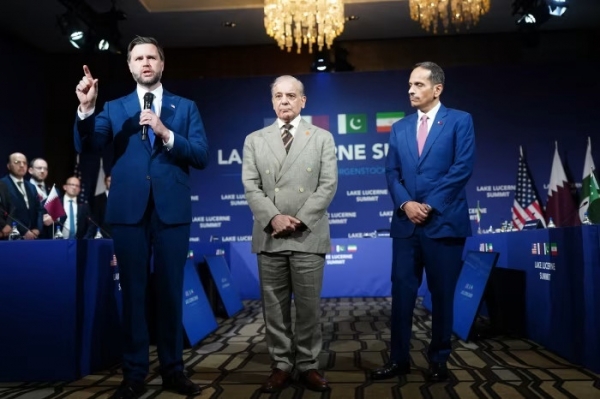
US and Iran Conclude Technical Negotiations with Significant Agreements
In a notable development on the international stage, Iran has announced that technical negotiations between the country and the United States, along with intermediary parties, have officially concluded in Switzerland. The outcomes of these negotiations are considered a significant step toward addressing the long-standing tensions between the two nations.
The conclusion of these technical discussions comes at a critical time when diplomatic efforts in the Middle East are increasingly focused on de-escalation and conflict resolution. The negotiations, which spanned multiple days, represent a crucial component in the broader framework of diplomatic relations between Washington and Tehran.
Key Focus Areas of the Technical Negotiations
The extended negotiations centered on technical matters related to Iran's nuclear program and measures to enhance regional security. Participants engaged in detailed discussions on verification protocols, monitoring mechanisms, and confidence-building measures. These technical talks served as a foundation for addressing more complex political issues that have historically strained US-Iran relations.
The inclusion of intermediary parties facilitated a more constructive dialogue, allowing both nations to explore areas of mutual interest without the immediate pressure of direct diplomatic confrontation. This approach has proven effective in previous diplomatic efforts and appears to have yielded positive results in this instance.
Significant Agreements Reached
The technical negotiations resulted in several important agreements that address critical concerns for both nations:
- Nuclear program transparency: Iran has committed to enhanced transparency measures regarding its nuclear activities, including increased access for international inspectors and more detailed reporting on uranium enrichment processes.
- Military tension reduction: Both parties have agreed upon specific measures to reduce military tensions in the region, including protocols for naval encounters in the Persian Gulf and limitations on certain military exercises.
- Continuous dialogue mechanism: The establishment of a regular communication channel between US and Iranian officials to address emerging issues promptly and prevent misunderstandings from escalating.
- Economic cooperation framework: Preliminary agreements on potential areas for economic cooperation, particularly in sectors that could benefit from technical exchange and knowledge transfer.
Implications for International Relations
These agreements carry significant implications not only for US-Iran relations but also for the broader geopolitical landscape of the Middle East. The successful conclusion of technical negotiations demonstrates that diplomatic channels remain viable despite historical animosities.
Regional analysts suggest that these developments could create momentum for more comprehensive negotiations addressing broader issues such as regional security architecture, economic cooperation, and diplomatic normalization. The involvement of European intermediary nations has been particularly crucial in bridging differences between the American and Iranian positions.
The impact on regional security dynamics cannot be overstated. Reduced military tensions between the US and Iran could potentially alter the security calculus for other regional actors, creating opportunities for broader stability initiatives. However, experts caution that sustainable peace will require continued diplomatic engagement and implementation of confidence-building measures.
Expert Analysis and Future Prospects
Diplomatic observers have characterized the technical negotiations as a necessary precursor to more substantive political discussions. The agreements reached, while technical in nature, establish important precedents for future engagement between Washington and Tehran.
"These technical agreements represent the building blocks for a more stable relationship between the US and Iran," commented Dr. Sarah Johnson, a Middle East policy analyst at the International Relations Institute. "The commitment to transparency and continuous dialogue creates a framework within which more complex issues can be addressed over time."
However, challenges remain. Implementation of the agreed-upon measures will require political will from both sides, and the broader geopolitical context continues to present obstacles to full normalization of relations. The path forward will likely involve incremental progress rather than rapid transformation.
Global Response and Monitoring
The international community has welcomed the positive outcome of the technical negotiations, with several major powers expressing cautious optimism about the potential for further diplomatic progress. The United Nations has indicated its willingness to support implementation mechanisms and verification processes.
Monitoring bodies, including the International Atomic Energy Agency (IAEA), will play a crucial role in verifying compliance with the nuclear-related agreements. The IAEA has previously expressed interest in enhanced cooperation with Iranian authorities, and these technical agreements may provide an opportunity for strengthening such collaboration.
Conclusion
The conclusion of technical negotiations between the US and Iran, marked by several significant agreements, represents a positive development in the complex diplomatic relationship between these two nations. While the agreements are technical in nature, they establish important foundations for addressing more substantive issues in the future.
The international community will continue to monitor developments closely, as the implementation of these agreements could have far-reaching implications for regional stability and global non-proliferation efforts. The successful conclusion of these negotiations demonstrates that even historically adversarial nations can find common ground through sustained diplomatic engagement and technical cooperation.
| Aspect | Details |
|---|---|
| Duration of Negotiations | Multiple days |
| Location | Switzerland |
| Number of Agreements Reached | Four key technical agreements |
| Participating Parties | United States, Iran, European intermediary nations |
| Primary Focus Areas | Nuclear program transparency, military tension reduction, continuous dialogue, economic cooperation |
| Next Steps | Implementation of agreements, preparation for broader political negotiations |