Russia Considers Mandatory Domestic Oil Refining to Address Fuel Crisis
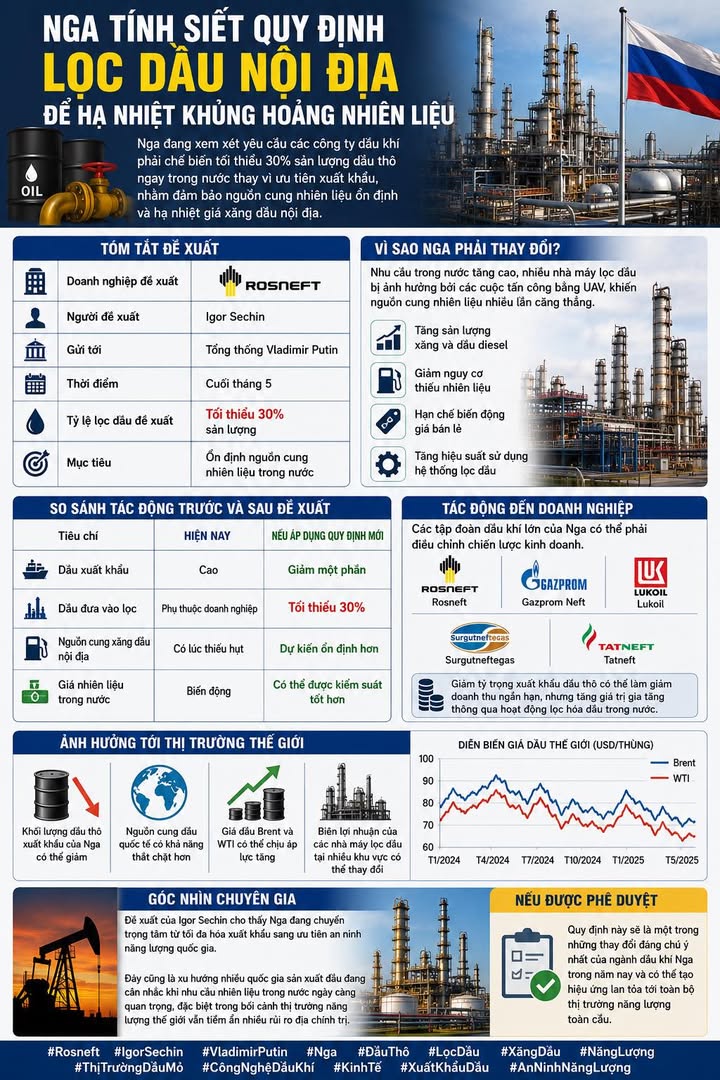
In a move that could significantly reshape global energy markets, Russia is contemplating a major policy shift that would require domestic oil companies to refine at least 30% of their crude production domestically rather than prioritizing exports. The proposal, submitted by Igor Sechin, CEO of Rosneft, to President Vladimir Putin in late May, represents a fundamental reorientation of Russia's energy strategy toward domestic security.
Background: Russia's Evolving Energy Landscape
For decades, Russia has relied heavily on crude oil exports as a primary source of foreign currency revenue. However, the country has increasingly faced challenges in maintaining stable domestic fuel supplies. Growing domestic demand, combined with disruptions to refining capacity from drone attacks and other factors, has led to periodic fuel shortages and price volatility within Russia.
The current situation has prompted Russian officials to reconsider their approach, potentially shifting from a strategy focused on maximizing export revenues to one that prioritizes energy security for domestic consumers. This recalibration comes at a time when global energy markets remain volatile due to geopolitical tensions and fluctuating demand patterns.
The Proposal: Details and Objectives
According to documents reviewed by industry analysts, Igor Sechin's proposal outlines a mandatory refining requirement that would compel Russian oil producers to process a minimum of 30% of their domestically extracted crude within Russian refineries. The measure aims to address several pressing challenges facing Russia's fuel market:
- Ensuring stable fuel supplies during peak demand periods
- Preventing domestic fuel shortages that have occurred in various regions
- Reducing price volatility at the retail level
- Improving the utilization efficiency of Russia's refining infrastructure
The proposal specifically targets companies like Rosneft, Gazprom Neft, Lukoil, Surgutneftegas, and Tatneft, which collectively control the vast majority of Russia's oil production capacity.
Rationale for the Policy Shift
Several factors have contributed to Russia's consideration of this significant policy change. First and foremost is the recurring issue of domestic fuel shortages that have plagued various regions, particularly during seasonal demand peaks. These shortages have not only inconvenienced consumers but have also created political challenges for the government.
Additionally, Russia's refining infrastructure has faced operational challenges, including damage from drone strikes and the need for modernization. By increasing domestic refining requirements, the government aims to incentivize investment in refining capacity and technology upgrades.
The policy also represents a broader trend among major energy-producing nations to prioritize domestic security in an increasingly uncertain global environment. As geopolitical tensions continue to affect energy markets, many countries are reconsidering their export strategies to ensure adequate domestic supplies.
Comparative Analysis: Current vs. Proposed Regulatory Framework
The following table outlines the key differences between Russia's current approach to oil refining and distribution versus the proposed new regulatory framework:
| Criteria | Current Framework | Proposed New Framework |
|---|---|---|
| Domestic Refining Requirement | Market-driven, no mandatory minimum | Mandatory minimum of 30% domestic refining |
| Export Focus | High priority on crude exports | Reduced crude exports, increased refined product exports |
| Domestic Fuel Supply | Periodic shortages in some regions | Expected improvement in supply stability |
| Retail Price Volatility | Significant fluctuations common | Potentially better price control |
| Refinery Utilization | Inconsistent across different facilities | Increased overall utilization rates |
Impact on Russian Oil Companies
The proposed regulation would necessitate significant strategic adjustments for Russia's major oil producers. Companies that have traditionally focused on maximizing crude oil exports would need to reallocate substantial portions of their production to domestic refining operations.
For Rosneft, Russia's largest oil producer, this shift would represent a particularly significant transformation. The company has historically prioritized crude exports, and increased domestic refining would require substantial capital investment in refining capacity and technology.
Other major players like Gazprom Neft, Lukoil, and Surgutneftegas would also face substantial operational changes. While some companies already have substantial refining operations, the new mandatory requirement would necessitate further expansion or optimization of their refining capabilities.
Despite the potential short-term reduction in export revenues, the long-term benefits could include higher profit margins from refined products and reduced exposure to global crude price volatility. Additionally, increased domestic refining could create opportunities for value-added petrochemical production, further enhancing the economic benefits.
Global Market Implications
If implemented, Russia's increased domestic refining requirement could have profound implications for global energy markets:
- Reduced crude oil exports from Russia, potentially tightening global supply
- Increased exports of refined petroleum products from Russia
- Upward pressure on global crude prices, particularly Brent and WTI benchmarks
- Shifts in refining margins and profit patterns across different global regions
- Potential changes in global trade flows for both crude and refined products
The magnitude of these effects would depend on several factors, including the extent to which Russian companies can increase refining efficiency, the responsiveness of global supply adjustments, and the elasticity of demand in various markets.
Expert Analysis and Industry Perspectives
Energy market analysts view Russia's potential policy shift as indicative of a broader global trend toward prioritizing domestic energy security. "We're seeing a fundamental reevaluation of energy export strategies worldwide," noted one senior commodities analyst. "Countries are increasingly recognizing the importance of maintaining adequate domestic supplies, even at the potential cost of reduced export revenues."
Industry experts also point out that Russia's refining capacity may need significant upgrades to handle increased processing volumes. "The existing infrastructure may not be sufficient to meet the proposed 30% refining requirement without substantial investment," explained a refining technology specialist. "This could create both challenges and opportunities for technology providers and engineering firms."
Geopolitical analysts suggest that the policy could further strengthen Russia's position in the global refined products market while potentially reducing its influence in the crude oil market. "This represents a strategic pivot for Russia," commented a political risk analyst. "By focusing on refined products rather than crude exports, Russia could potentially achieve higher value-added returns while maintaining greater control over its energy resources."
Conclusion: A Potential Watershed Moment for Energy Markets
Russia's consideration of mandatory domestic oil refining requirements represents a potentially transformative development in global energy markets. If implemented, the policy would mark a significant shift in Russia's energy strategy, prioritizing domestic security over maximizing export revenues.
The proposal, currently under review by President Putin and other senior officials, could have far-reaching implications for both Russian oil companies and global energy markets. While the immediate focus is on addressing domestic fuel shortages and price volatility, the long-term effects could reshape international energy trade flows and market dynamics.
As the world continues to navigate an increasingly complex energy landscape, Russia's potential policy shift may serve as a bellwether for other energy-producing nations considering similar approaches to balancing domestic needs with international market obligations. The outcome of this policy debate will be closely watched by industry participants, policymakers, and market observers worldwide.