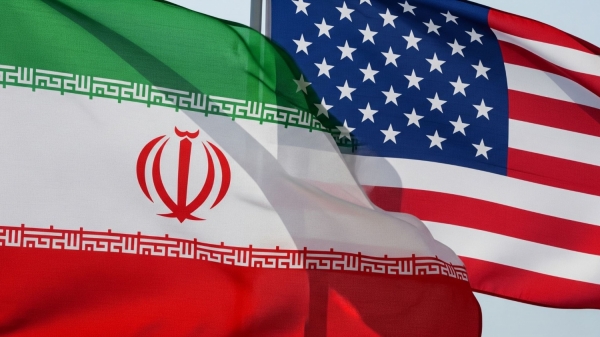
US-Iran Tensions Escalate as Military Technology Takes Center Stage in Regional Conflict
Escalating Tensions in the Middle East
In a rapidly deteriorating security landscape, the United States Central Command (CENTCOM) has conducted new airstrikes targeting multiple locations in Iran. These latest strikes represent a significant escalation in the ongoing conflict, coming in response to an attack on a commercial vessel transiting the Strait of Hormuz. The situation has dramatically increased the risk of complete collapse of the nuclear agreement and threatens to drag the entire region into an intractable conflict.
The Strait of Hormuz, a strategically vital maritime channel through which approximately one-fifth of global oil shipments pass, has emerged as the epicenter of geopolitical tensions in recent months. This latest escalation carries not only political significance but also clearly demonstrates the technological military competition between these two global powers.
Military Technology in the Confrontation
High-tech military engagements between the United States and Iran have become defining features of regional tensions. Both nations possess advanced weapon systems that reflect distinct paths of defense industrial development.
US Strike Capabilities
The United States has deployed numerous advanced strike technologies in recent operations:
- Unmanned Aerial Vehicles (UAVs) including the MQ-9 Reaper and RQ-4 Global Hawk
- Precise GPS and laser targeting systems
- Joint Direct Attack Munition (JDAM) guidance systems
These systems enable the US to conduct precision strikes from safe distances, minimizing the risk of personnel casualties while maintaining significant pressure on opposing forces.
Iranian Defense Technology
Iran has developed formidable defensive capabilities that should not be underestimated:
- Russian-supplied S-300 air defense systems
- Domestically-produced surface-to-air missiles such as Sayyad and Bavar-373
- Indigenous combat and reconnaissance UAVs like the Shahed-136
- Electronic warfare and jamming systems
The combination of imported and domestically-developed technologies has created a formidable defensive network, giving Iran the capability to counter aerial attacks.
Surveillance and Positioning Technology
Surveillance and positioning technologies play a critical role in monitoring military and commercial activities, particularly in the sensitive Strait of Hormuz.
Satellite Surveillance Systems
Both the US and Iran rely on satellite assets to monitor each other's activities:
| Characteristic | United States | Iran |
|---|---|---|
| Military satellite count | Over 100 satellites | Fewer than 10 satellites |
| Image resolution capability | As high as 10cm | Average approximately 1m |
| Update frequency | Multiple times per day | Every few days |
Maritime Positioning Technology
The Strait of Hormuz represents the world's busiest shipping lane, making maritime positioning and vessel monitoring technologies critically important:
- Automatic Identification System (AIS) mandatory on all commercial vessels
- Satellite monitoring equipment such as the ESA's Sentinel-1
- Coastal and naval radar systems
- Maritime command and control centers
These technologies serve not only for tracking commercial traffic but also as essential tools for detecting potential maritime security threats.
Impact on Energy Security
Tensions in the Strait of Hormuz directly impact global energy security, where 20-30% of global oil shipments pass through this critical chokepoint daily.
The Strategic Importance of the Strait of Hormuz
The Strait of Hormuz represents an irreplaceable strategic node in the global energy supply chain:
- Only 21 miles wide at its narrowest point
- Facilitates the transport of 17-18 million barrels of oil per day
- Connected to a global oil market valued at $1.5 billion per day
- Directly affects global energy prices
Maritime Security Technologies
To protect this vital maritime corridor, numerous maritime security technologies have been deployed:
| Technology | Purpose | Application |
|---|---|---|
| Multimodal surveillance systems | Early threat detection | Multi-national naval forces |
| Unmanned Underwater Vehicles (UUVs) | Mine sweeping and intelligence gathering | Naval and special forces |
| Electronic countermeasure devices | Counter missile and UAV threats | Warships and commercial vessels |
| Missile defense systems | Intercept threatening missiles | Warships and critical infrastructure |
Impact on Cybersecurity
The military confrontation between the US and Iran has also increased the risk of cyber attacks targeting critical infrastructure.
Industrial Attack Risks
Both nations possess capabilities to conduct industrial cyber attacks:
- The US can target Industrial Control Systems (ICS) and SCADA systems
- Iran demonstrated its capabilities through the 2012 attack on Saudi Aramco's oil infrastructure
- Energy infrastructure, electrical grids, and water systems have become potential targets
- Such attacks could cause economic damage worth billions of dollars
Military Communication Security
In the context of potential conflict, securing military communications has become paramount:
- The US utilizes MILSATCOM satellite communications and advanced encryption systems
- Iran has developed domestic communication networks and proprietary encryption
- Blockchain technology is being researched to enhance security
- AI is being employed to detect intrusions and encrypt data
Future Technology in Regional Conflict
The ongoing tensions between the US and Iran are likely to accelerate the development of military and security technologies in the region for years to come.
Emerging Weapon Technologies
Both nations are heavily investing in next-generation weapon technologies:
- Directed-energy weapons
- Hypersonic missiles exceeding Mach 5 speeds
- Stealth drones and fully autonomous systems
- Multi-layered missile defense systems
Artificial Intelligence Applications
Artificial Intelligence (AI) is increasingly becoming a critical factor in modern warfare:
- AI decision support systems assisting commanders in battle
- Machine learning for analysis of large intelligence datasets
- Autonomous drones capable of independent decision-making
- Highly automated defense systems
Conclusion
The technological confrontation between the US and Iran not only reflects geopolitical competition but also demonstrates the rapid advancement of modern military and security technology. Against the backdrop of escalating tensions in the Strait of Hormuz, technology plays a central role in both offensive and defensive operations.
The impact of this conflict extends beyond the regional sphere, with global consequences for energy security and international commerce. The development of military and cybersecurity technologies could reshape the balance of power in the region and worldwide for decades to come.
Meanwhile, the international community faces the challenge of preventing further escalation and seeking diplomatic solutions to minimize the risk of complete collapse of the nuclear agreement—an agreement that remains fundamental to regional stability.