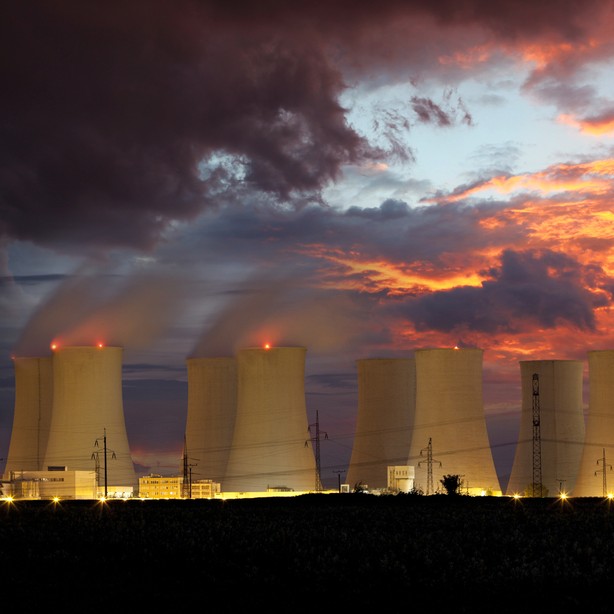
AI Factory: The Trillion-Dollar Race for Digital Energy
No generation in human history has witnessed the speed and scale of infrastructure development as we are seeing today. In the coming years, trillions of dollars will be poured into "AI factories" - vast campuses equipped with advanced processors, networking equipment, cooling systems, and power demands capable of rivaling major cities.
According to McKinsey estimates, infrastructure spending related to AI could exceed $5 trillion by 2030, while JLL projects developers will need approximately 100 gigawatts of new data center capacity during the same period. This expansion is forcing investors to rethink their approach to artificial intelligence.
The Energy Crisis: An Unprecedented Constraint
For the past three years, the focus has primarily been on chips, models, and software. But the scarcest resource in the AI game is energy. This is a zero-sum game.
As the industry collides with the physical limits of the electrical grid, attention and investment are shifting to the energy that will power everything... or not.
Utility companies in North America and Europe are receiving requests for hundreds of megawatts from individual AI campuses. Many now face multi-year wait times to study interconnections, upgrade transmission, and deliver substation capacity before even a single server can be powered up.
| Organization | Energy Strategy | Scale |
|---|---|---|
| Microsoft | Supporting the restart of the nuclear reactor at Three Mile Island | Not publicly detailed |
| Signing agreements related to next-generation nuclear energy | Not publicly detailed | |
| Amazon, Meta, Oracle | Seeking long-term energy deals, production assets, and large-scale infrastructure | Hundreds of megawatts |
Corporate Strategy: Responding to Harsh Realities
This harsh reality is forcing new corporate strategies. Microsoft is supporting the restart of the nuclear reactor at Three Mile Island. Google has signed agreements related to next-generation nuclear energy. Amazon, Meta, Oracle, OpenAI, and others are pursuing long-term energy deals, production assets, and large-scale infrastructure investments to secure power for future expansion.
However, for an elite group of companies, the race for energy began years ago. Before AI factories became Wall Street's favorite investment theme, Bitzero (NASDAQ: AIBZ) had secured cheap power, land, permits, and grid access in Norway, Finland, and North Dakota.
Bitzero: Ahead of the AI Pack
Today, the company controls a development pipeline exceeding one gigawatt of potential capacity, positioning it in a small group of operators entering the current AI construction boom with energy already secured, rather than stuck in waiting lines.
Years before AI sparked a global race for data center capacity, Bitzero focused on the simpler work of Bitcoin mining. They secured cheap power first, then built computing infrastructure on top of it.
| Location | Potential Capacity | Key Features |
|---|---|---|
| Namsskogan, Norway | 110 MW (under contract) | Direct access to 132 kilovolt transmission network, cheap hydropower |
| Kokemki, Finland | 520 MW (initial phase) | Land secured, expandable to 1 GW |
| North Dakota | Capacity not disclosed | Not publicly detailed |
Over the years, this approach has led Bitzero to some of the world's most attractive energy markets, particularly Norway and Finland, where abundant hydropower, cool climates, and stable regulatory environments create unusually favorable operating conditions.
The economics are compelling. The board reports all-in power costs of around three to four cents per kilowatt-hour at operations in Norway, allowing the company to mine Bitcoin with estimated costs of around $50,000 per coin—well below industry averages.
Breakthrough: The $2.6 Billion Deal
While competitors struggle with rising energy costs and shrinking profit margins, Bitzero continues to scale and reinvest cash flow into infrastructure. This has formed a larger cryptocurrency mining operation.
The company has assembled a portfolio of sites, transmission access, land, permits, fiber connections, and energy deals spanning Norway, Finland, and North Dakota. Collectively, this portfolio now represents over one gigawatt of potential capacity—a scale that becomes increasingly difficult to replicate as AI developers, cloud providers, and large-scale operators compete for the same resources.
This May, Bitzero (NASDAQ: AIBZ) signed a letter of commitment with OneQode Networks to lease the entire 110-megawatt capacity at the Namsskogan campus. The 15-year lease agreement is valued at approximately $2.6 billion and is expected to support dedicated GPU clusters for enterprise AI, sovereign AI initiatives, and large-scale model training workloads.
For the first time, a third party has signed onto a letter of commitment committing the entire capacity of one of Bitzero's flagship campuses to AI infrastructure under a long-term contract measured in billions rather than projections.
The Future of the Tech Industry: Energy is the New Gold
The OneQode deal comes at a time when AI infrastructure demand is accelerating faster than the industry can build it. Tech companies are no longer talking about data centers in terms of server racks or individual GPU clusters. They're planning campuses measured in hundreds of megawatts and development pipelines measured in gigawatts. They're planning AI factories.
According to Kevin O'Leary, "Mr. Wonderful" from Shark Tank and a major Bitzero sponsor: "When you go looking at opportunities in the US, I would say 50% or more of the data centers that have been announced will not get built because there's no electricity on the grid."
He said, "I don't really look at it as a Bitcoin miner anymore, I look at it as an energy real estate company. It has power under 6 cents per kWh, with land, permits, and water, that's extremely hard to find anywhere in the world."
The AI infrastructure race is also shaping investor attention across the entire tech industry. Super Micro Computer (NASDAQ: SMCI) has emerged as one of the largest suppliers of AI-optimized server systems, while SpaceX (NASDAQ: SPXC) is increasingly seen as an important part of the AI ecosystem through its Starlink satellite network, expanding global connectivity and supporting high-intensity data applications in remote areas.
Together, these companies show that AI is creating opportunities across hardware, telecommunications, and cybersecurity. However, they also highlight a common reality: none of these companies can achieve their full potential without abundant and reliable electricity.
The Market Before the Storm
The AI boom is triggering an unprecedented and sudden surge in natural gas and energy stocks. If you're not paying attention to the energy demands of data centers, you're missing the biggest energy story of this decade.
The amount of money being committed is in the trillions. Hundreds of gigawatts are being planned. The entire energy system is being redesigned to support the new generation of computing. No generation in human history has attempted to build digital infrastructure at this scale, and this is just the beginning.