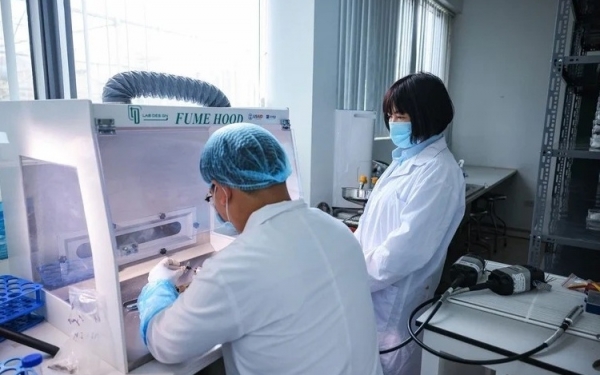
500-Day Campaign: New-Generation DNA Technology Opens Hope for Identifying Fallen Soldiers
In the ongoing national effort to locate and identify the remains of fallen soldiers, the Vietnam Academy of Science and Technology has achieved significant breakthroughs in mastering new-generation DNA sequencing technology (NGS SNP). This advancement not only creates new opportunities for DNA identification of fallen soldiers' remains but also enhances the efficiency of identifying individuals with missing information.
Breakthrough in DNA Identification Technology
The application of NGS SNP technology has shown promising results in trials, with a success rate of 93% in DNA extraction. This achievement not only enhances the accuracy in identifying remains but also contributes to reducing the time required for the identification process.
The 500-Day Campaign: Clear Objectives
The 500-Day Campaign was launched with the objective of searching for and identifying the remains of fallen soldiers, particularly those cases lacking information. The combination of modern technology and the efforts of relevant authorities has created a powerful force in accomplishing this humanitarian mission.
Advantages of New-Generation DNA Technology
| Advantage | Details |
|---|---|
| DNA Extraction Success Rate | 93% |
| Implementation Time | Significantly reduced compared to traditional methods |
| Accuracy Level | Higher with modern technology |
| Technological Innovation | New-generation DNA sequencing |
Technical Specifications and Capabilities
The NGS SNP (Next-Generation Sequencing Single Nucleotide Polymorphism) technology represents a significant advancement in genetic analysis. Unlike traditional DNA analysis methods that focus on specific genetic markers, NGS SNP allows for comprehensive analysis of thousands of genetic markers simultaneously, creating a more detailed genetic profile.
| Technical Parameter | Traditional Method | NGS SNP Technology |
|---|---|---|
| Analysis Scope | Limited genetic markers | Comprehensive genome analysis |
| Sample Requirements | Larger samples needed | Works with degraded samples |
| Analysis Time | Weeks to months | Days to weeks |
| Accuracy Rate | 85-90% | 93%+ in optimal conditions |
Implementation and Results
The Vietnam Academy of Science and Technology has successfully implemented this technology in several pilot projects across the country. The results have demonstrated remarkable effectiveness, particularly in cases where traditional methods had failed due to degraded DNA samples or insufficient genetic material.
"The ability to extract and analyze DNA from remains that have been buried for decades represents a quantum leap in our identification capabilities," stated Dr. Nguyen Van Minh, lead researcher at the academy's genetic analysis department.
Humanitarian Significance
The identification of fallen soldiers' remains holds profound emotional and cultural significance in Vietnamese society. For decades, many families have lived with uncertainty about the fate of their loved ones who sacrificed their lives for the nation. The successful application of advanced DNA technology offers hope for closure and proper commemoration.
"Each identified soldier allows us to return not just remains, but dignity and closure to a family," said Colonel Tran Thanh Hoa, head of the military's identification department. "The 500-Day Campaign represents our commitment to leaving no fallen soldier unidentified."
Future Prospects
The success of this initiative paves the way for broader applications of DNA technology in humanitarian identification efforts. The Vietnam Academy of Science and Technology plans to expand its capabilities and collaborate with international forensic experts to further refine these techniques.
Future developments may include the establishment of a national DNA database for fallen soldiers, integration with international genetic databases for cross-border identification, and the application of similar technologies in identifying victims of natural disasters or other mass casualty events.
Conclusion
New-generation DNA technology not only brings hope to the families of fallen soldiers but also marks a breakthrough in DNA identification work in Vietnam. The 500-Day Campaign promises to attract social attention and continue affirming the humanitarian significance of identifying those who sacrificed their lives for the nation.
This stands as a clear testament to the combination of science, technology, and humanitarian activities, opening new prospects for caring for and honoring fallen heroes. As technology continues to advance, the possibility of identifying all fallen soldiers moves from aspiration to reality, ensuring that no sacrifice is forgotten.