Decree No. 272/2026/NĐ-CP: Institutional Lever for Energy Projects to Enter Acceleration Phase
The Government has issued Decree No. 272/2026/NĐ-CP, a legal document expected to remove institutional bottlenecks and provide a solid legal foundation to accelerate the implementation of key energy projects in the coming period. This is considered a significant boost, helping Vietnam's energy sector overcome challenges in planning, administrative procedures, and capital sources, towards the goal of sustainable development.
Background for the Decree
In the context of Vietnam's increasing energy demand and strong commitments at COP26 to achieve net zero emissions by 2050, accelerating the development of renewable energy projects and key energy projects has become an urgent requirement. However, many projects have been delayed due to institutional barriers, complex administrative procedures, and lack of effective investment incentive mechanisms.
According to the Ministry of Industry and Trade, there are currently more than 50 large energy projects awaiting approval or implementation with a total capacity of over 30,000 MW, including many renewable energy projects and large-scale LNG power projects. The issuance of Decree No. 272/2026/NĐ-CP is seen as a breakthrough solution to address these obstacles.
Main Contents of Decree 272/2026/NĐ-CP
Decree No. 272/2026/NĐ-CP focuses on the following main contents:
- Simplification of administrative procedures: Reducing the time for appraisal and approval of key energy projects from 45 days to 30 days for projects under the Government's decision authority.
- "One-stop" inter-connected mechanism: Establishing a "one-stop" inter-connected mechanism between ministries, sectors, and localities to simultaneously handle procedures on land, environment, and planning for projects.
- Risk-sharing mechanism: Issuing a risk-sharing mechanism between the state and investors for renewable energy projects and LNG power projects.
- Special incentives: Specifying special incentives on taxes, fees, land rent, and support for accessing preferential capital for clean energy projects.
- Competitive bidding mechanism: Innovating the bidding mechanism for selecting energy project investors, focusing on economic efficiency and commitments to develop high technology.
The "One-stop" Inter-connected Mechanism - Breakthrough in Procedures
Among the important contents, the "one-stop" inter-connected mechanism is considered the most significant breakthrough of Decree No. 272/2026/NĐ-CP. Accordingly, key energy projects will be licensed through a single focal point, minimizing waiting time and legal compliance costs for investors.
| Comparison of licensing procedures before and after applying Decree No. 272/2026/NĐ-CP | ||
|---|---|---|
| Criteria | Before application | After application |
| Number of involved agencies | Over 10 agencies | 01 inter-connected focal point |
| Appraisal time | 45-60 days | 30 days |
| Number of document submissions | Over 5 times | 01 time |
| Compliance costs | 3-5% of total capital | 1-2% of total capital |
Risk-sharing Mechanism - Solution for Large-scale Projects
Decree No. 272/2026/NĐ-CP also stipulates a risk-sharing mechanism between the state and investors, especially for renewable energy projects and LNG power projects. Specifically:
- The state will ensure electricity purchase prices for wind power and solar power projects for 20 years at competitive rates.
- For LNG power projects, the Government will support a portion of the costs for building infrastructure for receiving and processing LNG.
- Flexible price adjustment mechanism when there are fuel market fluctuations.
- Supporting investors in resolving land clearance and compensation issues if any.
Impact on Key Energy Projects
The issuance of Decree No. 272/2026/NĐ-CP is expected to have a positive impact on key energy projects being implemented and planned for implementation in the coming time. Specifically:
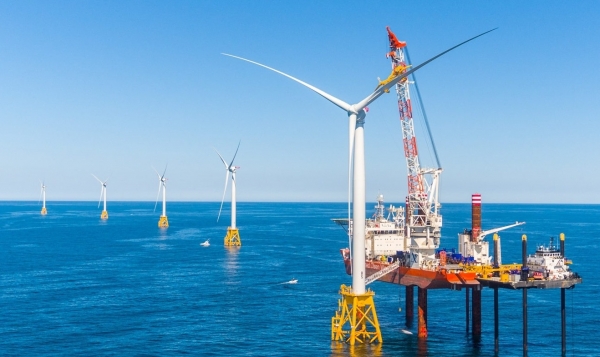
- Offshore wind power: Accelerating the progress of offshore wind power projects with a total expected capacity of 10,000 MW by 2030.
- Solar power: Creating conditions for solar power projects applying new, high-efficiency technologies to be widely deployed.
- LNG power: Attracting strategic investors into large-scale LNG power projects, ensuring national energy security.
- Nuclear power: Providing a legal basis for researching and preparing necessary conditions for future nuclear power projects.
Reactions from Experts and Investors
Decree No. 272/2026/NĐ-CP has received positive responses from experts and investors. Mr. Trần Văn Lâm, an energy expert, commented: "This is the right and timely step of the Government, creating an important lever for Vietnam's energy sector to overcome the difficult period and move towards sustainable development goals."
According to a survey by the Vietnam Energy Association, over 80% of investors participating in the Vietnamese energy market believe that Decree No. 272/2026/NĐ-CP will create a more transparent and effective investment environment. Many large energy corporations such as Vietnam Electricity (EVN), PetroVietnam, and international energy groups have expressed readiness to invest in key energy projects in Vietnam.
Prospects and Challenges
However, the implementation of Decree No. 272/2026/NĐ-CP also poses challenges that need to be addressed:
- Institutionalization: The timely issuance of detailed guidelines for the decree's provisions is needed to avoid the situation of "documents on paper".
- Implementation capacity: Enhancing the capacity of state management agencies at local levels to effectively implement the new regulations.
- Technology transfer: Ensuring that new energy projects apply advanced, environmentally friendly technologies.
- Energy security: Balancing renewable energy development and ensuring national energy security.
According to the Ministry of Industry and Trade, with the issuance of Decree No. 272/2026/NĐ-CP, Vietnam expects to achieve energy development goals by 2030, including:
- Total capacity of renewable energy sources reaching 25,000 MW, accounting for 30% of the total power system capacity.
- Reducing CO2 emissions by 18% compared to 2020.
- Ensuring national energy security with a localization rate of over 50%.
Conclusion
Decree No. 272/2026/NĐ-CP is considered a significant boost, creating an institutional lever for energy projects to enter the acceleration phase. With breakthrough mechanisms in administrative procedures, risk-sharing, and investment incentives, the decree not only helps solve immediate problems but also creates a solid foundation for the sustainable development of Vietnam's energy sector in the coming period.
However, for the decree to be effective, the active involvement of ministries, sectors, localities, and the business community is needed. Only then can Vietnam fully utilize its energy potential, moving towards green development goals and achieving net zero emissions by 2050.
#Decree272 #VietnamEnergy #WindPower #SolarPower #LNGPower #SustainableDevelopment