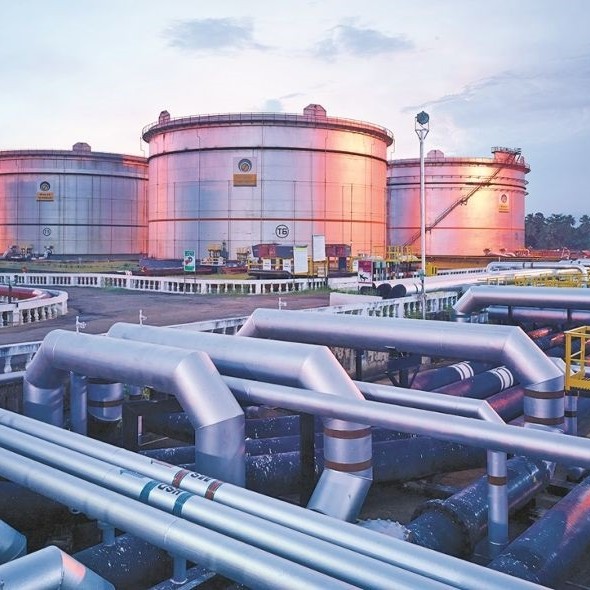
India: The New Oil Power Reshaping the Global Fuel Market
For decades, Saudi Arabia has served as the world's crude oil "swing" producer, with the ability to adjust production levels flexibly. When more crude oil is needed, Riyadh opens the taps. When there's a surplus, they close them. But while the world watches who controls crude oil production, another "swing" producer has quietly emerged—one that trades in diesel, jet fuel, and gasoline rather than crude oil.
That country is India, and they are increasingly controlling the market. When Middle Eastern refineries were damaged in the Iran/US conflict, when Russian diesel exports collapsed under Ukrainian drone attacks, and when Europe once again struggled to find alternative supplies, Indian refineries seized the opportunity and began sending more cargoes to the highest bidders.
The Rise of a Refining Superpower
This sounds like a classic "swing" supplier. According to Kpler data, India is on track to export approximately 1.4 million barrels per day of refined products in July. This figure is about 50% higher than May's levels and represents the highest monthly export figure since last September.
These oil barrels aren't going to a single destination. They're going to where prices are highest—wherever shortages exist. Two months ago, over 80% of India's diesel exports went to Africa. Europe received nothing. This was because Europe had largely shut itself off to fuels refined from Russian crude. Meanwhile, Africa suddenly needed alternative supplies after the Hormuz crisis disrupted Middle Eastern trade flows. Indian cargoes simply changed direction.
| Month | Refined Product Exports (million barrels/day) | Change from Previous Month | Primary Destinations |
|---|---|---|---|
| May | ~0.93 | - | Africa, Southeast Asia |
| June | ~1.2 | Increase of ~29% | Africa, Europe |
| July (projected) | ~1.4 | Increase of ~17% | Global (demand-driven) |
India's Flexible Strategy
Unlike many refining centers, India doesn't depend on a single crude oil source. According to Kpler, Russian oil now accounts for more than half of India's imports this month, but refineries also purchase from Iraq, Saudi Arabia, UAE, the United States, West Africa, and Latin America. If one supplier encounters problems, India buys from elsewhere. Indian refineries don't really care which barrel of oil comes from where as long as they can profit from turning it into something more valuable.
And right now, refined products are certainly valuable because the real tightening in today's oil market is in refined products.
First, Russia's refining system has been under attack for months by Ukrainian drone strikes, forcing Moscow to restrict diesel, gasoline, and jet fuel exports. And some Middle Eastern refineries are still operating at reduced capacity after months of conflict. Diesel inventories in Europe remain extremely tight. Jet fuel is hardly abundant either.
Sustainable Growth
India is fortunate to be one of the few places where refining capacity is increasing rather than declining. The International Energy Agency projects India's refining capacity will increase by another 15% by 2030. Investment in the refining sector has increased by an average of 23% over the past five years.
India imports nearly 90% of its crude oil. For most countries, this sounds like an energy security problem. But India has turned it into a business model. Buy crude oil from whoever offers the best economic terms. Turn it into higher-value products. Export those products to where profit margins are strongest.
Lessons from Saudi Arabia
This is a strategy that looks smarter as the global fuel market begins to fragment. The government understands this too. This week, New Delhi nearly doubled export taxes on diesel and jet fuel while reducing the tax on gasoline exports. If diesel and jet fuel supplies tighten further, the government wants those barrels available domestically before they reach foreign buyers.
| Feature | Saudi Arabia (Crude Oil) | India (Refined Products) |
|---|---|---|
| Role | Adjusts crude oil production | Manages refined product flows |
| Supply Source | Domestically produced crude | Diversified (Russia, Iraq, Saudi Arabia, etc.) |
| Exports | Crude oil | Diesel, gasoline, jet fuel |
| Growth Rate | Stable | Strong growth (15% by 2030) |
The Future of India's Refining Industry
That's the balance that comes with being a refining superpower. Export enough to capitalize on global shortages. Keep enough at home to avoid creating shortages for yourself.
Saudi Arabia still determines who gets more crude oil. But India is increasingly determining who gets more diesel, jet fuel, and gasoline. When the world suddenly needs an extra diesel, jet fuel, or gasoline cargo, there's a good chance it's leaving an Indian refinery.
And as refining capacity continues to grow while other regions struggle with aging facilities, war damage, and insufficient investment, India's role in balancing the global fuel market is likely to grow with it.
Written by Julianne Geiger for Oilprice.com