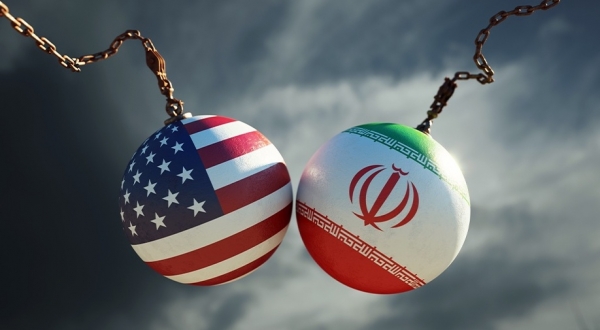
US-Iran Conflict: Risk of Escalation to Major War in the Middle East
In the context of rapidly escalating tensions in the Middle East, the United States has conducted a series of airstrikes targeting Iranian positions in the region, leading to decisive countermeasures from Tehran. These developments have raised concerns that the conflict between the two powers could escalate into a major war, threatening to disrupt the established ceasefire and destabilize the already volatile Middle Eastern region.
Background of Escalating Tensions
The relationship between Washington and Tehran has remained tense for decades, but the situation has become particularly dangerous in recent months. After the US withdrew from the 2015 nuclear agreement and reimposed economic sanctions, Iran began reducing its compliance with the agreement's provisions, including enriching uranium beyond permitted limits.
Tensions escalated significantly after an American drone was shot down by Iran in June 2019, followed by attacks on oil tankers in the Gulf of Oman in July 2019. The climax came with the assassination of Qasem Soleimani, commander of the Islamic Revolutionary Guard Corps (IRGC) Quds Force, in a US airstrike in Baghdad in early 2020.
Latest Developments: From Airstrikes to Retaliation
In recent days, the situation in the Middle East has become extremely tense as the US conducted airstrikes against multiple Iranian targets in Syria and Iraq. These attacks were carried out after Washington accused Iran of being behind missile attacks on US military facilities in the region.
According to US Department of Defense sources, the airstrikes targeted Iranian military infrastructure, including weapons depots, command centers, and missile deployment points. Meanwhile, Iran quickly issued threats of retaliation, stating that it "will not forget" American actions and will "respond decisively."
Tehran subsequently conducted missile and drone attacks on US military targets in Iraq, while the IRGC announced it had launched ballistic missiles at Ain al-Assad airbase, where US troops are present.
Analysis of Regional Impacts
The conflict between the US and Iran is not limited to these two nations but risks spreading throughout the Middle East, where many countries have complex relationships with both sides.
Israel and US Allies
Israel, which views Iran as an existential threat, is likely to support American actions and may even participate in military operations if the conflict escalates. Countries such as Saudi Arabia, the United Arab Emirates (UAE), and Egypt, which have tense relations with Iran, may also support the US or even join an anti-Iran coalition.
Iraq and Iran-Influenced Countries
Iraq, bordering both Iran and hosting US military forces, is in an especially precarious position. The Baghdad government has called for restraint and emphasized that Iraq does not want to become a battlefield for conflicts between great powers. However, Iran-backed militia forces in Iraq may participate in actions against the US, further complicating the situation.
Syria, where both the US and Iran have military presence, could become a new hotspot. Meanwhile, Lebanon, where Hezbollah—an Iran-backed militia—exerts strong influence, could also be drawn into the conflict.
International Perspectives
The international community has expressed deep concern about the risk of escalating conflict between the US and Iran. The United Nations has called on both sides to exercise restraint and engage in dialogue, while European powers such as the UK, France, and Germany have also expressed concern and called for de-escalation.
Russia and China, two powers that support Iran, have criticized American actions and called for resolving the conflict through diplomacy. Meanwhile, Middle Eastern countries like Turkey and Jordan have called for calm and avoided military conflict.
Future Prospects
The future of the situation in the Middle East depends heavily on how the US and Iran choose to act in the coming days. If both sides continue to escalate, the risk of a major conflict is high and could lead to:
- Significant casualties, both military and civilian
- Global economic disruption due to oil supply disruptions from the Middle East
- Increased activity of terrorist groups taking advantage of the chaos
- Formation of new military blocs and restructuring of the regional order
However, there is still a possibility that both sides will seek to de-escalate tensions, especially as both the US and Iran face other challenges. The US is preparing for a presidential election, while Iran is dealing with economic problems due to sanctions and domestic protests.
| Comparison of Military Capabilities: US vs. Iran in the Middle East | |
|---|---|
| United States | Iran |
| Military bases in Iraq, Afghanistan, Kuwait, Qatar, UAE | Presence in Syria, Iraq, Lebanon, Yemen |
| 5th Fleet naval forces in the Gulf | Smaller navy but capable of blocking the Strait of Hormuz |
| Advanced military technology, strong air force and navy | Focus on ballistic missiles, small vessels, drones |
| Key Stakeholders and Their Positions | ||
|---|---|---|
| Party | Position | Possible Actions |
| United States | Reduce Iranian influence, protect allies | Enhance military presence, impose sanctions |
| Iran | Counter US military presence, protect influence | Missile attacks, support militia forces |
| Iraq | Avoid becoming battlefield, maintain stability | Call for restraint, negotiate peace |
| Israel | Prevent Iranian nuclear program | Support US, attack if necessary |
Conclusion
The conflict between the US and Iran in the Middle East is at a dangerous threshold, with the risk of escalating into a major war that could destabilize the entire region and affect global security. While both sides have legitimate reasons for their actions, wisdom and restraint are necessary to avoid catastrophic consequences.
The international community needs to intensify diplomatic efforts to promote dialogue between Washington and Tehran while seeking solutions to the core issues causing tensions. Only through diplomacy and cooperation can a sustainable solution to the situation in the Middle East be achieved, ensuring peace and stability for the region and the world.
In the current context, all eyes are on the next developments, with the hope that American and Iranian leaders will make wise decisions, prioritizing peace over conflict.