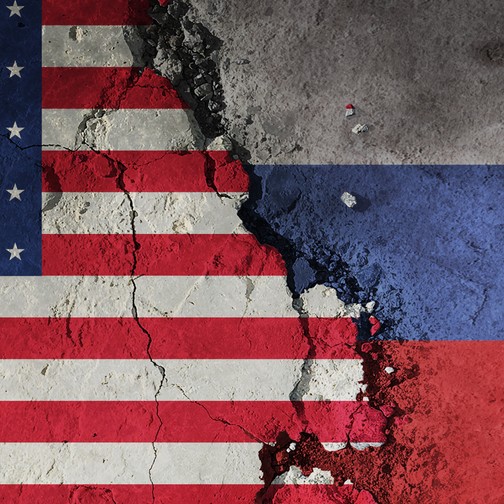
Rubio-Lavrov Meeting: No Breakthrough in U.S.-Russia Diplomacy on Ukraine
The international community had been anticipating a significant diplomatic development in the more than four-year Russia-Ukraine conflict, but the recent meeting between U.S. Secretary of State Marco Rubio and Russian Foreign Minister Sergei Lavrov failed to produce any promising signals toward peace.
The July 23 encounter between these top diplomats from opposing nations lasted merely 35 minutes, with both sides showing no indication of breakthroughs or reasons for optimism. The brief discussion took place in the Philippines, where both officials were attending regional events, highlighting the informal and somewhat constrained nature of this crucial diplomatic exchange.
Background of the Meeting
The Rubio-Lavrov conversation occurred against a backdrop of complex geopolitical maneuvering. The United States has been attempting to mediate a peace agreement, but these efforts have stalled as the Trump administration shifted focus to conflicts with Iran. Meanwhile, the Kremlin has shown no signs of softening its maximalist war demands, maintaining positions that have consistently blocked previous diplomatic initiatives.
This meeting represents one of the highest-level direct contacts between the two nations since the escalation of the conflict in 2022. The timing is particularly significant as both sides appear to be reassessing their strategies amid changing battlefield dynamics and shifting international alliances.
Reactions to the Diplomatic Exchange
When questioned by RFE/RL reporters, Rubio characterized the conversation as "good" and "straightforward" but emphasized that new proposals would be necessary following the failure of previous peace initiatives. He declined to provide specific details about the discussion.
"The United States... is ready to play a constructive role in ending a meaningless war," Rubio stated when asked about the conflict. When pressed about whether the meeting might yield breakthroughs, the Secretary of State tempered expectations about rapid progress.
"Do you think we're going to solve the Ukraine war in 30 minutes here? That's not how it works," he remarked.
In contrast, when RFE/RL asked Lavrov when Russia would end the war, the Russian foreign minister appeared to ignore the question or not hear it, offering no substantive response on this critical issue.
Russia's Position
In an official statement, Russia's Ministry of Foreign Affairs indicated that Lavrov expressed Moscow's dissatisfaction with U.S. weapons supplies to Ukraine. The Russian delegation also accused European allies of Ukraine of pursuing "destabilizing policies" seeking "Russia's strategic defeat."
Lavrov referenced the meeting between President Donald Trump and Vladimir Putin in Anchorage, Alaska. The Russian Foreign Ministry claimed that the Kremlin had been adamant that at Anchorage, Trump and Putin had reached an important agreement to end the Ukraine war. This assertion has been repeatedly denied by Rubio and other U.S. officials.
The Russian delegation maintained its maximalist positions, insisting on complete control over occupied territories in eastern Ukraine, a stance that remains fundamentally incompatible with Ukraine's sovereignty requirements and international law.
Current Battlefield Situation
On the ground, Ukrainian and Russian forces have reached a stalemate, with Russian units advancing at a slow pace and suffering heavy casualties. Ukraine's long-range drone campaign has significantly impacted Russian oil refining infrastructure, causing bottlenecks in fuel production. Meanwhile, Russia continues to devastate Ukrainian cities with ballistic missiles and drone attacks.
The human cost of the conflict continues to mount, with civilian casualties increasing in Kyiv and other urban centers. The war has now extended beyond four years with no clear resolution in sight, despite repeated diplomatic attempts.
| Key Information | Details |
|---|---|
| Russian military casualties | 5,000-6,000 soldiers per week |
| Duration of conflict | Over 4 years |
| Civilian casualties | Sharp increase in Kyiv and other cities |
| Ukraine's tactical approach | Long-range drone attacks against Russian infrastructure |
Challenges to Peace
Rubio acknowledged that both Russia and Ukraine have strong motivations to end the war, but he identified the primary barrier as finding terms acceptable to both sides.
"That's the challenge - an ending that both sides can accept," he stated. Rubio emphasized that any peace agreement would require "new ideas and some new concepts." Washington is prepared to contribute proposals, he said, "if there's an opportunity and the right conditions."
Previous Proposals No Longer Viable
The United States has been the largest supplier of weapons and military equipment to Kyiv since the full-scale invasion began in February 2022. However, since Trump returned to the White House in January 2025, the flow of weapons has slowed, though supplies continue through European allies—a development that has particularly irritated Moscow.
When asked whether Lavrov called on Washington to stop supplying weapons to Ukraine, Rubio indicated no change in U.S. policy, stating that the United States continues to sell weapons through NATO mechanisms while simultaneously pursuing diplomatic channels.
"We want the war to end," Rubio said. "We're ready to play any constructive role we can to end the war."
President Trump's Perspective
Rubio indicated that Trump remains focused on ending the conflict because "the killing stops" and Ukraine can rebuild while young Russian soldiers are no longer being killed.
"He thinks it's a stupid war. He thinks it's a meaningless war," Rubio said of Trump's assessment of the Ukraine conflict.
When asked by RFE/RL whether Trump and Ukrainian President Volodymyr Zelenskyy might meet soon, Rubio said U.S. officials maintain regular contact with Kyiv and have met with Ukrainian representatives more frequently than with Russian officials.
Rubio also noted that he did not discuss Russia's war in Ukraine with Chinese Foreign Minister Wang Yi in separate conversations because they had "other things to talk about," suggesting that while the Ukraine conflict remains a priority, it exists within a broader diplomatic context.
Future Outlook
Kremlin spokesperson Dmitry Peskov expressed little optimism about the Lavrov-Rubro meeting, indicating that Moscow does not expect immediate diplomatic breakthroughs. Meanwhile, diplomats worldwide continue to seek diplomatic pathways to end this prolonged and costly conflict.
Despite the lack of immediate progress, the meeting demonstrates that both sides are maintaining dialogue channels—a factor considered essential for any future peace process. The challenge remains bridging the fundamental gap between Russia's maximalist demands and Ukraine's insistence on sovereignty and territorial integrity.
As the conflict enters its fifth year, the international community faces the difficult task of balancing support for Ukraine with the urgent need to prevent further escalation and suffering. The brief Rubio-Lavrov meeting, while not producing breakthroughs, may represent a necessary step in maintaining diplomatic channels that could eventually lead to a resolution.