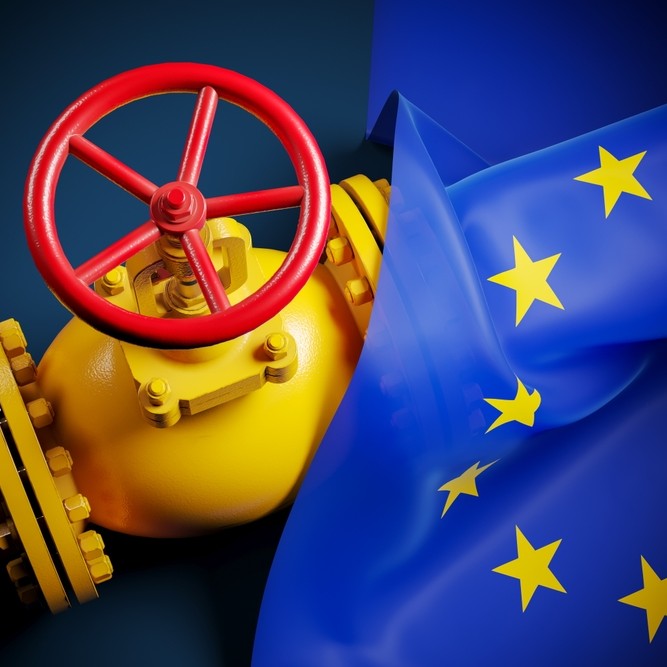
European Commission Recommends Waiving Penalties for Methane Emissions Regulations Amid Rising Energy Security Concerns
The European Commission (EC) has informed EU governments that they should waive penalties for oil and gas companies violating methane emission regulations for the next three years, due to pressure from the US government requesting the abolition of these regulations. Although this decision is not binding, many member states are expected to follow the EC's recommendation.
Reasons Behind the Decision
The EC's decision came after the United States, Qatar, along with oil and gas industry groups and most EU member states expressed concerns about strict regulations and requested changes. Many countries worry that Europe will not be able to ensure energy supply when the regulations come into effect in January 2027, if energy companies cannot provide imported gas meeting the EU's strict emission standards.
The EC stated that these changes are reasonable "in the context of the global energy market being tight due to the prolonged blockade at the Strait of Hormuz." This strait, which connects the Persian Gulf with the Gulf of Oman and the Arabian Sea, has been nearly completely closed since February following the US and Israel-led conflict against Iran. It normally transports about 20% of global oil and gas supplies when operating normally.
EU Climate Policy
The EU's climate policy, one of the first in the world, was adopted in 2024 to control methane leaks to combat climate change. This policy establishes the EU's first legal framework for measuring, reporting, and verifying methane emissions in the energy sector.
| Methane and Climate Change | Impact |
|---|---|
| Methane's Contribution | Accounts for approximately 30% of global warming since the Industrial Revolution |
| Energy Sector's Contribution | More than 35% of human-caused methane emissions |
| Methane's Warming Effect | 80 times more potent than CO2 over a 20-year period |
Despite the launch of the Global Methane Pledge at the COP26 conference in 2021, many countries are still lagging in achieving their methane targets.
Reactions from the Environmental Community
The postponement of enforcement is expected to help the EU avoid supply chain disruptions. When the regulations take effect, non-compliant companies could face penalties equivalent to up to 20% of annual revenue. However, critics argue that instead of completely scrapping the regulation, the EC could have amended the law to implement it gradually to help Europe begin addressing methane emission issues.
Esther Bollendorff, Director of the Fossil Fuel Program at Climate Action Network Europe, pointed out that "a three-year penalty holiday, initiated by unfounded energy security concerns, could facilitate US methane gas shipments." She emphasized that these recommendations "should not prevent member states from implementing strict penalty systems" and that such actions are "necessary to ensure that companies are held accountable for their pollution."
Pressure from the United States and Other Changes
The United States has been highly critical of this law and other EU climate policies. US Energy Secretary Chris Wright, along with Algeria, Nigeria, and Qatar, warned the EU in June about potential disruptions to the region's oil and gas supplies. A group of 17 EU member states have also requested a delay in implementing the law.
The EU is currently considering other changes to its climate policy, which could trigger reactions from environmental advocates. The EC has proposed changes aimed at slowing the reduction of greenhouse gas emission limits for businesses as part of a potential reform. These reforms would ease regulations for the EU's Emissions Trading System and allow businesses more time to reduce carbon emissions than previously planned.
| Proposed Changes | Current Deadline | New Proposed Deadline |
|---|---|---|
| Greenhouse gas emission limits | 2034 | 2038 |
EU Climate Minister Wopke Hoekstra stated: "We are adopting a more business-friendly approach, and I would say, smarter approach." Meanwhile, the EC has assured member states that these changes will still ensure that the Emissions Trading System (ETS) aligns with the EU's goal of reducing carbon emissions by 90% by 2040 compared to 1990 levels.
Pressure from the United States and other countries, along with prolonged global fuel shortages, has prompted the European Commission to recommend temporarily waiving penalties for oil and gas companies violating methane emission regulations, causing concern among environmental advocates. Additionally, there are growing concerns that the EU's strong climate policy may be weakened if other regulations are implemented before it can be enforced.
As the global energy landscape continues to evolve, the EU faces the challenge of balancing climate commitments with energy security, a dilemma that will likely shape environmental policy for years to come.