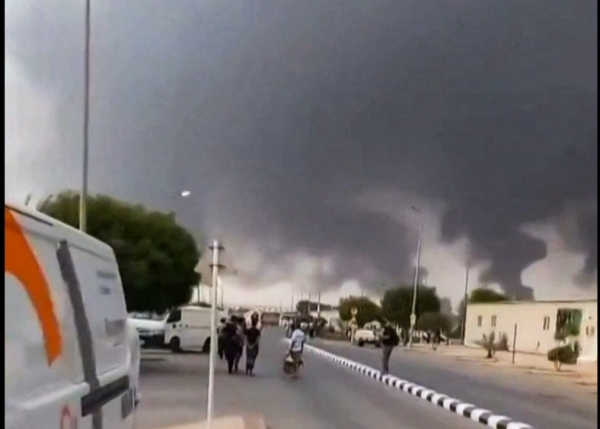
Houthi Forces Attack Saudi Oil Facilities, Escalating Middle East Tensions
In a significant escalation of regional tensions, Houthi forces in Yemen have conducted a series of drone attacks targeting critical oil infrastructure facilities in Saudi Arabia on July 26. These attacks have heightened an already volatile situation in the Middle East, one of the world's most volatile geopolitical hotspots.
Background on Middle East Tensions
The Middle East has long been recognized as a region of significant instability, characterized by complex conflicts and geopolitical rivalries. The ongoing conflict in Yemen, which began in 2014, has evolved into a proxy war between the Iran-backed Houthi rebels and the Saudi Arabia-backed Yemeni government.
Recent escalations between Iran and Western powers, coupled with the United States' withdrawal from the 2015 nuclear agreement in 2018, have further complicated the situation. Drone and missile attacks against energy infrastructure have emerged as a persistent threat to regional stability, with potential global ramifications.
Details of the July 26 Attack
On July 26, Houthi forces claimed responsibility for a series of drone attacks targeting oil facilities in Saudi Arabia. According to announcements from the rebel group, the attacks specifically targeted locations in western and southern regions of the kingdom.
While Saudi Arabia has not yet released detailed information about the extent of the damage, sources indicate that several oil infrastructure facilities sustained damage. These attacks come just months after the September 2019 assault on the Abqaiq refinery and Khurais oil field, which caused the largest disruption to oil production in history.
Impact on Global Energy Markets
Attacks on Saudi Arabia's oil infrastructure can have profound implications for global energy markets. As the world's largest oil exporter, any disruption to Saudi Arabia's operations can trigger significant fluctuations in oil prices.
| Potential Impact | Level of Impact |
|---|---|
| Increase in crude oil prices | High |
| Disruption to supply chains | Moderate |
| Rise in energy costs | High |
| Financial market volatility | Moderate |
Energy market analysts predict that oil prices could increase by 5-10% in the short term if the attacks cause significant damage. However, the long-term impact will depend on the extent of the damage and the speed at which affected facilities can be restored to operational capacity.
Reactions from Stakeholders
Saudi Arabia: The Saudi government has strongly condemned the attacks, describing them as "unacceptable" and pledging to protect the kingdom's critical infrastructure. Minister of Energy Prince Abdulaziz bin Salman affirmed that Saudi Arabia possesses sufficient capacity to handle any operational disruptions.
Houthi Forces: The Houthi rebels have stated that these attacks are part of an "economic war" against Saudi Arabia, emphasizing they will continue targeting Saudi interests until the kingdom ceases its intervention in Yemen and lifts the economic blockade.
United States: The U.S. administration has expressed deep concern about the attacks. Secretary of State Antony Blinken suggested Iran's involvement in supporting the Houthis and called on the international community to strongly condemn such actions.
Ministry of Foreign Affairs of Vietnam: Vietnam has expressed deep concern about the escalating tensions in the Middle East, calling on all parties to exercise restraint, enhance dialogue, and resolve differences through peaceful means.
Future Outlook for the Region
Recent attacks demonstrate that energy infrastructure in the Middle East remains an attractive target for opposing forces. This raises critical questions about regional and global energy security.
Experts suggest that a comprehensive political solution to the Yemeni conflict is necessary to mitigate energy security risks. Simultaneously, oil-exporting nations should increase investment in infrastructure security and diversify their markets to reduce dependence on single transportation routes.
Given the current situation, global energy markets may continue to experience volatility in the coming days as investors respond to the latest attack news and potential Saudi Arabian responses.
Closely monitoring developments in the Middle East is essential for energy-importing nations, including Vietnam, to make timely adjustments in energy policy and ensure national energy security.