#OilRefining #OilField #Singapore #China #Energy #OilPrice #OilGasTechnology #GlobalEconomy #LNG #ElectricVehicles
😲 If profit margins continue to decline sharply in the next 6 months, will a series of Asian oil refineries be forced to close like previous energy crises 🌿🤔
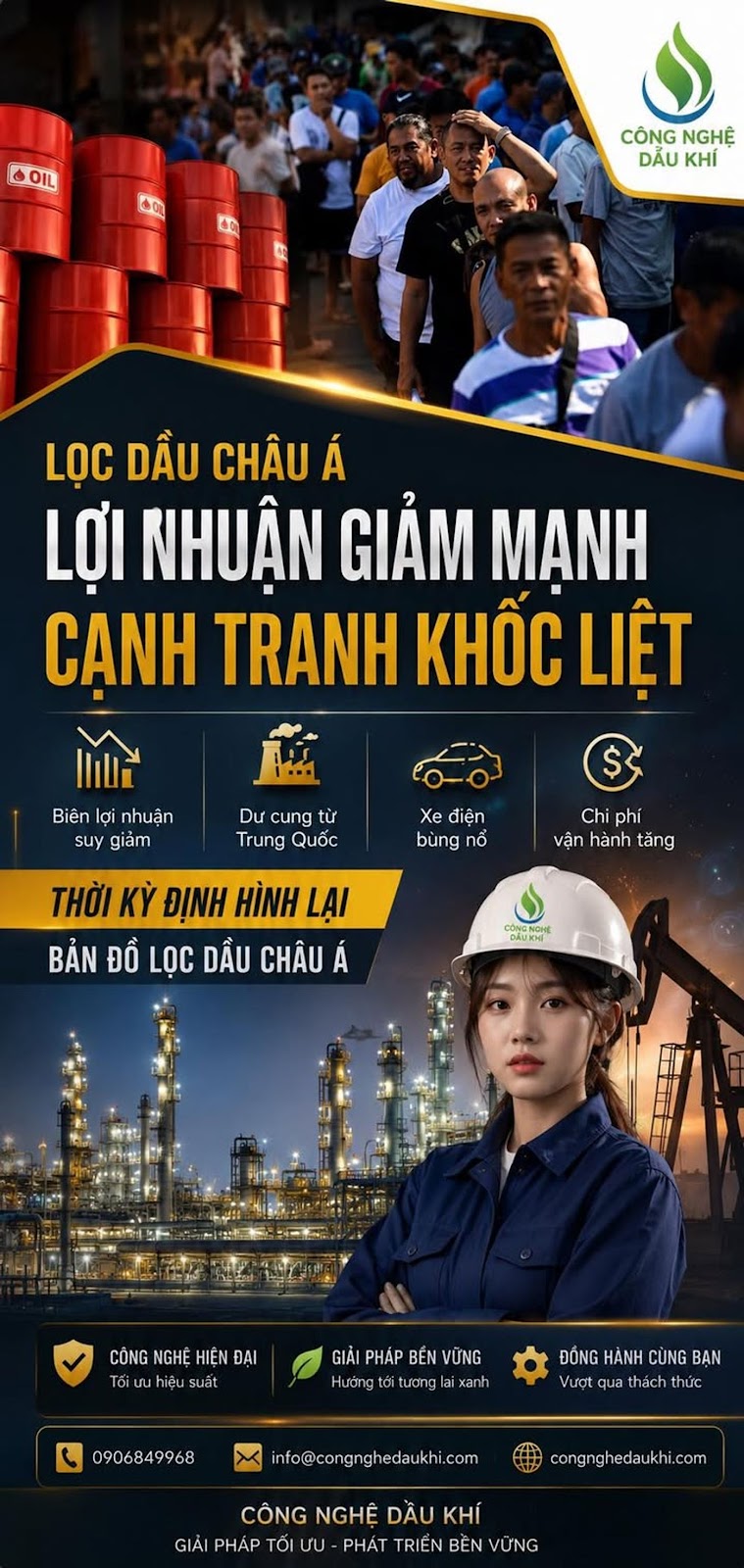
The Asian oil refining industry is experiencing the strongest profit squeeze since the 2022 energy boom. From Singapore, South Korea to Japan, many large oil refining complexes are facing extreme pressure as fuel demand weakens while new supply continues to increase.
In particular, China is becoming the focus of shaking the entire industry as many new factories come into operation, creating a gasoline oversupply situation in the region. Meanwhile, global economic growth is slower than expected, causing fuel demand to no longer boom like in the post-Covid-19 period.
📊 The biggest pressure table for the Asian oil refining industry in 2026
Impact Factor
China has an excess supply of fuel. Crack spread prices dropped sharply
Electric vehicles grow rapidly Gasoline demand weakens
Global economic slowdown Lower diesel consumption
New factory in the Middle East Fierce export competition
Operating costs increase. Profits erode
In Singapore, oil refining profit margin used to be a "money printer" during the period of shocking oil prices in 2022. But by 2026, many businesses only reached the threshold enough to maintain operations instead of creating sudden profits.
📉 Compare the current situation with the previous boom period
Profit Status Stage
2022 Extremely high profits due to energy crisis
2024 Starts to decline sharply
2025 Many factories reduce capacity
2026 Competing for survival
Some large oil refining corporations in Korea and Japan have begun to cut production to save costs. This shows that the market is entering a much more intense purification cycle.
In this competition, modern integrated petrochemical complexes such as those in the Middle East have a clear advantage over traditional oil refineries in Japan or Korea. Businesses that can produce both fuel and chemical raw materials will be more resilient to oil price fluctuations.
📌 These models have great advantages
Competitiveness Model
Integrated petrochemical complex Very strong
Small-scale factory Weak
Old technology factory High risk of loss
Combination of LNG and chemicals Has long-term potential
Meanwhile, the Philippines had to increase fuel subsidies for public transport drivers to reduce the pressure on people from escalating fuel prices. This is a sign that the impact of the oil market is no longer just on businesses but has spread directly to social life.
💰 If oil prices continue to stay high and refining profits continue to decline, transportation prices and commodity costs in many Asian countries may increase by millions of VND per month for large logistics and transportation businesses.
🌍 It is worth noting that the current competition is not just an oil story anymore. This is a race between traditional fossil energy and the accelerating wave of electric vehicles, clean energy and green hydrogen globally.
Many experts believe that the period 2026–2030 will be a period of "reshaping the Asian oil refining map", where businesses that are slow to convert technology are at risk of being eliminated from the market.
#EnergyCrisis #PetrochemicalRefining #Gasoline Prices #Oil Fluctuations #EV #Hydrogen #CleanEnergy #AsianEconomy #OilGas #OilGasTechnology
(Feed generated with)