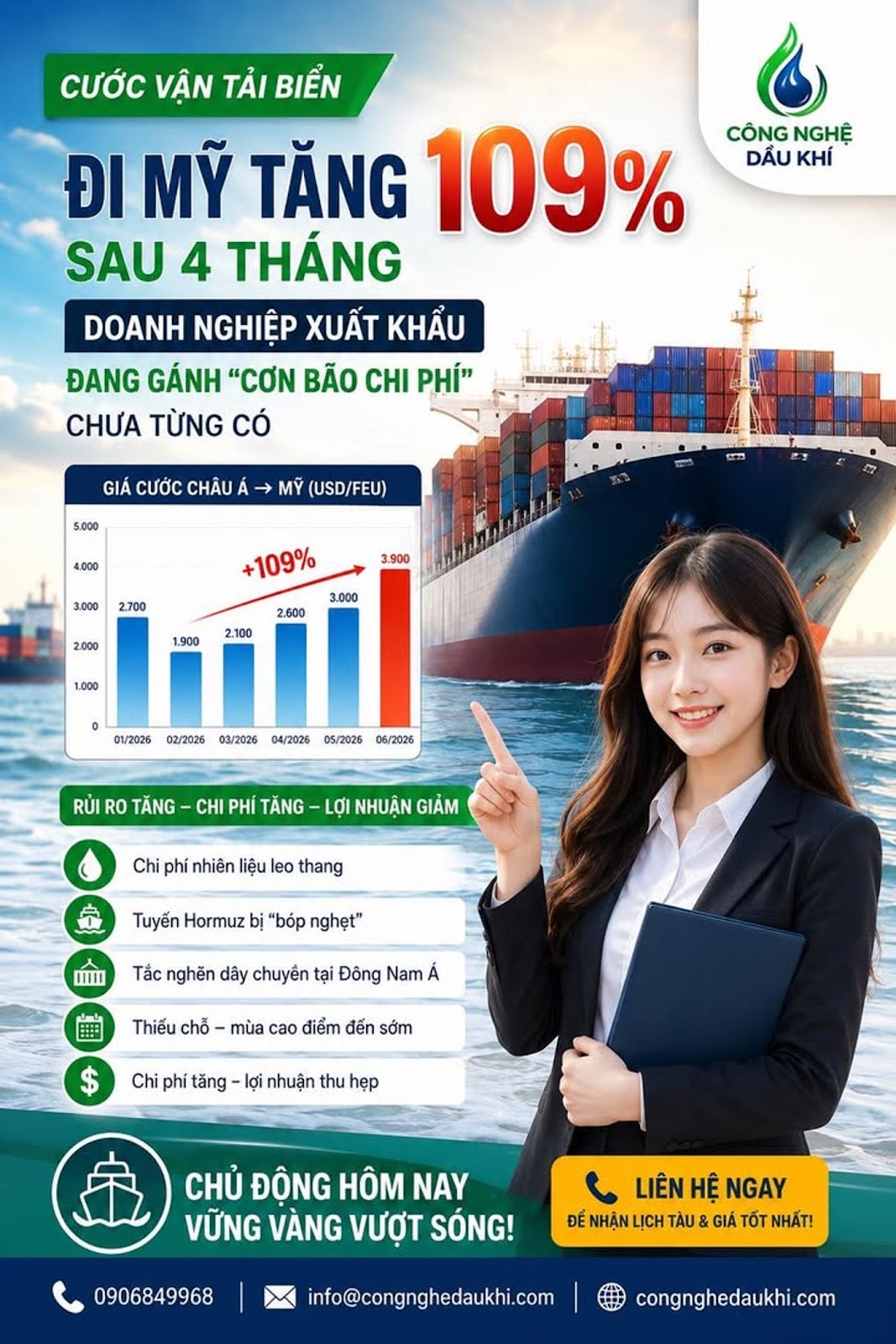
Sea Freight Costs to US Surge 109% in Just 4 Months: Exporters Face Unprecedented "Cost Storm"
The global logistics market is experiencing one of its most volatile periods since the pandemic. According to data released by Xeneta and international logistics firms, sea freight rates from Asia to the US have surged from approximately $1,900/FEU to nearly $3,900/FEU within just four months, representing an increase of about 109%.
What concerns industry observers most is that this upward trend shows no signs of abating, as multiple geopolitical, energy, and supply chain factors simultaneously impact the global sea freight market.
Table: Asia to US Sea Freight Rate Evolution
| Period | Freight Rate (USD/FEU) |
|---|---|
| January 2026 | 2,700 |
| February 2026 | 1,900 |
| March 2026 | 2,100 |
| April 2026 | 2,600 |
| May 2026 | 3,000 |
| June 2026 | 3,900 |
Total increase: approximately 109%
Factors Driving the Freight Rate Surge
Soaring Fuel Costs
The conflict in the Middle East has sent shockwaves through the global energy market. The Strait of Hormuz, which handles approximately 20% of the world's seaborne oil trade, has experienced severe disruptions, causing oil prices and vessel operating costs to rise dramatically.
Shipping companies have continuously added numerous surcharges to their base rates:
- Fuel Adjustment Factor (BAF)
- War Risk Surcharge
- Carrier Risk Surcharge
- Insurance Premiums
All these additional costs are ultimately passed on to customers through increased freight rates.
The Strait of Hormuz: A Global Bottleneck
The Strait of Hormuz represents one of the world's most critical strategic shipping routes. When instability affects this region:
- Vessels must take longer alternative routes
- Transit times are extended
- Cargo capacity is reduced
- Operating costs for shipping fleets increase significantly
According to Reuters, vessel traffic through the region has decreased substantially, with many ships diverting to alternative routes, increasing pressure on the entire international logistics network.
Widespread Congestion at Transshipment Ports
Singapore and Port Klang in Malaysia are handling large volumes of redirected vessels, leading to:
- Slower container turnaround times
- Extended vessel waiting times at ports
- Frequent schedule changes
- Reduced vessel space availability
This chain effect directly impacts all import and export businesses.
Peak Season Arrives Earlier Than Expected
Typically, July through September marks the peak shipping season to the US. However, this year has seen:
- Many companies advancing their shipment schedules
- Fear of further price increases
- Concerns about container shortages
- Worries about lack of vessel space
This has led to a sudden surge in booking demand starting as early as June.
Impact on Vietnamese Enterprises
Table: Impact Assessment on Vietnamese Businesses
| Category | Impact Level |
|---|---|
| Logistics Costs | Very Strong Increase |
| Profit Margins | Significant Reduction |
| On-Time Delivery Capability | Decreased |
| Risk of Losing Customers | Increased |
| Enterprise Cash Flow | High Pressure |
Simple Example of Cost Impact
A container that previously cost approximately:
- 49,000,000 VND
Now costs approximately:
- 101,000,000 VND
Shipping costs alone have increased by more than:
- 52,000,000 VND per container
For Vietnamese export enterprises with thin profit margins such as textiles, furniture, plastics, seafood, or agricultural products, this represents an enormous pressure.
What Businesses Need to Do Right Now
- Book Early - Secure shipping space in advance
- Recalculate Product Pricing - Adjust cost structures to reflect increased logistics expenses
- Renegotiate Delivery Contracts - Discuss terms with customers to share the increased costs
- Monitor Oil Price Fluctuations Closely - Stay informed about factors affecting fuel costs
- Diversify Shipping Routes - Explore alternative transportation methods
- Collaborate Closely with Shipping Companies and Forwarders - Maintain strong communication channels
Market Perspective
Historically, when sea freight costs rise significantly, global commodity prices tend to follow several months later. Electronics, home appliances, food products, and raw materials for production can all be indirectly affected.
What worries exporters most today is not the current high freight rates, but the uncertainty about when this price cycle will peak. If freight costs increase by another 30% to 50% in the next quarter, which Vietnamese enterprises will face the greatest pressure, and which sectors will be most severely affected?
The current situation represents a critical test for Vietnam's export sector, requiring both short-term tactical adjustments and long-term strategic planning to navigate this unprecedented "cost storm" in global logistics.