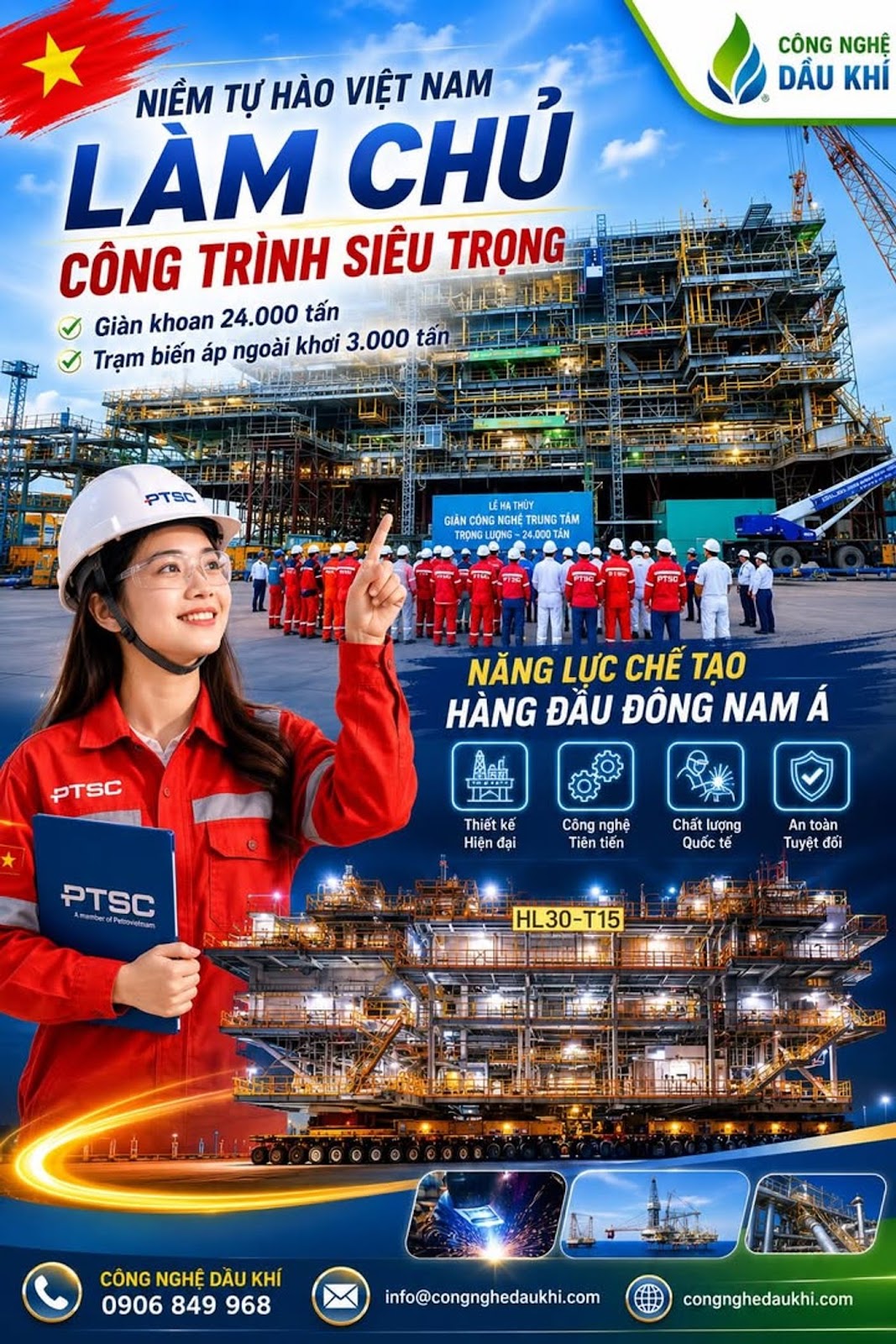
Vietnam's Engineering Marvel: Building 24,000-Ton Offshore Platforms and 3,000-Ton Transformer Stations
When discussing massive offshore oil and gas structures that serve the energy industry, many people typically think of countries like Norway, South Korea, Singapore, China, or the United Arab Emirates. However, few realize that Vietnam has emerged as one of the rare Southeast Asian nations capable of independently designing, manufacturing, and assembling colossal offshore oil and gas components weighing tens of thousands of tons.
The images of topside platforms and offshore transformer stations being constructed at Vietnam's industrial ports not only demonstrate technical capabilities but also reflect the maturation of the country's entire mechanical manufacturing ecosystem. These achievements represent significant milestones in Vietnam's industrial development and position it as a growing player in the global energy infrastructure market.
Landmark Engineering Achievements
Vietnam's industrial sector has accomplished remarkable feats in constructing massive offshore structures. These projects require precision engineering, advanced manufacturing techniques, and the ability to handle components of extraordinary weight and complexity.
| Type of Structure | Approximate Weight |
|---|---|
| Offshore central processing platform | 24,000 tons |
| Offshore transformer station | 3,000 tons |
| Large drilling platform base | Thousands to tens of thousands of tons |
| Oil and gas processing modules | Thousands of tons |
These structures are not merely massive steel blocks. Each project incorporates tens of thousands of meters of electrical cables, automated control systems, process pipelines, and extremely strict fire prevention and safety standards. The complexity extends beyond the physical dimensions to include sophisticated engineering systems that must operate reliably in harsh offshore environments.
Why These Achievements Are Extraordinary
Completing an offshore platform or transformer station requires mastering multiple technical domains simultaneously:
- Designing massive steel structures
- High-precision welding according to international standards
- Machining thousands of precise components
- Managing projects with tens of millions of man-hours
- Transporting and launching super-heavy components
- Ensuring safe operation in harsh marine environments
The transportation of a topside structure weighing tens of thousands of tons from the fabrication yard to the sea alone constitutes a complex technical operation spanning several days, utilizing specialized hydraulic self-propelled vehicles and barges. This requires precise planning, coordination, and execution to ensure the structural integrity of these massive components throughout the journey.
Vietnam's Regional Position in Offshore Manufacturing
In the Southeast Asian region, few countries possess the capability to manufacture large-scale offshore oil and gas structures. Vietnam has established itself as a strong and growing player in this field:
| Country | Offshore Manufacturing Capability |
|---|---|
| Singapore | Very strong |
| Indonesia | Strong |
| Malaysia | Strong |
| Vietnam | Strong and growing |
| Thailand | More limited |
| Philippines | More limited |
Notably, enterprises under Petrovietnam and PTSC have participated in numerous international projects, exporting oil and gas components to various markets outside Vietnam. This international recognition demonstrates the competitiveness and quality of Vietnam's engineering and manufacturing capabilities on the global stage.
Significant Economic Value
Large-scale offshore projects can generate value ranging from thousands to tens of trillions of Vietnamese Dong. The benefits extend beyond direct revenue to include:
- Creating thousands of jobs for highly skilled engineers and technical workers
- Establishing domestic mechanical supply chains
- Reducing dependence on foreign contractors
- Increasing domestic localization rates
- Enhancing Vietnam's industrial standing
The development of these capabilities has stimulated growth in related industries, including metallurgy, precision machining, specialized transportation, and marine engineering. This ecosystem development creates a virtuous cycle of industrial advancement and economic diversification.
Applications Beyond Oil and Gas
These manufacturing capabilities are now being applied to various other sectors:
- Offshore wind power
- Offshore transformer stations
- Renewable energy projects
- Maritime infrastructure
- Heavy industrial structures
This diversification positions Vietnam to participate more deeply in global energy supply chains during the ongoing global energy transition. As the world shifts toward renewable energy sources, Vietnam's established offshore manufacturing capabilities provide a foundation for developing new energy infrastructure, particularly in offshore wind power which requires similar engineering expertise as oil and gas platforms.
The Pride of Vietnamese Engineering
The most remarkable aspect of these achievements is not the impressive weight of 24,000-ton platforms or 3,000-ton transformer stations. The true pride lies in the Vietnamese engineers, workers, and enterprises that have demonstrated that structures once considered "only possible for industrial powers" can now be manufactured in Vietnam and gradually exported to global markets.
These accomplishments represent a significant leap in Vietnam's industrial capabilities and technological self-sufficiency. They demonstrate the country's ability to compete in high-value, technically complex segments of the global engineering market. As Vietnam continues to develop its industrial base, these achievements serve as both a testament to past accomplishments and a foundation for future growth in increasingly sophisticated manufacturing sectors.
The development of Vietnam's offshore engineering capabilities reflects broader trends in the country's industrial evolution—from assembly and light manufacturing to complex, high-value engineering projects. This transition positions Vietnam as an emerging industrial player with the potential to contribute significantly to global energy infrastructure development in both traditional and renewable sectors.