US Crude Oil Inventories Plummet Over 9 Million Barrels in a Single Week: Is the Oil Market Poised for a Boom or Heading for a Supply Shock?
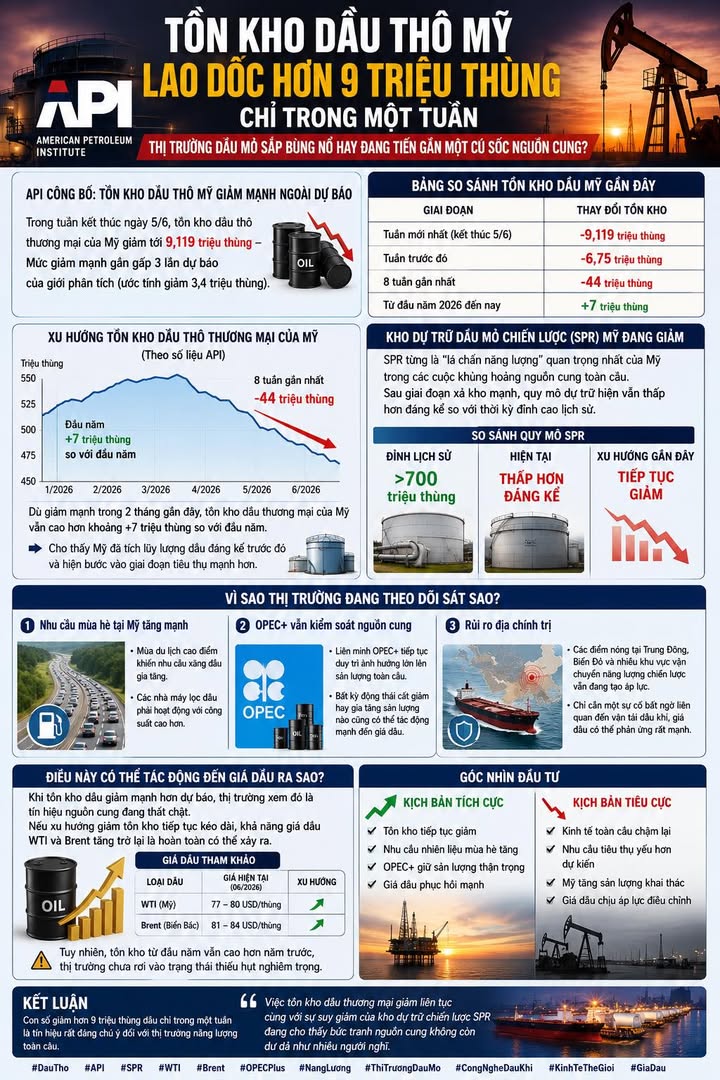
The global energy landscape is facing a critical juncture as recent data reveals an unexpected and dramatic decline in US crude oil inventories. In a development that has sent shockwaves through energy trading markets, the American Petroleum Institute (API) reported a staggering drop of 9.119 million barrels in commercial crude oil inventories for the week ending June 5. This figure represents nearly triple the decrease anticipated by industry analysts, who had projected only around 3.4 million barrels in inventory draw.
The Unprecedented Inventory Decline
The latest inventory figures represent a significant deviation from market expectations and historical patterns. What makes this data particularly noteworthy is that it's not an isolated incident but rather part of a concerning trend. In the preceding week, US oil inventories had already decreased by 6.75 million barrels. When viewed over an eight-week period, the cumulative inventory reduction amounts to approximately 44 million barrels according to API data.
These figures raise critical questions about the balance between global oil supply and demand. Is the market experiencing a temporary imbalance or signaling a fundamental shift in energy dynamics that could lead to substantial price increases?
| US Crude Oil Inventory Changes - Recent Comparison | |
|---|---|
| Time Period | Inventory Change |
| Latest Week (ending June 5) | -9.119 million barrels |
| Previous Week | -6.75 million barrels |
| 8-Week Period | -44 million barrels |
| Year-to-Date (2026) | +7 million barrels |
A Complex Inventory Picture
Despite the dramatic reduction in inventories over the past two months, a more nuanced picture emerges when examining the year-to-date data. Commercial oil inventories in the US remain approximately 7 million barrels higher than at the beginning of 2026. This suggests that while the market is currently experiencing a rapid drawdown, it's operating from a position of relative abundance accumulated during earlier months.
This creates an interesting paradox: the market appears to be transitioning from a period of inventory accumulation to one of accelerated consumption. The question remains whether this represents a seasonal adjustment or the beginning of a more sustained structural shift in global oil demand and supply dynamics.
Strategic Petroleum Reserve (SPR) Decline
The inventory concerns extend beyond commercial stockpiles to include the US Strategic Petroleum Reserve (SPR), once considered the nation's most critical energy security shield. Following periods of significant releases to moderate fuel prices during previous crises, the SPR has yet to recover to its historical peak levels.
| US Strategic Petroleum Reserve Comparison | |
|---|---|
| Period | Reserve Level |
| Historical Peak | Over 700 million barrels |
| Current Level | Significantly Lower |
| Recent Trend | Continued Decline |
Key Factors Influencing Market Sensitivity
Several interconnected factors are currently making the global oil market exceptionally sensitive to supply and demand signals. These elements combine to create a precarious balance where small changes can have amplified effects on prices.
1. Surge in US Summer Demand
The peak summer driving season in the United States typically triggers increased consumption of gasoline and diesel products. This year appears to be no exception, with robust travel and tourism activity boosting demand for refined petroleum products. In response, US refineries are operating at elevated utilization rates to meet consumption requirements, placing additional pressure on crude oil inventories.
2. OPEC+ Supply Management
The OPEC+ alliance continues to exert significant influence over global oil production levels. Through coordinated production adjustments, the alliance maintains substantial control over market dynamics. Any decisions regarding production cuts or increases—whether actual or anticipated—can trigger immediate reactions in oil markets. The organization's ability to adapt to changing market conditions remains a critical variable in price determination.
3. Geopolitical Risk Factors
Geopolitical tensions in key energy-producing and transportation regions represent a persistent risk premium in oil markets. Ongoing conflicts and security concerns in the Middle East, disruptions in the Red Sea corridor, and instability in other strategic energy transportation routes create an environment where supply disruptions remain a constant possibility. Even minor incidents in these regions can lead to significant price volatility as markets price in potential supply disruptions.
Potential Impact on Oil Prices
The relationship between inventory levels and oil prices follows well-established market principles. Typically, larger-than-expected inventory draws signal tightening supply conditions, which tend to support higher prices. If the current trend of declining inventories continues over several weeks, a substantial price increase for both WTI and Brent crude becomes increasingly likely.
However, market observers note that the year-to-date inventory surplus provides some buffer against immediate price spikes. The current situation doesn't yet indicate a severe supply shortage, but rather a market transitioning toward a more balanced state with potential upward pressure on prices.
Investment Perspectives
Market participants are carefully weighing multiple scenarios as they position themselves for potential price movements. Two contrasting narratives are emerging among energy investors:
Bullish Scenario
- Continued inventory drawdowns extend beyond current levels
- Sustained increase in summer fuel demand exceeds expectations
- OPEC+ maintains conservative production policies
- Geopolitical tensions escalate, further constraining supply
- Result: Strong oil price recovery and potential for new price peaks
Bearish Scenario
- Global economic growth slows, reducing energy consumption
- Demand proves weaker than market expectations
- US production increases to fill supply gaps
- OPEC+ decides to increase production quotas
- Result: Downward pressure on prices and market correction
Conclusion: A Market at a Crossroads
The remarkable 9 million barrel decline in US crude oil inventories over a single week represents a significant data point that demands careful attention from energy market participants. While it's premature to definitively declare the beginning of a new oil price bull market, the consecutive inventory drawdowns combined with the declining Strategic Petroleum Reserve suggest that supply conditions may be tighter than previously assumed.
If this trend continues over the coming months, the global oil market could be entering a period of sustained price increases reminiscent of previous energy crises. The confluence of rising demand, constrained supply, and geopolitical risks creates a perfect storm scenario that could reshape energy markets worldwide.
Energy industry stakeholders, policymakers, and investors would be wise to monitor these developments closely, as the current trajectory of inventory movements may signal fundamental changes in the global energy balance that could have far-reaching economic implications.