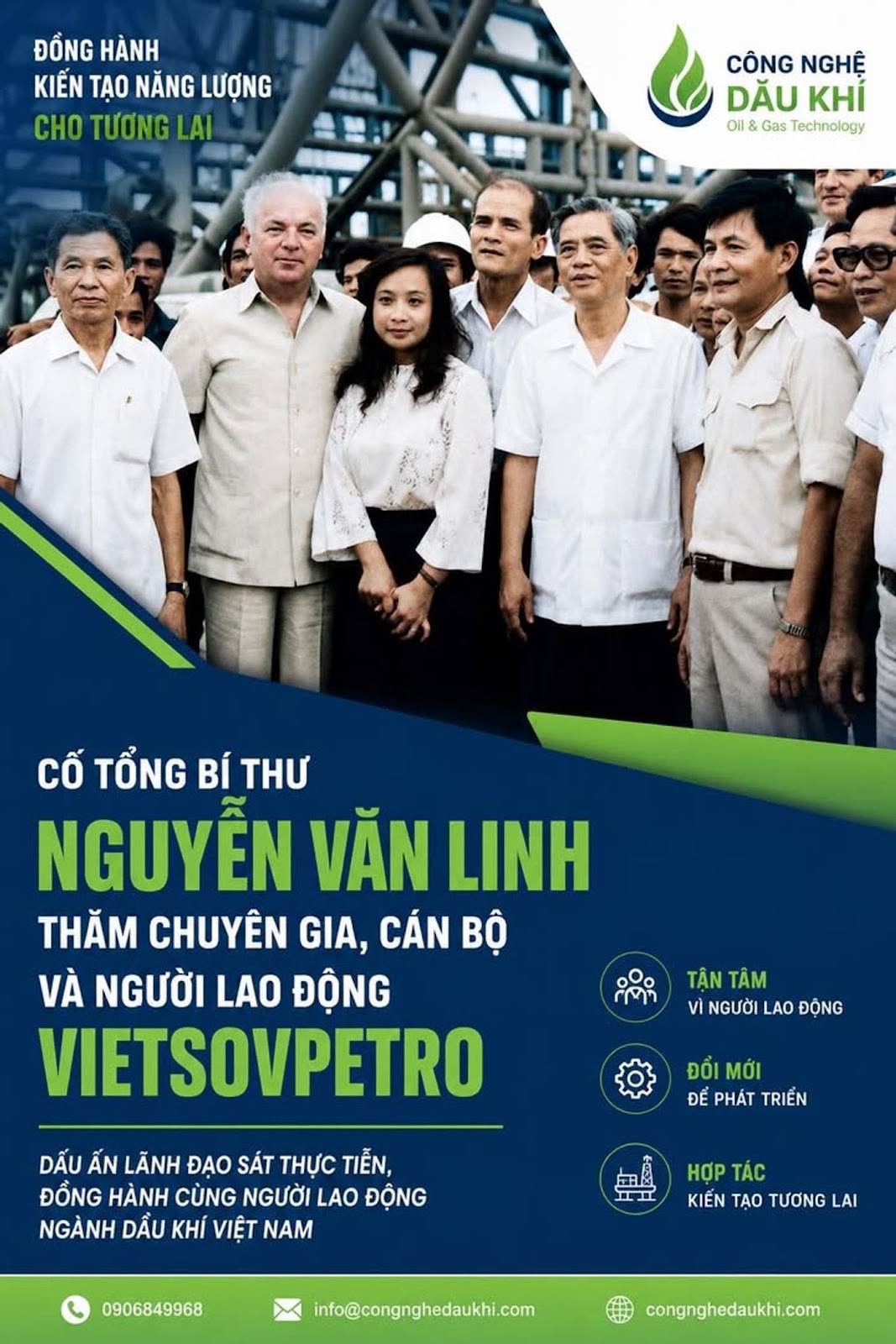
Former General Secretary Nguyen Van Linh's Visit to Vietsovpetro: A Legacy of Leadership Close to the Workers
In the annals of Vietnam's oil and gas industry, few moments carry as much historical significance as the visit by former General Secretary Nguyen Van Linh to the Vietsovpetro facility. This encounter between a national leader and the workers at the forefront of Vietnam's energy development represents a pivotal moment in the country's economic transformation during the early years of the Đổi Mới (Renovation) period.
How many senior leaders in history have personally visited offshore oil rigs to meet with oil and gas workers during a time when the nation faced numerous challenges? The image of General Secretary Nguyen Van Linh engaging with experts, officials, and laborers at the Vietnam-Soviet joint venture Vietsovpetro remains a special milestone in the historical development of Vietnam's petroleum sector.
The Role of Vietsovpetro in Vietnam's Đổi Mới Period
Established in 1981, the Vietnam-Soviet joint venture Vietsovpetro stood as a symbol of economic and technical cooperation between Vietnam and the Soviet Union (later Russia). It became the primary crude oil exploitation unit in Vietnam for many decades, contributing valuable foreign exchange to the national budget.
| Key Information about Vietsovpetro | Details |
|---|---|
| Established | 1981 |
| Headquarters | Vung Tau |
| Vietnamese Partner | Petrovietnam |
| Russian Partner | Zarubezhneft |
| Field of Operation | Oil and Gas Exploration and Production |
| Cooperation Extension | Until 2030 |
During the late 1980s, as Vietnam's economy faced numerous challenges, crude oil from the Bach Ho (White Tiger) field and other offshore works of Vietsovpetro became a strategic resource contributing to macroeconomic stability.
A Visit of Special Significance
During his visit to Vietsovpetro, former General Secretary Nguyen Van Linh not only inquired about production conditions but also personally met with Vietnamese experts, Soviet specialists, and thousands of oil and gas officials, engineers, and workers.
Such working trips clearly demonstrated his leadership style of being close to the people and grounded in practical reality. Historical materials about former General Secretary Nguyen Van Linh always show the image of a decisive yet approachable leader who frequently listened to opinions from the grassroots level before making major policy decisions.
Nguyen Van Linh and the Đổi Mói Process
In 1986, Nguyen Van Linh became General Secretary and was one of the key figures laying the foundation for Vietnam's Đổi Mói (Renovation) process. The renovation policies created conditions for many economic sectors to develop strongly, including the oil and gas industry.
| Impact of Đổi Mói on the Oil and Gas Industry | Effects |
|---|---|
| Investment Attraction | Increased international cooperation |
| Technology | Access to modern techniques |
| Foreign Exchange | Increased export revenue |
| Human Resources | Training of high-quality engineers |
| Infrastructure | Expansion of offshore oil and gas projects |
A Lasting Impression on Vietnam's Oil and Gas Industry
Today, when recalling the early years of Vietnam's modern oil and gas industry, people remember not only the first offshore wells at Bach Ho but also the attention given by successive generations of national leaders to oil and gas workers.
Former General Secretary Nguyen Van Linh's visit to Vietsovpetro stands as testimony to the spirit of accompanying production, workers, and key economic sectors of the nation.
More than three decades have passed, but the values he left behind remain meaningful. These include the mindset of renovation, the spirit of daring to think and act, and faith in the strength of Vietnam's workforce—those who contributed to building the oil and gas industry into one of the most important economic pillars of the country.
The legacy of this visit continues to inspire current and future generations in Vietnam's energy sector, reminding us of the importance of leadership that remains connected to the workers and grounded in the practical realities of national development.