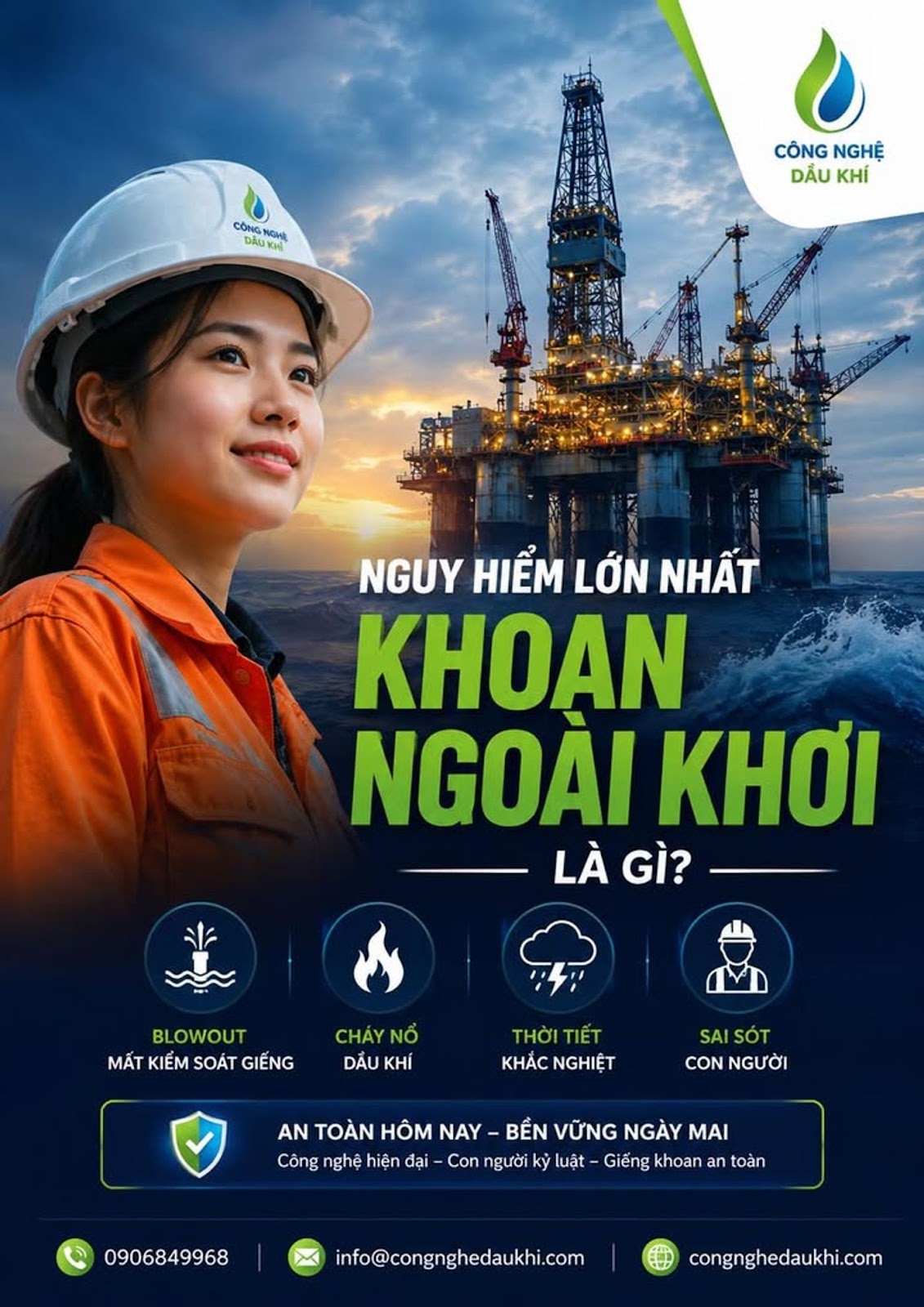
The Greatest Danger in Offshore Drilling: Nature or Human Error?
When a single human error can cause a drilling rig valued at over 12,000 billion VND to erupt in flames and result in tens of billions of dollars in damages, we must ask: what truly poses the greatest threat in offshore operations—nature or human beings themselves?
Offshore drilling is widely regarded as one of the most complex and hazardous industrial activities in the world. Each well represents a continuous battle against formation pressure, flammable gases, harsh marine environments, and technical risks that can emerge at any moment.
The Deepwater Horizon Disaster: A Case Study in Catastrophic Failure
On April 20, 2010, at approximately 21:49 local time, the Deepwater Horizon disaster occurred in the Gulf of Mexico. The drilling rig, operated by Transocean for BP, exploded, resulting in 11 worker fatalities, 17 injuries, and creating the largest offshore oil spill in U.S. history.
Subsequent investigations concluded that the causes extended beyond the oil and gas flowing uncontrolled from the well. Rather, it was a chain of consecutive decision-making failures in risk management, well control, and operations that led to the catastrophe.
Primary Hazard Assessment in Offshore Drilling
The following table summarizes the principal hazards encountered in offshore drilling operations, their severity levels, and potential for catastrophic consequences:
| Hazard | Severity Level | Catastrophic Potential |
|---|---|---|
| Uncontrolled well blowout | Very High | Extremely Large |
| Toxic H₂S gas | Very High | Very Large |
| Hydrocarbon explosions | Very High | Very Large |
| Storms and large waves | High | Large |
| Drilling equipment failure | High | Moderate |
| Marine vessel collisions | Moderate | Moderate |
| Human error | Very High | Extremely Large |
Notably, in most investigations of major oil and gas accidents worldwide, the human factor often emerges as the final link in the chain that transforms incidents into disasters.
Common Risks on Offshore Drilling Rigs
The following table outlines typical hazards encountered on offshore platforms and their potential consequences:
| Risk | Potential Consequences |
|---|---|
| High-pressure kick | Can lead to blowout |
| Blowout | Explosions, oil spills |
| Toxic H₂S gas | Rapid fatalities |
| Hoisting equipment failure | Industrial accidents |
| Confined spaces | Gas asphyxiation |
| Large waves and strong winds | Loss of platform stability |
| Procedural errors | Cascading accidents |
The "Number One Nightmare": Understanding Blowouts
In the oil and gas industry, a blowout is considered the "number one nightmare." This occurs when oil or gas from the reservoir escapes control and erupts to the surface with tremendous force. If the Blowout Preventer (BOP) system fails or responds too slowly, the escaping flammable gas can ignite, causing a massive explosion.
Historical Oil Industry Disasters
The following table outlines some of the most significant incidents in oil industry history:
| Year | Incident | Casualties/Impact |
|---|---|---|
| 1988 | Piper Alpha | 167 fatalities |
| 2010 | Deepwater Horizon | 11 fatalities, largest oil spill in US history |
| 1979 | Ixtoc I | Major oil spill in Mexico |
| 2021 | Pemex Platform Fire | Multiple casualties |
The Financial Stakes of Offshore Drilling
A modern deepwater drilling platform represents an investment of approximately 12,000 to over 24,000 billion VND. A single deepwater well can cost between 500 billion and over 2,500 billion VND. Consequently, a major accident can erase the profits of an entire project for many years.
The Human Factor: Complacency as the Greatest Risk
Many veteran petroleum engineers argue that the most significant danger in offshore drilling is not high pressure or rough seas, but human complacency. When operations proceed normally for consecutive months, people easily become less vigilant. This is precisely when risks begin to accumulate silently.
For this reason, leading global oil and gas companies now invest heavily in well control training, emergency scenario simulations, regular BOP inspections, and building a safety culture rather than focusing solely on production volume.
Technology vs. Human Judgment
In the battle between technology and nature offshore, modern equipment can certainly help reduce risks. However, human decision-making ultimately remains the decisive factor. Advanced monitoring systems, automated controls, and improved safety protocols all require human oversight and proper implementation.
The question remains: in your assessment, what poses the most frightening threat on an offshore drilling platform—an uncontrolled well blowout, toxic H₂S gas, hydrocarbon explosions, or human error itself?