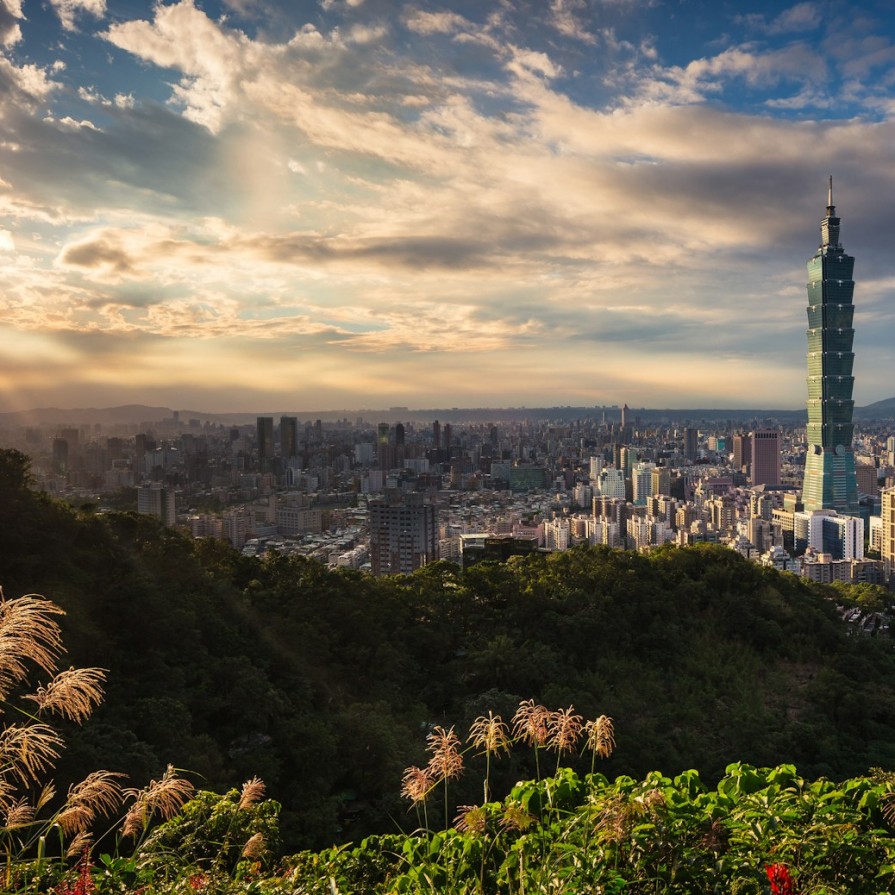
Taiwan's Energy Crisis: The High Cost of Energy Dependency
The issue of energy dependency and its consequences has become a central topic of discussion in recent months. The Hormuz crisis has brought energy security to the forefront of political agendas, accompanied by fuel price caps, rationing, and warnings of severe shortages. Numerous countries have been cited as examples of low or high energy dependency, leading to either isolation or significant economic losses.
Taiwan: A Case Study in Energy Vulnerability
Among highly dependent nations, Taiwan stands out as a notable case. The country relies on imports for 94% to 97% of its energy needs, according to various estimates, with particular heavy reliance on LNG (liquefied natural gas). Taiwan lost one-third of its LNG imports following the closure of the Hormuz Strait and attacks on Qatar's LNG production facilities.
| Taiwan's Energy Structure | |
|---|---|
| Energy Source | Percentage (%) |
| Natural Gas (LNG) | 23% |
| Petroleum | 36% |
| Coal | 32% |
| Solar Energy | 2% |
| Wind and Hydropower | 3% |
This means Taiwan is extremely dependent on imported hydrocarbons. To complicate matters further, Taiwan is an electronics powerhouse, leading in chip production, which demands substantial energy. TSMC alone, a semiconductor giant, consumes up to 8% of Taiwan's electricity, according to a recent analysis by The Diplomat on Taiwan's energy challenges.
The AI Hub and Future Energy Demands
Simultaneously, Taiwan is emerging as an artificial intelligence (AI) center, and electricity demand from this sector will grow faster than the rest of the economy, authors of The Diplomat also point out. This presents a dual challenge for Taiwan as it must both address its imported energy dependency and meet the growing demands from high-tech industries.
Responding to the Hormuz Crisis Strategy
Interestingly, Taiwan weathered the Hormuz crisis thanks to increased U.S. LNG exports. According to Natalia Katona in a report for Oilprice in May, Taiwan quickly replaced lost Gulf Coast LNG with American gas, with April imports only slightly lower than the total for March.
However, as Katona pointed out, "emergency commodities are not like long-term supply." The reality is that emergency purchases are more expensive than long-term supply contracts, and they can be diverted at any time if someone offers a higher price, as seen in both this crisis and the 2022 crisis following Russia's invasion of Ukraine and Western energy sanctions against Russia.
| Energy Supply Strategy Comparison | |
|---|---|
| Taiwan | European Union |
| Long-term contracts with Qatar and UAE | Dependence on spot market |
| Stable, predictable costs | Highly volatile costs |
| Lower risk of disruption | Higher risk of disruption |
Economic Strengths and Geopolitical Weaknesses
Financially, Taiwan is in a favorable position. ING reports the island's exports in May increased by more than 51% compared to the same period last year despite the energy crisis, thanks to its leading electronics industry. At the same time, however, Taiwan remains in China's shadow, with analysts warning that the mainland could assert territorial claims at any time, including through blocking energy flows to the island.
The Challenge of Renewable Energy Transition
According to The Diplomat article, this makes Taiwan's transition to local energy particularly important. However, they overlooked the reality that local energy from wind and solar cannot replace baseload electricity from coal and gas plants, as has been demonstrated in the U.S., where all major tech companies have heavily invested in wind and solar, but ultimately concluded that they cannot match the reliability of coal, gas, and nuclear sources.
Diversifying Energy Supply - The Strategic Solution
Therefore, Taiwan is moving toward diversifying its supply sources. The shift from the Middle East to the U.S. is a response to tightening supplies in the Gulf, but is likely to become a stable trend in the future with long-term supply contracts. Other LNG producers outside the Middle East may soon consider Taiwan's state energy company CPC among their long-term buyers.
Diversification is always a smart choice. For Taiwan, a country with sensitive geopolitical positioning and an economy heavily dependent on imported energy, supply diversification is not just an economic choice but a national security requirement. The lesson from the Hormuz crisis shows that preparation and contingency planning can help Taiwan face future energy shocks, but only if the diversification strategy is implemented systematically and long-term.
Ultimately, Taiwan's story is a clear demonstration that energy security is not just a technical or economic issue, but a national security matter. In an increasingly complex geopolitical landscape, nations heavily dependent on energy imports need comprehensive strategies to ensure stable supplies, not just for the present but for the future.