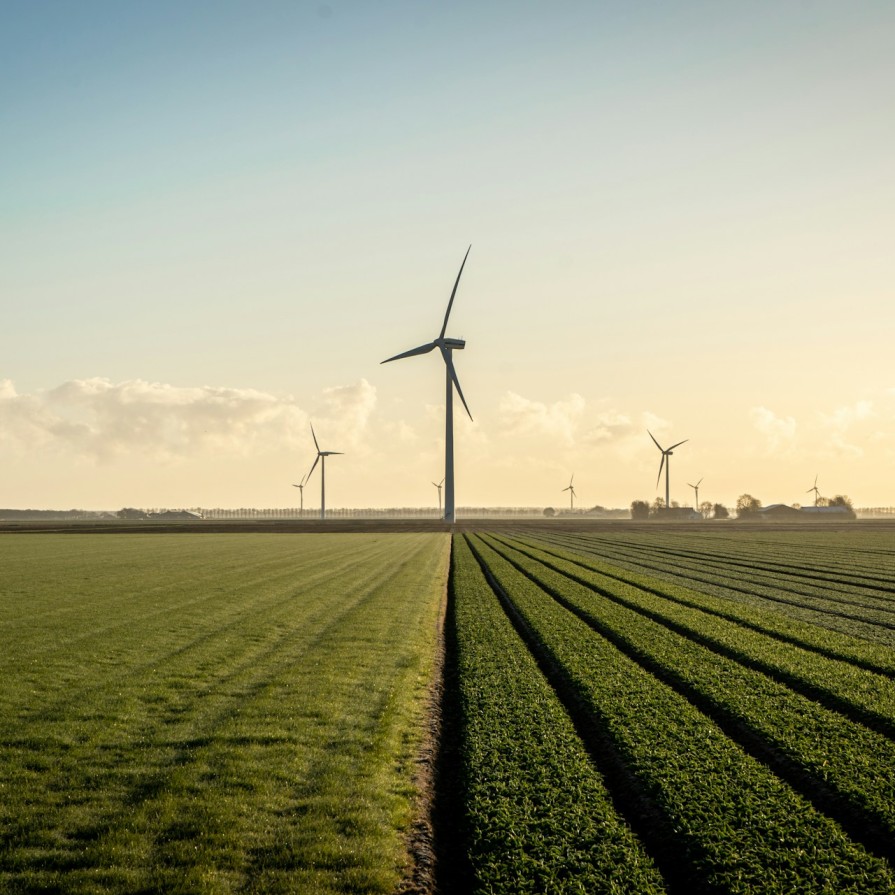
Global Clean Energy Investment Surges Amidst Turbulent Times
In the face of unprecedented political challenges in global decarbonization efforts, spending on clean energy continues to grow robustly worldwide. The "World Energy Investment 2026" report by the International Energy Agency (IEA), published this May, forecasts that of the $3.4 trillion the world will invest in energy this year, $2.2 trillion will be allocated to clean energy, while only $1.2 trillion will flow to fossil fuels. This marks a historic shift in energy spending and global energy security priorities.
The Energy Market in a State of Flux
Across the globe, the energy market is in a state of extreme instability due to a cascade of overlapping energy crises from multiple directions and causes. The fact that clean energy is being driven by energy security concerns offers us valuable lessons. Examining where the money flows shows clearly that, for global leaders, clean energy now represents the future of safety, affordability, and resilience. This represents a significant shift from how energy security has traditionally been viewed.
Until now, coal, oil, and gas have represented safety and security, seen as reliable pillars compared to the large clean energy experiment. The ongoing conflicts in countries central to global oil and gas flows have created significant levels of instability and volatility in the fossil fuel market. While most of the world continues to struggle with the shock of oil and gas prices along with redrawing energy supply chains following Russia's invasion of Ukraine in 2022, the market now faces a new and far more extreme wave of energy supply disruptions from the conflicts in Ukraine by the United States and Israel.
The Clean Energy Advantage of Independence
These conflicts provide a crucial advantage for clean energy in terms of autonomy and energy independence. "Wind and solar energy cannot be embargoed, blockaded, or shut off by a foreign country," David Frykman, General Partner at Stockholm-based venture capital group Norrsken, wrote in an op-ed in March for Fortune. "Every terawatt hour of domestically produced renewable energy is a terawatt hour that no adversary can weaponize."
And that independence also saves countries importing fuel massive amounts of money. The IEA estimates that clean energy and energy efficiency have enabled the world's five largest fuel-importing regions to save $260 billion in avoided fossil fuel import costs in 2025. "It's not just climate benefits," Forbes recently editorialized. "It's independence."
Pressure from AI Demand
Besides the ongoing disruptions to oil and gas supplies, there are significant disruptions occurring on the demand side of the equation. The explosion of artificial intelligence (AI) is causing unprecedented increases in energy demand forecasts, forcing both public and private sectors to rapidly expand energy capacity as quickly and cheaply as possible. New research released by the United Nations shows that water and energy consumption from data centers is expected to double by the end of this decade, meaning energy production must maintain the same rapid expansion pace.
"Electricity demand from AI data centers continues to drive investment in renewable energy, with electricity consumption from U.S. data centers expected to triple by 2035 compared to 2024 levels," Bloomberg recently reported. A significant portion of this investment is coming from emerging economies in the Global South, as renewable energy has simply become too cheap to fail.
Detailed Market Analysis
While the overall data paints a clear trend toward renewable energy, the detailed data is more complex and nuanced. "Markets with revenue support mechanisms have maintained momentum in renewable energy investment," says Meredith Annex, Head of Clean Power at BloombergNEF. "While projects in markets where revenue certainty is changing, particularly when it involves large policy swings like in the U.S. or mainland China, are seeing a boom-bust cycle ahead of those changes."
And while investors worldwide are pouring more money than ever into clean energy, governments continue to provide trillions of dollars in support and subsidies to the fossil fuel industry. But even when accounting for public spending on fossil fuels, clean energy still leads in investment terms. The writing is on the wall - we are officially leaving the oil age and entering the electricity age.
Summary of Global Energy Investment 2026
| Investment Type | Amount (Billion USD) | Percentage |
|---|---|---|
| Clean Energy | 2,200 | 64.7% |
| Fossil Fuels | 1,200 | 35.3% |
| Total | 3,400 | 100% |
Economic Benefits of Clean Energy for Importing Countries
| Region | Projected Savings (Billion USD) | Year |
|---|---|---|
| Top 5 fuel-importing regions | 260 | 2025 |
Impact of AI Data Centers on Energy Demand
| Metric | Current Status | 2020 Projection | Growth |
|---|---|---|---|
| U.S. data center electricity consumption | 2024 baseline | 3x increase | +200% |
| Global data center water and energy consumption | Current baseline | 2x increase | +100% |
This shift is not just a short-term trend but is reshaping the global energy landscape for the long term. As countries continue to face geopolitical instability and surging energy demands, clean energy is increasingly becoming the choice not just for environmental reasons but for economic and national security imperatives as well.