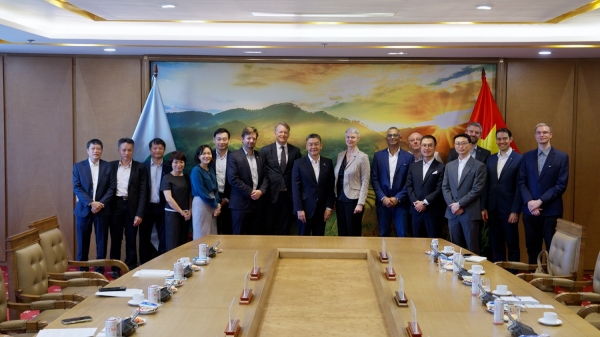
Strategic Partnership Between Petrovietnam and Norway to Advance Vietnam's Offshore Wind Energy Sector
On June 12th, a significant meeting took place at the headquarters of Vietnam National Oil and Gas Group (Petrovietnam), bringing together leaders from Petrovietnam and a delegation of Norwegian enterprises. This important gathering focused on exploring collaboration opportunities in the energy sector, particularly in developing the offshore wind power value chain—a field with tremendous potential yet facing numerous challenges for Vietnam.
Meeting Details and Objectives
The meeting occurred in an atmosphere of cooperation and openness, with participation from representatives of leading Norwegian companies in the renewable energy sector, particularly those specializing in offshore wind technology. The Petrovietnam delegation was led by Mr. Le Manh Hung, Chairman of the Board of Directors.
Mr. Le Manh Hung emphasized: "Vietnam is setting ambitious targets for renewable energy development, with offshore wind power identified as a crucial pillar. We highly value the experience and advanced technology of Norway—a world leader in this field."
The discussions centered on how Norway's expertise could support Vietnam's transition to cleaner energy sources while addressing the technical, financial, and regulatory challenges inherent in developing offshore wind infrastructure.
Context for Cooperation: Vietnam's Renewable Energy Transition
Vietnam is undergoing a significant transformation from fossil fuels to renewable energy sources. The government has approved the Renewable Energy Development Strategy to 2030, with a vision toward 2050, targeting 30-35% of total electricity production from renewable sources by 2030 and 80-85% by 2050.
Within this framework, offshore wind power is considered the most promising potential source, with an installed capacity target of up to 47,000 MW by 2030—equivalent to approximately 30% of Vietnam's total installed electricity capacity.
Current State of Vietnam's Offshore Wind Industry
Despite its ambitious targets, Vietnam's offshore wind sector faces several significant challenges:
- Limited experience with relatively new technology requiring knowledge transfer
- Shortage of highly specialized labor force
- Inadequate transmission infrastructure to support offshore generation
- Complex legal and regulatory procedures
- High investment requirements with elevated risk profiles
These challenges have resulted in slower-than-expected development of offshore wind projects, despite Vietnam's excellent wind resources, particularly along its extensive coastline.
Norway's Expertise in Offshore Wind
Norway is recognized as a global model in offshore wind development. With its long coastline and favorable climatic conditions, this Nordic country has successfully developed a sophisticated offshore wind industry featuring advanced technology and efficient management processes.
Comparative Wind Energy Statistics:
| Indicator | Norway | Vietnam |
|---|---|---|
| Total wind power capacity (2023) | 4.6 GW | 4.1 GW |
| Offshore capacity | 2.8 GW | 0.4 GW |
| Wind's share of total electricity | 12% | 5% |
| Years of offshore wind experience | 25 years | 5 years |
Potential Areas for Collaboration
During the meeting, both sides identified several promising areas for cooperation:
- Technology Transfer: Norway could assist Vietnam in developing large wind turbines, anchoring systems, and offshore electricity transmission technologies.
- Workforce Development: Establishing training programs for engineers and skilled workers in offshore wind technology.
- Supply Chain Development: Supporting Vietnam in building an auxiliary industry for offshore wind components.
- Project Management: Sharing experience in managing large-scale offshore wind projects.
- Green Finance: Collaborating on mobilizing international capital for offshore wind projects.
Strategic Vision for the Future
Petrovietnam aims to become a leading force in offshore wind development in Vietnam. The group has established Petrovietnam Renewable Energy Corporation (RECO) with the mission of developing large-scale offshore wind projects.
Mr. Tran Minh Hung, General Director of RECO, stated: "We expect cooperation with Norway to help bridge the technology gap and enhance the competitiveness of Vietnam's wind power sector. This is not just bilateral cooperation but also an opportunity for Vietnam to participate in the global energy value chain."
RECO has already identified several offshore wind projects in Vietnam's southern coastal regions with total capacity exceeding 3,000 MW, which could benefit significantly from Norwegian expertise and technology.
Policy Support and Regulatory Framework
The Vietnamese government has been working to improve the regulatory environment for renewable energy, including offshore wind. Recent developments include:
- Feed-in tariff mechanisms for wind power
- Simplified licensing procedures for renewable energy projects
- Tax incentives for renewable energy investments
- Streamlined land allocation for renewable energy infrastructure
However, further regulatory improvements are still needed, particularly for offshore wind projects, which face unique challenges related to maritime zoning, environmental impact assessments, and grid connection.
Conclusion: A Partnership for Sustainable Development
The collaboration between Petrovietnam and Norway in the offshore wind sector demonstrates Vietnam's strong commitment to developing renewable energy. With support from a world-leading partner, Vietnam's offshore wind industry has the potential for sustainable development, contributing to green economic growth and carbon emission reduction targets.
This partnership not only brings economic benefits but also enhances Vietnam's technological capabilities and creates high-quality employment opportunities in the renewable energy sector—paving the way for a sustainable future for the nation.
As global pressure to address climate change intensifies, such international collaborations become increasingly valuable for developing nations seeking to transition to cleaner energy sources while maintaining economic growth.