Strengthening Maritime Defense: Vietnam and US Naval Leadership Meet to Advance Strategic Partnership
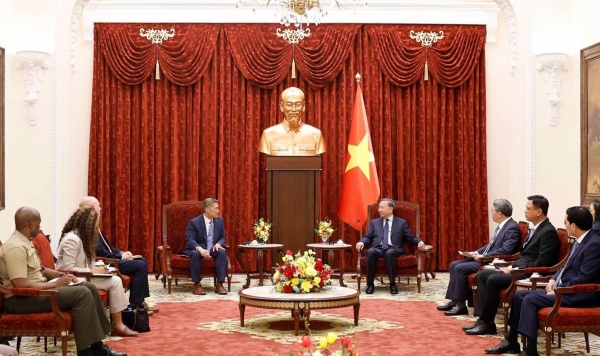
June 22, 2026 - In a significant development for regional security architecture, General Secretary and President of Vietnam Tô Lâm met with Acting US Secretary of the Navy Hùng Cao at the Presidential Office. This high-level dialogue marks a pivotal moment in the evolving defense relationship between the two nations, particularly in maritime security and naval cooperation in the increasingly complex South China Sea context.
Evolution of Vietnam-US Defense Relations
The bilateral relationship between Vietnam and the United States has undergone remarkable transformation since the normalization of diplomatic relations in 1995. What began as a reconciliation process has evolved into a Comprehensive Strategic Partnership established in 2013, with defense cooperation emerging as one of its most dynamic components.
Naval relations have been particularly noteworthy, with both nations conducting numerous joint activities including officer exchanges, port visits, and participation in multilateral maritime forums. The US Navy's presence in Vietnamese ports has increased steadily, reflecting growing trust and interoperability between the two naval forces.
Maritime security has become a natural area of collaboration given Vietnam's extensive coastline and the US's strategic focus on maintaining freedom of navigation in international waters. The relationship has progressed from initial confidence-building measures to substantive operational coordination.
Detailed Meeting Proceedings
During the meeting at the Presidential Office, President Tô Lâm welcomed Acting Secretary Hùng Cao's visit, emphasizing Vietnam's consistent policy of prioritizing friendly and cooperative relations with the United States based on mutual respect for independence, sovereignty, and territorial integrity.
The discussions focused on several critical areas of mutual concern:
- Maritime security cooperation in the South China Sea
- Enhancing naval interoperability through joint exercises
- Capacity building in Vietnam's naval defense capabilities
- Regional security architecture and multilateral maritime frameworks
President Tô Lâm reiterated Vietnam's firm stance on peaceful dispute resolution in accordance with international law, particularly the United Nations Convention on the Law of the Sea (UNCLOS) 1982. He emphasized the importance of maintaining freedom of navigation and overflight in international waters.
In response, Acting Secretary Hùng Cao expressed appreciation for Vietnam's significant achievements in national construction and defense, while affirming the US commitment to strengthening the strategic partnership with Vietnam. He highlighted the potential for expanded naval cooperation, including technology sharing and joint training programs.
Strategic Significance in Current Geopolitical Context
This meeting occurs at a time when the South China Sea continues to experience complex developments, with competing territorial claims and increasing military presence by regional powers. The US's "Free and Open Indo-Pacific" strategy and Vietnam's growing role in regional security architecture make enhanced naval cooperation particularly timely.
The direct dialogue between Vietnam's top leadership and the US Navy's civilian leadership demonstrates the maturing nature of the defense relationship, moving beyond traditional military-to-military contacts to include high-level political guidance and strategic alignment.
"This meeting represents a significant step forward in operationalizing the Comprehensive Strategic Partnership between our nations," noted military analyst Dr. Nguyễn Văn Thảo. "The exchange between political leadership and naval command structures suggests a more integrated approach to maritime security cooperation that could have substantial implications for regional stability."
Expert Analysis
Defense specialists have highlighted several notable aspects of this meeting:
- The timing coincides with increased US naval deployments in the Indo-Pacific region
- The focus on naval cooperation reflects Vietnam's maritime security priorities
- The participation of civilian leadership on both sides indicates a whole-of-government approach
- The discussion of technology transfer suggests potential for more advanced defense cooperation
"What makes this meeting particularly significant is its emphasis on practical maritime security cooperation rather than just symbolic gestures," explained Dr. Trần Minh Hùng, a maritime security expert at the National Institute for Strategic Studies. "The specific focus on naval interoperability and capacity building indicates a desire for more substantive operational coordination."
Recent Developments in Defense Cooperation
This meeting follows several other important milestones in Vietnam-US defense relations:
- Last week's meeting between Vietnam's Minister of National Defense and his US counterpart in Washington D.C.
- The 2025 signing of a humanitarian assistance and disaster relief cooperation agreement
- The conclusion of a maritime cooperation framework in 2025
- Regular port visits by US Navy vessels to Vietnamese harbors
These developments have progressively built trust and created mechanisms for sustained cooperation in maritime security, naval operations, and defense industry engagement.
Future Cooperation Framework
Looking ahead, both nations appear committed to expanding their naval cooperation across multiple domains. The table below outlines key areas of cooperation, past activities, and future initiatives:
| Cooperation Domain | Current Activities | Future Initiatives |
|---|---|---|
| Maritime Security Operations | Coastal surveillance cooperation | |
| Defense Technology Transfer | Coastal defense system modernization | |
| Naval Capacity Building | ||
| Regional Security Architecture |
Broader Regional Implications
Enhanced naval cooperation between Vietnam and the United States occurs against a backdrop of increasing strategic competition in the Indo-Pacific region. As nations work to balance competing relationships and security concerns, Vietnam's approach of pursuing diversified partnerships while maintaining strategic autonomy has drawn international attention.
"Vietnam is positioning itself as a reliable security partner for the United States while carefully managing its relationships with other major powers," explained Dr. Lê Thị Kim Dung, a foreign policy analyst. "This naval cooperation with the US complements Vietnam's broader foreign policy objectives of maintaining peace and stability while protecting its maritime interests."
President Tô Lâm affirmed Vietnam's readiness to serve as a trusted bridge between the United States and regional nations, contributing to peace, stability, and cooperation in the Asia-Pacific region. This approach aligns with Vietnam's foreign policy doctrine of being a friend and reliable partner in the international community.
Conclusion: A New Chapter in Naval Cooperation
The meeting between President Tô Lâm and Acting Secretary Hùng Cao represents more than just a diplomatic courtesy; it signals a deepening of naval cooperation between Vietnam and the United States with tangible implications for regional security. As maritime challenges become increasingly complex, the ability of like-minded nations to coordinate their approaches will be critical to maintaining stability and freedom of navigation in international waters.
This high-level engagement builds upon years of progressive defense cooperation and suggests that Vietnam-US relations are entering a phase of more substantive operational coordination. The focus on naval interoperability and maritime security reflects both nations' recognition of the importance of maintaining a rules-based order in the increasingly contested waters of the South China Sea.
As both nations work to implement the agreements reached during this meeting, the international community will be watching to see how this enhanced cooperation contributes to regional security architecture and stability in one of the world's most vital maritime regions.
Information from the Presidential Office of Vietnam