New Forecast Model for El Nino and Its Impacts on Vietnam's Electricity Supply and Demand
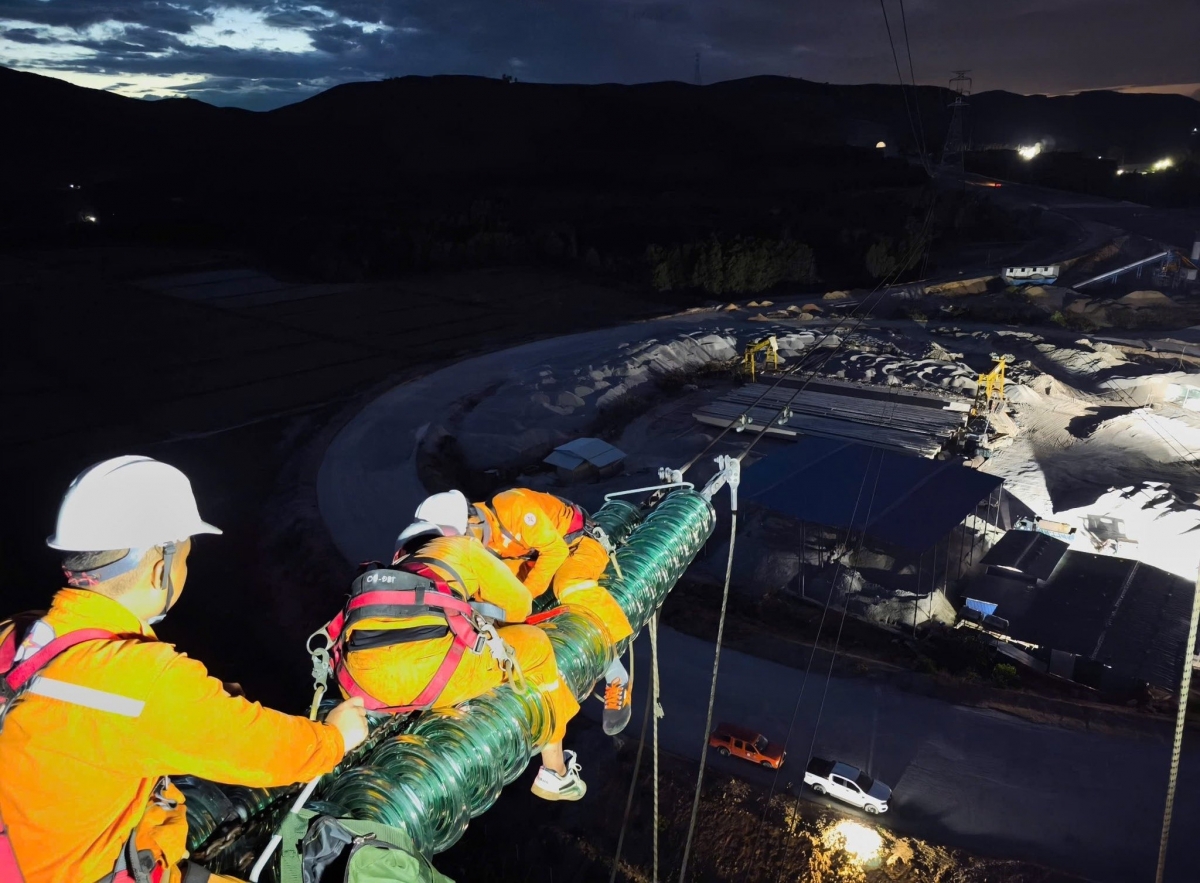
June 24, 2026 - Following Vietnam's power system setting new consecutive records for maximum load capacity in May and early June 2026, the official return of the El Nino phenomenon is attracting special attention from the energy sector. While the risk of widespread power shortages as seen in 2023 is evaluated as lower, El Nino could still create significant pressure on electricity supply security by increasing demand and reducing production capacity.
Background on Electricity Consumption in Vietnam
In recent months, Vietnam's power system has been operating under great pressure as it continuously sets new records for maximum load capacity. According to data from Vietnam Electricity (EVN), the maximum load reached 81,200 MW on May 25, 2026, an increase of 4.2% compared to the same period in 2025 and surpassing all previous records.
The maximum load was further increased to 82,500 MW on June 10, 2026, showing that electricity demand in Vietnam is growing strongly. This increase mainly comes from the industrial and residential sectors, especially in major cities like Hanoi and Ho Chi Minh City.
The El Nino Phenomenon and Its Impact on the Electricity System
The El Nino phenomenon is part of the ENSO (El Nino-Southern Oscillation) cycle, characterized by unusual increases in sea surface temperatures in the central and eastern Pacific Ocean. This phenomenon typically lasts from 9 to 12 months and can cause significant changes in global weather patterns.
In Vietnam, El Nino often leads to prolonged droughts and hot weather, particularly in the Central and Central Highlands regions. This directly affects electricity production from hydropower - Vietnam's important electricity source, accounting for about 36% of total electricity production.
| Time Period | Maximum Load (MW) | Growth vs. Same Period | Main Power Sources |
|---|---|---|---|
| May 2025 | 77,800 | - | Hydropower 35%, Coal 38%, Gas 18%, Renewable Energy 9% |
| May 25, 2026 | 81,200 | +4.2% | Hydropower 34%, Coal 37%, Gas 19%, Renewable Energy 10% |
| June 10, 2026 | 82,500 | +6.1% | Hydropower 33%, Coal 36%, Gas 20%, Renewable Energy 11% |
Expert Forecasts
According to the National Center for Hydro-Meteorological Forecasting, the El Nino phenomenon has officially returned since June 2026 and may last until the end of 2027. The forecast model shows that global average temperatures could increase by an additional 0.5-1°C compared to average levels, leading to prolonged heat waves in Vietnam.
Mr. Nguyen Van Hung, Head of Planning and Operation Department at EVN, stated: "Although we are better prepared than in 2023, El Nino still poses significant challenges to the power system. Prolonged heat waves will increase electricity demand for air conditioning, while simultaneously reducing hydropower output due to drought."
Analysis of Possible Scenarios
Based on forecast models and historical data analysis, energy experts have outlined three main scenarios for El Nino's impact on Vietnam's electricity system:
- Scenario 1 (Basic Scenario): Moderate heat waves, electricity demand increases by about 5-7% compared to the multi-year average. Low risk of power shortages, mainly occurring during peak hours in some areas.
- Scenario 2 (Unfavorable Scenario): Prolonged heat waves, electricity demand increases by 8-10%. Hydropower output decreases by 15-20%. Moderate risk of power shortages, possibly occurring in the Central and Central Highlands regions.
- Scenario 3 (Worst-case Scenario): Extreme and prolonged heat waves, electricity demand increases by over 10%. Hydropower output decreases by 25-30%. High risk of widespread power shortages, especially if incidents occur at thermal power plants.
Response Solutions
In light of these forecasts, EVN and relevant authorities have implemented a series of measures to ensure electricity supply security:
- Adjusting the operation plans of hydropower plants to optimize output
- Increasing production at thermal power plants, ready to mobilize backup power sources
- Coordinating with solar and wind power plants to maximize output
- Implementing electricity saving programs, advising the public on reasonable electricity use
- Preparing for power shortage response plans, ready for rotational power cuts if necessary
Comparison with 2023
In 2023, Vietnam experienced the most severe power shortage in decades, with maximum load reaching 79,500 MW but the system only being able to supply about 73,000 MW, leading to rotational power cuts in many localities. The main causes were severe droughts reducing hydropower output and incidents at thermal power plants.
Compared to 2023, the situation in 2026 is evaluated as more favorable thanks to:
- The power system has been expanded with approximately 8,000 MW of new capacity
- Operation management technology has been improved, enabling faster response to fluctuations
- The transmission system has been upgraded to reduce losses
- Fuel reserve plans for thermal power plants have been prepared more thoroughly
Conclusion
Although the risk of widespread power shortages is assessed as lower than in 2023, the El Nino phenomenon remains a major challenge for Vietnam's energy security. Thorough preparation of response plans, combined with accelerating the development of renewable energy sources and upgrading the transmission system, are necessary solutions to ensure stable electricity supply in the context of increasingly complex climate change.
According to experts, this is also an opportunity for Vietnam to restructure its power system toward sustainability, reduce dependence on hydropower, and strengthen renewable energy sources, while improving energy efficiency to reduce pressure on the system.