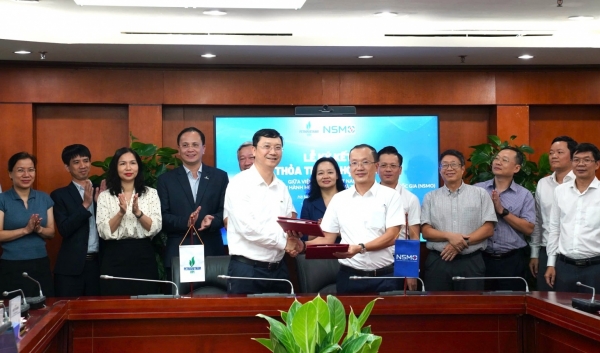
Vietnam Petroleum Institute and National Power System Operation Company Collaborate to Advance Power System Efficiency
In a significant development for Vietnam's energy sector, the Vietnam Petroleum Institute (VPI) and the National Power System Operation Joint Stock Company (NSMO) formalized a strategic partnership on June 24. This collaboration aims to research, develop, and implement advanced technological solutions to enhance the efficiency of Vietnam's power system operations and electricity market management. The agreement comes at a critical time when Vietnam's electricity demand continues to grow rapidly, necessitating more sophisticated approaches to power system management and market optimization.
Background on Partner Organizations
The Vietnam Petroleum Institute (VPI), operating under Petrovietnam, Vietnam's National Oil and Gas Group, brings extensive research and development capabilities in energy technologies. With a strong focus on innovation and technological advancement, VPI has contributed significantly to Vietnam's energy sector through various research initiatives and technological applications.
Meanwhile, the National Power System Operation Joint Stock Company (NSMO) serves as the crucial entity responsible for the real-time operation and control of Vietnam's national power system. NSMO manages the electricity market, ensuring grid stability, reliability, and efficient power dispatch across the country's interconnected transmission network.
| Organization | Core Responsibilities | Expertise Areas |
|---|---|---|
| Vietnam Petroleum Institute (VPI) | Energy research and technological development | Petroleum engineering, energy efficiency, technological innovation |
| National Power System Operation (NSMO) | Power system operation and electricity market management | Grid stability, load dispatch, market operations, system control |
Strategic Objectives of the Partnership
The collaboration between VPI and NSMO is designed to address several critical challenges facing Vietnam's power sector. As Vietnam continues its economic development, electricity demand has been increasing at an annual rate of approximately 8-10%, creating significant pressure on the existing power infrastructure. The partnership aims to develop innovative solutions that can enhance the reliability, efficiency, and sustainability of the power system while optimizing market operations.
Key strategic objectives include:
- Enhancing power system reliability and stability through advanced technological solutions
- Optimizing electricity market operations to improve efficiency and reduce costs
- Developing accurate demand forecasting capabilities to better match supply with consumption patterns
- Creating a more resilient power system capable of integrating higher shares of renewable energy
- Reducing technical and commercial losses in the power distribution network
Technological Focus Areas
The partnership will concentrate on several cutting-edge technological domains to achieve its objectives. These areas have been carefully selected based on their potential to deliver significant improvements in power system performance and market efficiency.
| Technological Domain | Applications in Power Sector | Expected Benefits |
|---|---|---|
| Artificial Intelligence and Machine Learning | Demand forecasting, fault detection, optimization algorithms | Improved accuracy, faster response times, operational efficiency |
| Big Data Analytics | Grid performance analysis, consumer behavior patterns | Data-driven decision making, customized services |
| Internet of Things (IoT) | Smart grid monitoring, asset management | Real-time monitoring, predictive maintenance |
| Advanced Grid Control Systems | Frequency regulation, voltage control | Enhanced stability, improved power quality |
Implementation Framework and Milestones
The agreement outlines a comprehensive implementation framework with specific milestones to ensure the successful development and deployment of technological solutions. The collaboration will proceed through several distinct phases, each building upon the achievements of the previous phase.
Phase 1 (Months 1-6): Focus on establishing joint research teams and conducting comprehensive assessments of current power system operations and market management processes. This phase will identify specific pain points and opportunities for technological intervention.
Phase 2 (Months 7-12): Concentrate on the research and development of prototype solutions for the most pressing challenges identified during the initial assessment. This will involve laboratory testing and simulation of proposed technologies in controlled environments.
Phase 3 (Months 13-18): Field implementation of selected solutions in specific regions or subsystems of the national power grid. This phase will allow for real-world testing and refinement of technologies under actual operating conditions.
Phase 4 (Months 19-24): Full-scale deployment of proven technologies across the national power system, accompanied by comprehensive training programs for operational staff and market participants.
Expected Impact on Vietnam's Energy Sector
The successful implementation of this partnership is expected to generate substantial benefits for Vietnam's energy sector and the broader economy. By enhancing the efficiency and reliability of the power system, the collaboration will support Vietnam's economic development goals while facilitating the transition toward a more sustainable energy future.
One of the most significant impacts will be improved power system reliability, which is critical for industrial production and economic activities. Currently, Vietnam's power system experiences occasional disruptions that can impact industrial operations and economic output. The technological solutions developed through this partnership are expected to reduce the frequency and duration of power outages, enhancing the overall business environment.
Additionally, the partnership will contribute to Vietnam's energy transition goals by developing solutions that facilitate the integration of renewable energy sources. As Vietnam aims to increase the share of renewable energy in its power generation mix to approximately 20% by 2030, advanced grid management technologies will be essential to maintain system stability and reliability.
Expert Perspectives
Industry experts have welcomed the collaboration between VPI and NSMO as a timely and necessary initiative for Vietnam's power sector. Dr. Nguyen Van Tinh, an energy policy analyst, commented: "This partnership represents a crucial step in modernizing Vietnam's power system. By combining VPI's research capabilities with NSMO's operational expertise, Vietnam can develop homegrown solutions tailored to its specific challenges and opportunities."
Ms. Tran Thi Mai, a power system engineer with over 20 years of experience, added: "The focus on advanced technologies like AI and big data analytics is particularly important as Vietnam's power system becomes increasingly complex. These technologies will enable more precise control and optimization of the grid, which is essential as we integrate more variable renewable energy sources."
Broader Implications for Vietnam's Energy Future
The collaboration between VPI and NSMO extends beyond immediate operational improvements to have broader implications for Vietnam's energy future. The technological solutions developed through this partnership will position Vietnam as a regional leader in power system innovation and could potentially be exported to other countries facing similar challenges.
Furthermore, the partnership aligns with Vietnam's broader climate commitments and sustainable development goals. By improving energy efficiency and facilitating the integration of renewable energy, the collaboration will contribute to reducing greenhouse gas emissions and promoting a cleaner energy future.
As Vietnam continues to develop its industrial base and urban infrastructure, the demand for electricity will only increase. The technological innovations resulting from this partnership will be essential to meeting this demand sustainably while maintaining grid reliability and economic competitiveness.
Conclusion
The strategic partnership between the Vietnam Petroleum Institute and the National Power System Operation Company marks a significant milestone in the development of Vietnam's power sector. By combining research expertise with operational knowledge, this collaboration has the potential to transform how Vietnam's power system is managed and operated, creating a more efficient, reliable, and sustainable energy future.
As implementation progresses, the technologies and solutions developed through this partnership will not only benefit the power sector but also contribute to Vietnam's broader economic development and environmental sustainability goals. The collaboration exemplifies how public and private entities can work together to address complex challenges and drive technological innovation in critical infrastructure sectors.
With Vietnam's electricity demand continuing to grow and the energy transition accelerating, initiatives like this partnership will be increasingly important in ensuring that the country's power system can meet future challenges while supporting sustainable economic development.