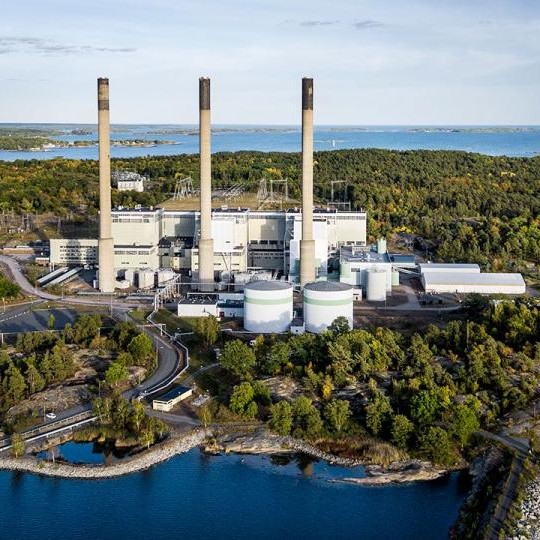
Kevin O'Leary Invests in AI Energy Solutions: Bitzero Emerges as Winner in the Power Race
While many investors are focusing on AI software and semiconductors, "Mr. Wonderful" from Shark Tank, Kevin O'Leary, is taking a different approach. He's betting on the $5 trillion infrastructure required to run AI - with a special focus on Bitzero (NASDAQ: AIBZ) as one of the first companies addressing the biggest bottleneck for AI: energy.
O'Leary's Smart Investment Strategy
O'Leary recognizes that while AI is the hot trend, the actual infrastructure needed to operate it is where the big money will flow. He's not directly investing in AI algorithms or chips, but rather focusing on a more fundamental need: electricity.
"Bitzero looked further ahead while the rest of the market was focused solely on AI software and semiconductors," commented an industry analyst. "That's precisely why they're leading in solving the energy challenge - the truly decisive factor for AI's future."
Bitzero: From Bitcoin Mining to AI Energy Provider
Bitzero has made a remarkable transformation from low-carbon bitcoin mining to an energy provider for the $5 trillion data center industry that desperately needs cheap electricity.
On May 5th, Bitzero signed a binding 15-year lease agreement for AI power, marking its official transition. The company has secured over 1 gigawatt of cheap energy across Norway, Finland, and the United States - assets that AI cannot operate without.
Major AI Infrastructure Spending Plans
| Company | Projected 2026 spending (billion USD) | Long-term infrastructure plans |
|---|---|---|
| Amazon | 200 | Focused on data centers |
| Microsoft | 190 | Expanding AI data centers |
| Alphabet | 190 | Cloud computing infrastructure |
| Meta | - | $600 billion by 2028 |
| 2026 total | 725 | Data centers, chips, electricity, infrastructure |
McKinsey estimates an additional $5.2 trillion will be deployed for AI infrastructure this decade. This capital is funding land, energy, physical infrastructure, substations, and equipment before AI can even operate.
The Energy Bottleneck: AI's Greatest Challenge
Analysts warn that half of the AI data centers announced today may never be built due to projects failing to secure energy on time. Over 70% of grid connection requests are withdrawn, with only a small fraction actually coming online.
The latest research from Berkeley Labs (part of the U.S. Department of Energy's Office of Science) projects electricity demand for global AI data centers to reach approximately 945 terawatt-hours by 2030 - equivalent to Japan's total electricity consumption.
"Megawatts will determine who builds and who doesn't," an energy industry expert stated. "While investors previously focused on semiconductors as the decisive factor in the AI boom, it's clearly now a question of energy above all."
Projected AI Data Center Electricity Demand
| Year | Electricity demand (TWh) | Growth vs. 2023 | Equivalent country |
|---|---|---|---|
| 2023 | ~470 | - | - |
| 2030 (Forecast) | ~945 | ~175% | Japan |
| 2030 (Maximum) | ~1,200 | ~255% | Germany + UK |
Bitzero: Advantage from Secured Energy
The crypto-mining-turned-AI-energy-provider company has an edge because it already controls gigawatt-scale electricity while other AI developers are still struggling to secure supply.
"As electricity prices surge across the United States due to skyrocketing demand from both Bitcoin mining and rapid data center expansion, Bitcoin miners have a particular advantage because we secured energy access early on," Mohammed Bakhashwain, founder and CEO of Bitzero Holdings, Inc., said in a recent interview with Oilprice.com.
Bitzero's Competitive Advantages
- Secured over 1 gigawatt of cheap energy
- Existing permits and infrastructure
- Flexible model: same megawatt can mine Bitcoin or support AI
- Strategic locations in Norway, Finland, and North Dakota
- Electricity costs under 4 cents/kWh in Norway
"While others are still fighting for grid access, permits, and infrastructure, Bitzero has secured those assets over the past four years and knows how to operate large-scale energy-consuming facilities. This creates flexibility - a competitive advantage in a market where energy is the real barrier," Bakhashwain explained.
Bitzero's Development Pace
Earlier this month, Bitzero NASDAQ AIBZ completed technical validation for up to 520 megawatts at the Kokemki facility in Finland, targeting a 1GW capacity at full operation. The initial 80MW phase targets the first half of 2027, with 400MW to 800MW expected to follow in subsequent phases.
In Norway, Bitzero operates as a full industrial platform. The company is mining Bitcoin with electricity costs under four cents per kilowatt-hour, maintaining operations and generating revenue while adding additional infrastructure.
At Namsskogan, the next 70MW tranche is expected to be energized in Q4 2026, directly connected to the ongoing 325MW expansion based on existing grid capacity.
Strategic Agreement in Norway
On May 5th, Bitzero signed a binding letter of intent with OneQode Networks covering the full 110 MW capacity of the Namsskogan data center facility in Norway under a 15-year lease for GPU-based AI workloads. The agreement carries an implied value of approximately $2.6 billion over the lease term and marks Bitzero's official entry into the large-scale data center AI infrastructure market.
This is a dual win for Bitzero. When mining in Norway, Bitzero uses its own electricity to generate revenue from Bitcoin production. Under the AI agreement, Bitzero generates revenue by leasing capacity and infrastructure of the facility to OneQode. Meanwhile, OneQode pays the electricity bills related to operating AI systems inside the facility.
This means Bitzero holds recurring infrastructure revenue without directly bearing the large, continuous energy costs associated with operating large-scale AI workloads.
According to Bitzero management, with full utilization of 110 MW, the Namsskagan facility could generate approximately $176-178 million in annual revenue. Recent shareholder analysis modeling the agreement estimated annual net operating income (NOI) of around $151 million based on an 85% margin structure related to the lease agreement.
Bitzero's Unique Business Model
Bitzero NASDAQ AIBZ is building large-scale facilities backed by secured, low-cost energy and positioning them for AI and high-performance computing needs. The company doesn't choose between cryptocurrency and AI - it's running both.
"Bitcoin mining helps maintain capacity and generates cash flow, while similar sites are being developed to support AI and HPC workloads as demand expands," Bakhashwain explains.
"We see tremendous opportunity in HPC," CEO Mohammed Bakhashwain stated, pointing to the technical team that has worked on deployments with Microsoft and Nscale in Norway. The company controls land, energy, and ready-to-deploy infrastructure to provide large facilities and is moving to monetize that capacity for AI tenants.
The model is built to capture two revenue streams from the same megawatts: mining today and higher-value AI colocation tomorrow.
"We hope to get the best of both worlds - long-term, institutional-grade cash flow from HPC and AI, while still having exposure to Bitcoin," Bakhashwain said. "This helps keep facilities operational while capacity is repositioned for larger, longer-term contracts."
The Challenge of Power Supply for AI
It can take up to 7 years to build large-scale power supply to feed data centers. However, investors have been operating under the major assumption that energy will naturally be available right after all data centers are built. This is where data center hype meets electrical reality.
But securing energy isn't that simple. At minimum, it requires grid studies, transmission access, permits, negotiations with utilities, and long-term pricing frameworks.
The IEA forecasts global data center electricity use to grow 4 times faster than total electricity demand from all sectors combined. The agency is targeting data center electricity demand to roughly double, reaching around 945 TWh by 2030.
Similarly, Goldman Sachs projects data center electricity demand to increase 175% by 2030 compared to 2023 levels. This is equivalent to adding an entire country to the grid.
"Power supply isn't keeping up with data center construction," an expert noted. "We'll need $6.7 trillion by 2030, including $5.2 trillion for AI infrastructure alone, to turn data center hype into reality. However, to date, projected grid investment to support that demand is only about $720 billion."
Why Bitzero's Model Attracts Attention
Kevin O'Leary isn't framing Bitzero as a mining company. He calls it an energy contracting company. The assets are secured electrical page capacity with low costs, attached to land, permits, and continuous load. Current Bitcoin mining monetizes that capacity. Leasing computing and capacity to major tenants is where the long-term value lies.
"The value of what Bitzero owns has skyrocketed, and over time the market will recognize that," O'Leary stated.
The company is building capacity that can be deployed into any market willing to pay more at any given time. This is how the same infrastructure can generate cash flow today and expand into larger contracts as AI demand continues to grow.
The AI power boom is also reshaping investor interest in some of America's largest publicly traded energy companies. EQT Corporation NYSE EQT, the nation's largest natural gas producer, is widely viewed as a fuel supplier for gas-fired power plants expected to support growing electricity demand. Vistra Corp. NYSE VST has become an AI infrastructure play through its diverse fleet of natural gas, nuclear, and renewable assets, while Constellation Energy NASDAQ CEG has attracted significant attention due to its position as the nation's largest carbon-free nuclear power producer.
Conclusion
For all of this, Bitzero isn't just participating in building AI. They may hold a piece of infrastructure that others will have to come to, just as OneQode did on May 5th.
The bigger point is where capital might start flowing when this logic sinks in. The AI boom is triggering an unprecedented and unexpected surge in natural gas and electricity stocks. If you're not paying attention to data center power needs, you're missing the biggest energy story of this decade. Smart money is quietly moving into companies positioned to handle the trillion-dollar AI computing boom.
#AI #Energy #Infrastructure #Bitzero #KevinOLeary #DataCenters #Computing