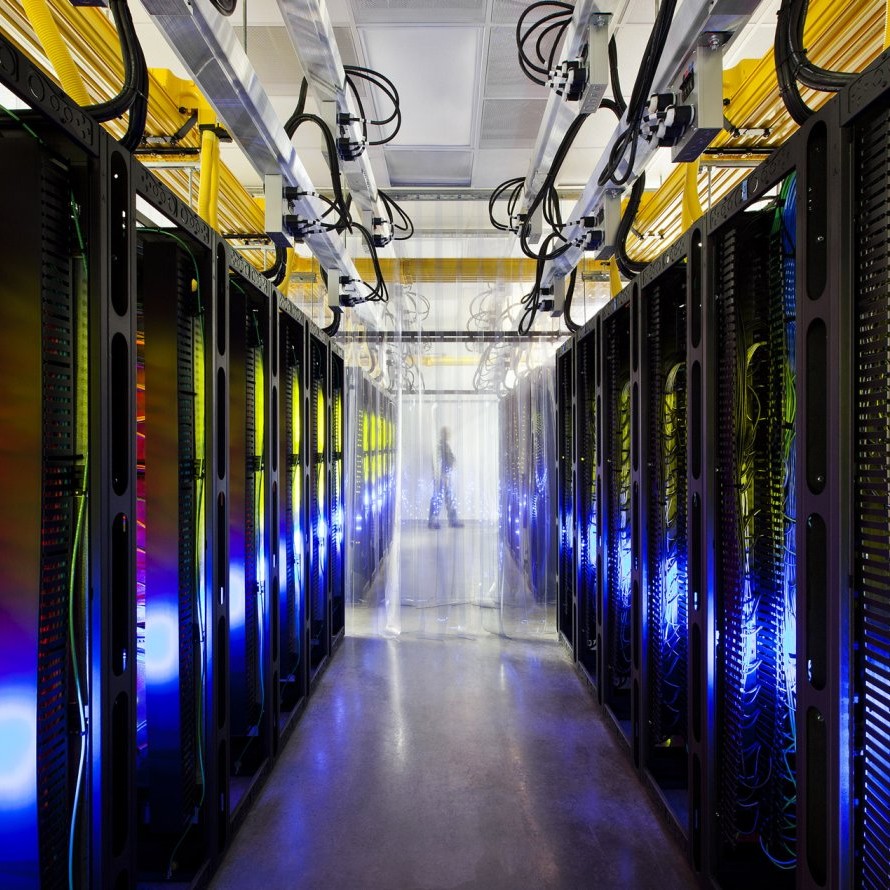
Energy Crisis: Bitzero's Golden Opportunity Amid the AI and Bitcoin Race
July 2025, the White House issued a stark warning: without $1.4 trillion in new infrastructure investments, electricity prices could rise by as much as 58% by 2030. The primary reason for this alarming forecast is the ever-increasing energy demand from AI data centers and cryptocurrencies like Bitcoin.
According to a new report from Axios, energy demand could increase tenfold between now and 2030. The power grid we've relied on for decades simply cannot keep pace with this growth, threatening to place significant pressure on both the AI and Bitcoin booms that have driven the market in recent years.
As Shark Tank investor Kevin O'Leary put it: "There's no more electricity left on the grid." This is why in Virginia, data centers now face waiting times of up to 7 years to connect to the power grid. While Microsoft, Google, and Amazon are all betting on nuclear power, these reactors may not come online until at least 2028, and more likely in the 2030s.
Bitzero: The Energy Solution Between Two Technology Storms
However, one company has found a unique advantage by combining the Bitcoin and AI markets while targeting locations with existing power infrastructure - Norway, Finland, and rural North Dakota. This is one of the reasons Bitzero (NASDAQ: AIBZ) has attracted attention and backing from O'Leary, who calls this data center company "essentially an energy company."
With 110 megawatts of contracted capacity at its flagship facility in Norway, over a gigawatt being developed across North America and Europe, and electricity contracts at just 3-4 cents per kWh, Bitzero possesses what both AI companies and Bitcoin miners crave: cheap, abundant, and immediately available power.
Bitzero Power Capacity Summary
| Location | Current Capacity | Potential Maximum | Power Source | Electricity Rate (cents/kWh) |
|---|---|---|---|---|
| Norway (Namsskogan) | 110 MW | ~300 MW | 100% hydroelectric | 3-4 |
| Finland (near Pori) | 10 MW | 1,000 MW | Hydro + nuclear | Not disclosed |
| North Dakota (former Nekoma site) | Under development | Cumulative >1 GW | Not disclosed | Not disclosed |
Guaranteed Power While Big Tech Waits
Founded in 2021, Bitzero secured a substantial amount of its energy infrastructure years before the current crisis began. While most developers build first and then struggle to get electricity, Bitzero reversed that order - securing access to power before building infrastructure.
Their Namsskogan facility in Norway runs on 100% hydroelectric power at just 3-4 cents per kilowatt-hour, about 70% cheaper than the U.S. average of 12 cents. This gives Bitzero immediate 110-megawatt capacity at a location with cheap, guaranteed power, and room to expand by another approximately 300 MW. With the largest cloud providers all consuming less than 500 megawatts, this makes them competitive even with the biggest names in the industry.
Bitzero doesn't just lease electricity. They are a licensed grid operator in Norway, giving them direct control over the energy supply. This regulatory approval process takes many years and creates another barrier that competitors cannot easily overcome.
But there's an even bigger moat that Bitzero secured due to its timing before the AI boom. Since Bitzero secured the Namsskogan location, Norway has limited new data center power rights to just 5 megawatts. This means any competitor trying to build at scale in Norway today would need to combine dozens of small permits, if they can get them at all.
Cash Flow While Others Wait
While companies committing billions to build data centers won't generate revenue for many years, Bitzero (NASDAQ: AIBZ) already has positive cash flow from Bitcoin mining, helping to fund the construction of larger data centers the company plans for next year.
This is because Bitzero's Bitcoin mining cost structure allows them to benefit from Bitcoin's price appreciation while minimizing downside risk. Their comprehensive breakeven strategy is currently around $50,000 per Bitcoin, significantly lower than the industry average of $75,000-$82,000. This means that while many of their competitors can't even break even mining Bitcoin at current prices, Bitzero continues to mine profitably, in part due to access to cheap electricity.
Bitcoin Mining Cost Comparison
| Metric | Bitzero | Industry Average |
|---|---|---|
| Break-even cost per Bitcoin | ~$50,000 | $75,000 - $82,000 |
| Electricity rate (cents/kWh) | 3-4 | 10-15 |
| Operating staff (for 40 MW) | 4-5 | ~20 |
This cost advantage also comes from how efficiently Bitzero operates. Other data centers might need 20 employees to operate a 40 MW facility. By contrast, Bitzero has just 4-5 people operating the Norway site. This difference helps explain why when Bitcoin's halving event in April 2024 cut mining rewards in half, competitors collapsed or pivoted to survive, while Bitzero thrived.
Smart Money Sees the Moat
This potential has attracted the attention of one of the most prominent investors in the AI energy space. Kevin O'Leary is a strategic investor and partner of Bitzero.
"There's a lot going on here because you have two competing forces. You have Bitcoin miners with insatiable demand, and you also have huge demand for AI data centers. These two are going to compete for electricity contracts," O'Leary predicts.
And Bitzero controls the power that both of these markets are craving. "This is essentially an energy company," says the Shark Tank investor and Bitzero strategic partner.
In a market where energy is the biggest bottleneck, Bitzero has secured the most valuable asset that AI companies are struggling to get - cheap electricity. Despite recent setbacks with green energy, Bitzero's advantage provides a unique edge even as green energy has faced headwinds.
"Many miners claim they are green, but they do it through purchasing carbon credits. Most of it is completely lying," O'Leary says about green energy claims in the cryptocurrency industry. "In the case of Bitzero NASDAQ: AIBZ is doing - hydro in Norway, nuclear in Finland - you know where it's coming from," he added.
2-3 Year Competitive Advantage
AI demand is exploding, but infrastructure can't keep up. Big Tech companies are rushing to build new data centers, only to run into walls they didn't anticipate. In September 2025, Google pulled its $1 billion data center proposal in Indianapolis just minutes before a city council vote. This occurred as residents filled meeting rooms, expressing concerns about strain on the power grid, water consumption, and rising electricity costs for neighbors.
Across the country, data center projects face similar opposition in urban and suburban areas. Community opposition, permitting delays, and grid capacity limits are slowing AI construction when the urgency has never been greater.
Bitzero doesn't face those problems. Their sites are already permitted and operational in rural Norway, Finland, and North Dakota. Places where energy infrastructure already exists and grid capacity was secured years ago.
Here's what's coming next. The Finland site is moving from the current 10 megawatts to full construction with 1 GW potential capacity. That's enough capacity to host multiple cloud providers simultaneously while Bitzero continues to generate revenue from Bitcoin from the same infrastructure.
Contracts Signed, Competitors Waiting
Bitzero just announced its first long-term tenant commitment. The company has signed a 15-year lease commitment for the entire 110 megawatts at its Norway site with AI cloud provider OneQode. While competitors trying to deliver similar capacity are reporting construction timelines of three to five years, the first deployment at the Norway site is expected in early 2027.
In the financial markets, investors are increasingly looking beyond semiconductor manufacturers and AI software companies to the businesses that will ultimately provide the energy for these massive computing facilities. Pipeline operator Williams Companies (NYSE: WMB) is seen as a primary beneficiary as increased electricity demand drives demand for electricity generated from natural gas. Utility giant NextEra Energy (NYSE: NEE) continues to invest heavily in generation, transmission, and grid infrastructure to meet rising electricity demand, while independent power producer NRG Energy (NYSE: NRG) is attracting increasing attention due to its diversified portfolio and exposure to large commercial electricity users, including data centers.
Bitzero is expected to further improve its profit margins with the recent announcement of a long-term tenant commitment. The company has just signed a 15-year lease commitment for the entire 110 megawatts at its Norway site with AI cloud provider OneQode. While competitors trying to deliver similar capacity are reporting construction timelines of three to five years, the first deployment at the Norway site is expected in early 2027.
Conclusion: Bitzero's Advantage in the AI Era
Even as the market continues to value Bitzero as a Bitcoin mining company, each 100 MW of contracted AI data center capacity equates to $2-3 billion in market capitalization. With 110 MW now contracted in a deal worth up to $2.6 billion, that's good news for a growing company with much more capacity potential to be developed in Europe and North America.
In the battle for electricity between AI and Bitcoin, the silent winner may be the company that serves both and has secured the power to do so. With 1 gigawatt of capacity and electricity 70% cheaper than the market, all secured before the crisis, Bitzero may have silently built one of the most valuable positions in the AI era.