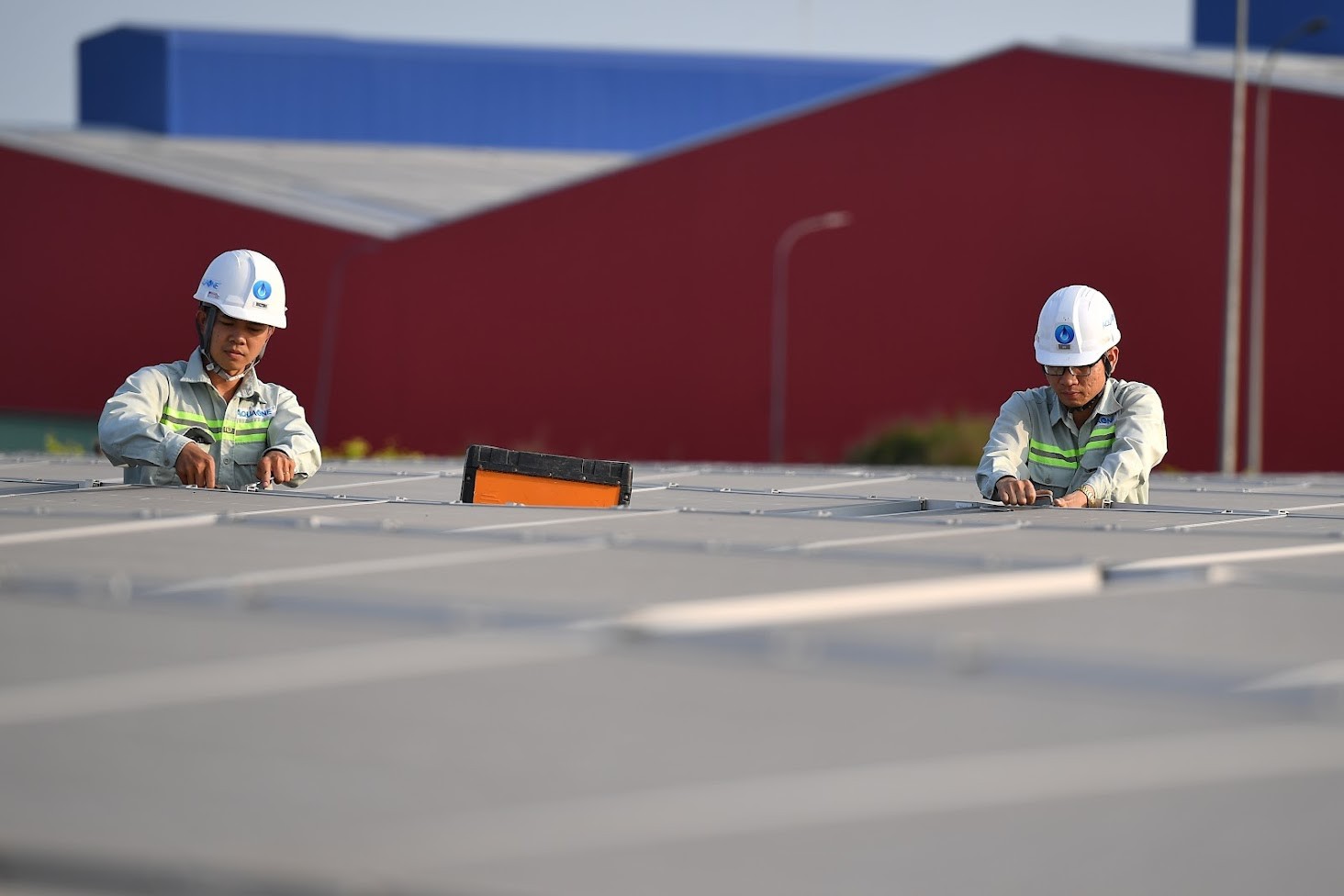
Decree 243/2026/NĐ-CP: A Paradigm Shift in Vietnam's Rooftop Solar Power Development and DPPA Mechanism
Just over a year after issuing two important decrees regarding the Direct Power Purchase Agreement (DPPA) mechanism and rooftop solar power development, the Vietnamese government has demonstrated its flexibility in energy market management by issuing Decree No. 243/2026/NĐ-CP on June 26, 2026. This document aims to amend and supplement several provisions of Decree 57/2025/NĐ-CP on the DPPA mechanism and Decree 58/2025/NĐ-CP on self-produced, self-consumed rooftop solar power.
The policy adjustment in such a short timeframe shows that state management agencies have promptly addressed practical implementation issues to improve the legal framework, creating more favorable conditions for renewable energy development in Vietnam. This is considered a significant paradigm shift, reflecting the government's determination to promote sustainable energy transition.
Background of Decree 243
Vietnam's legal framework for rooftop solar power has developed rapidly in recent years. In particular, Decrees 57 and 58 issued in 2025 introduced a new mechanism allowing households and businesses to both consume solar power on-site and sell excess electricity to the national grid through the Direct Power Purchase Agreement (DPPA) mechanism.
However, after practical implementation, these two decrees revealed several shortcomings, particularly related to administrative procedures, electricity pricing mechanisms, and responsibilities of participating parties. These issues have reduced the attractiveness of the DPPA mechanism and rooftop solar power, affecting the country's renewable energy development goals.
In this context, the issuance of Decree 243/2026/NĐ-CP is necessary to overcome limitations and create a more open legal environment, more strongly encouraging the participation of the private sector and households in the renewable energy market.
Key Amendments and Additions
Decree 243/2026/NĐ-CP introduces many important amendments and supplements compared to the original two decrees. Below are the main points:
| Amendment Content | Previous Regulations (Decrees 57, 58) | New Regulations (Decree 243) |
|---|---|---|
| DPPA Participation Eligibility | Only applicable to households and businesses with rooftop solar systems under 100 kWp | Extended to organizations and individuals with systems from 100 kWp to 1 MWp |
| Electricity Selling Price | Applied electricity purchase price through auction method | Allows application of fixed price or market price, depending on agreement |
| Administrative Procedures | Required multiple levels, lengthy processing time | Simplified, reduced processing time to 15 working days |
| Buyer's Responsibility | Only local Electricity Company | Extended to include independent power investors |
In addition, the new decree also supplements several other important provisions:
- Multi-point connection allowed: Sellers can connect their solar power systems with multiple buyers, increasing flexibility in transactions.
- DPPA contract term: Extended to a maximum of 20 years, providing investors with more time for capital recovery.
- Priority for solar energy use: Buyers are obligated to prioritize purchasing electricity from rooftop solar systems before purchasing from other sources.
- Financial support: The government will have policies to support interest rates for loans to invest in rooftop solar systems participating in the DPPA mechanism.
Impact on Stakeholders
Decree 243/2026/NĐ-CP is expected to have a positive impact on many stakeholders in the energy market:
1. For Households and Residential Users
The expansion of eligible participants and simplified procedures will encourage more households to install rooftop solar systems. Citizens can not only reduce electricity costs but also generate additional income from selling excess electricity. Particularly, the financial support policy will help reduce the initial investment burden.
2. For Businesses
Businesses, especially small and medium enterprises, will have more opportunities to transition to clean energy use, reduce production costs, and enhance their corporate sustainability image. The expansion of capacity up to 1 MWp also creates conditions for larger enterprises to participate.
3. For the Power Sector
The expanded DPPA mechanism will help reduce pressure on the national grid, especially during peak hours. This not only helps stabilize the system but also reduces the need for new investment in traditional power plants, contributing to greenhouse gas emission reductions.
4. For the Environment
The development of rooftop solar power through the DPPA mechanism will significantly reduce CO2 emissions, promoting sustainable development goals and Vietnam's emission reduction commitments at COP26. According to estimates, if effectively implemented, this program could help reduce approximately 5-7 million tons of CO2 by 2030.
Expert Assessment
According to energy experts, Decree 243/2026/NĐ-CP marks a significant paradigm shift in the government's approach to managing renewable energy development. Dr. Nguyen Van An, an expert at the Energy Institute, commented:
"The policy revision shows that the government has listened and responded quickly to implementation realities. These changes not only address existing obstacles but also create stronger momentum for rooftop solar power development. However, to ensure effectiveness, specific implementation roadmaps and close coordination between ministries, sectors, and localities are needed."
Ms. Tran Thi Mai, Chairwoman of the Vietnam Renewable Energy Association, also highly appreciated the government's flexibility: "Decree 243 has resolved the biggest bottlenecks in the previous DPPA mechanism. However, we hope the government will soon issue detailed guidelines to facilitate implementation by businesses and households."
Conclusion and Outlook
Decree 243/2026/NĐ-CP is considered a significant boost for Vietnam's rooftop solar power market. With practical amendments and supplements, this document not only overcomes the limitations of previous decrees but also opens up many new development opportunities.
According to the Ministry of Industry and Trade, the target by 2030 is to have at least 10% of total rooftop solar power capacity participating in the DPPA mechanism. With the support of Decree 243, this target is entirely achievable. However, to achieve this result, coordinated efforts from all ministries, sectors, localities, and active participation from people and businesses are required.
In the long term, the DPPA mechanism and rooftop solar power will not only help Vietnam diversify its energy supply but also contribute to transitioning to a green economy, reducing dependence on fossil fuels, and enhancing national competitiveness in the context of global energy transition.