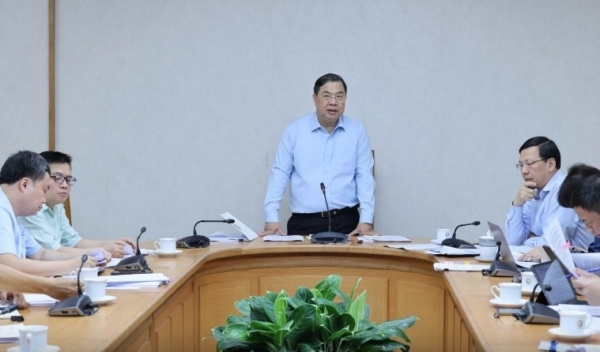
Adjustment of Electricity Planning VIII: Optimizing Power Sources to Meet National Development Requirements
The adjustment of Electricity Planning VIII is being intensively promoted with the perspective that calculations must be based on the actual development requirements of the country in the coming period. Deputy Prime Minister Pham Gia Tuc emphasized that this is not merely an adjustment of existing power sources but requires long-term vision to ensure stable power supply for the socio-economic development of the nation.
Background for the Adjustment of Electricity Planning VIII
Electricity Planning VIII, approved in 2022, set major goals for the national power system through 2030 with a vision extending to 2045. However, amidst the many fluctuations in socio-economic conditions and increasing electricity demand, adjusting the planning has become crucial to ensure power supply meets actual development needs.
In reality, Vietnam's economic development has been faster than initially forecast, leading to higher electricity demand. Concurrently, the trend toward clean energy transition and the net-zero commitment by 2050 also present new requirements for the power source structure.
Main Contents of the Electricity Planning VIII Adjustment
According to Deputy Prime Minister Pham Gia Tuc, the adjustment of Electricity Planning VIII focuses on the following main contents:
- Recalculating electricity demand with higher economic growth rates
- Adjusting the power source structure to increase the proportion of renewable energy
- Ensuring national energy security
- Optimizing existing power sources and adding new suitable projects
- Developing synchronized transmission and distribution infrastructure
Recalculating Actual Electricity Demand
The first and most important adjustment is recalculating electricity demand based on actual economic development speed. According to the Ministry of Industry and Trade, Vietnam's GDP growth rate in recent years has been higher than forecast in Electricity Planning VIII, leading to a corresponding increase in electricity demand.
| Year | Forecast GDP Growth (%) | Electricity Demand Growth (%) |
|---|---|---|
| 2023 | 5.05 | 8.2 |
| 2024 | 6.0-6.5 | 9.0-9.5 |
| 2025 | 6.5-7.0 | 9.5-10.0 |
Adjusting the Power Source Structure
One of the most significant changes in the adjusted Electricity Planning VIII is the power source structure. According to this, the proportion of renewable energy will be increased while gradually reducing traditional coal-based power sources.
Specifically, the proportion of renewable energy sources (solar power, wind power, small hydropower, biomass, etc.) in the total installed capacity is expected to increase from approximately 20% in the original Electricity Planning VIII to about 30-35% after adjustment.
Developing Transmission and Distribution Infrastructure
To ensure the stable operation of the power system, developing synchronized transmission and distribution infrastructure is a key factor. The adjusted Electricity Planning VIII will focus on:
- Building additional high-voltage transmission lines
- Modernizing the distribution grid
- Developing flexible transformer stations
- Applying digital technology in power grid operation management
Deputy Prime Minister Pham Gia Tuc's Perspective
Deputy Prime Minister Pham Gia Tuc emphasized: "The adjustment of Electricity Planning VIII is not just about adjusting existing power sources but must be calculated based on the actual development requirements of the country in the coming period."
The Deputy Prime Minister directed relevant ministries and sectors to:
- Ensure national energy security, avoiding dependence on any single supply source
- Strengthen international cooperation to access advanced technologies
- Prioritize renewable energy development while ensuring system stability
- Ensure economic benefits and environmental protection
Implementation Roadmap and Key Projects
According to the plan, the adjustment of Electricity Planning VIII will be completed in Q4/2023 and submitted to the Prime Minister for approval before the end of this year. After approval, key projects will be implemented in phases:
| Phase | Key Projects | Expected Capacity (MW) |
|---|---|---|
| 2023-2025 | 5,000 | |
| 2026-2030 | 15,000 | |
| 2031-2045 | 30,000 |
Impact on Socio-Economic Development
The adjustment of Electricity Planning VIII is expected to have a positive impact on Vietnam's socio-economic development:
- Ensure stable power supply for production and business
- Attract investment in the energy sector
- Create jobs for workers
- Contribute to achieving the net-zero commitment by 2050
- Enhance the competitiveness of the economy
Clean Energy Transition Trends
Vietnam is accelerating its transition to clean energy with the goal of achieving a 30% renewable energy share by 2030 and 70-80% by 2050. The adjusted Electricity Planning VIII will be an important tool to realize this goal.
However, developing renewable energy also presents challenges to system stability. Therefore, developing energy storage technologies and backup power sources is a pressing requirement.
Conclusion
The adjustment of Electricity Planning VIII is a necessary step to ensure power supply meets the actual development needs of the country. With the guiding perspective of Deputy Prime Minister Pham Gia Tuc, the adjusted Electricity Planning VIII will have long-term vision, ensuring national energy security while promoting sustainable socio-economic development.
This adjustment not only affects the power industry but also impacts many other sectors of the economy, from industry to agriculture and services. Therefore, the implementation of the adjusted Electricity Planning VIII requires close coordination among ministries, sectors, and localities to ensure maximum effectiveness.