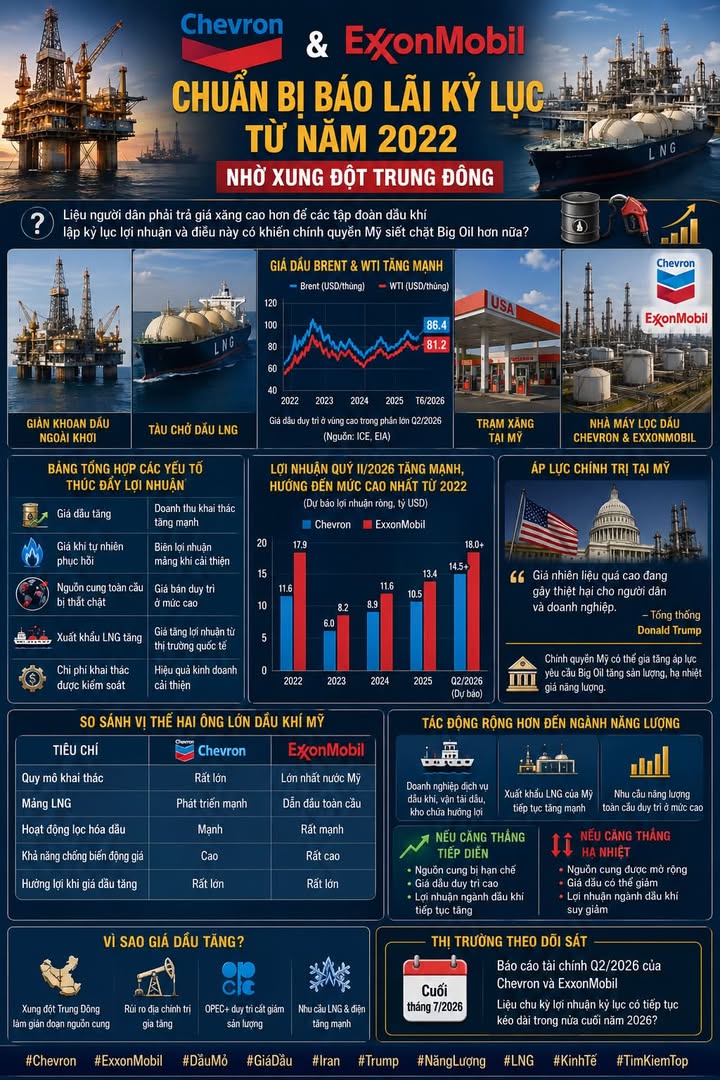
Chevron and Exxon Poised for Record Profits as Middle East Conflict Disrupts Energy Markets
In a dramatic shift for global energy markets, the ongoing conflict in the Middle East has fundamentally reshaped the landscape during the second quarter of 2026. With oil and gas supplies tightening, energy prices have surged, creating conditions that America's two largest energy corporations—Chevron and ExxonMobil—are preparing to report record-breaking profits since 2022.
According to pre-earnings forecasts, both companies are expected to demonstrate significant profit increases for Q2 2026, driven by sustained high prices for Brent and WTI crude throughout most of the quarter, coupled with a strong recovery in natural gas prices fueled by electricity demand and LNG markets.
Market Transformation Amid Geopolitical Tensions
The Middle East conflict has created unprecedented volatility in global energy markets. Disruptions to shipping lanes through critical chokepoints have threatened supply chains, while production uncertainties in key oil-producing nations have created a perfect storm for price increases. This geopolitical tinderbox has pushed energy prices to levels not seen in years, directly benefiting major integrated oil companies with extensive upstream operations.
Factors Driving Record Profits
Several converging factors have created the ideal conditions for extraordinary profitability in the energy sector:
| Factor | Impact on Profitability |
|---|---|
| Rising Oil Prices | Significant increase in exploration and production revenue |
| Natural Gas Price Recovery | Improved profit margins in gas segments |
| Tightened Global Supply | Sustained high selling prices |
| Increased LNG Exports | Growth in international market profits |
| Controlled Extraction Costs | Improved operational efficiency and margins |
Political Pressure Mounts as Consumers Feel the Pinch
While investors anticipate positive financial results, political pressure in the United States is intensifying. President Donald Trump has repeatedly criticized major oil corporations, suggesting that retail fuel prices remain artificially high, creating additional burdens for consumers and businesses alike.
This political dynamic places Chevron and ExxonMobil in a difficult balancing act between shareholder interests and mounting pressure from the administration. If profits exceed expectations, these corporations may continue to face calls for increased production investments to help cool energy prices.
Comparing America's Energy Giants
Despite similar market conditions, Chevron and ExxonMobil have distinct strengths and positioning within the energy sector:
| Criteria | Chevron | ExxonMobil |
|---|---|---|
| Production Scale | Very Large | Largest in the U.S. |
| LNG Operations | Strong Development | Global Leader |
| Refining & Petrochemicals | Strong | Very Strong |
| Price Volatility Resistance | High | Very High |
| Benefit from Higher Oil Prices | Significant | Significant |
Broader Industry Impacts
The favorable market conditions extend beyond Chevron and ExxonMobil. Numerous oilfield service companies, oil transport operators, storage facilities, and U.S. LNG exporters have reported increased activity as global energy demand continues to rise.
Support industries are experiencing a renaissance as the energy sector expands operations to capitalize on favorable pricing. From drilling contractors to pipeline operators, the entire value chain is benefiting from the current market conditions.
Future Outlook: Uncertainty in Energy Markets
The sustainability of this profit surge remains uncertain. Several scenarios could play out in coming quarters:
- Geopolitical De-escalation: If tensions in the Middle East subside and OPEC/non-OPEC production increases, oil prices could adjust downward, potentially reducing energy sector profits in subsequent quarters.
- Sustained Supply Constraints: If supply restrictions persist, the energy sector will likely maintain its high-profit cycle through the remainder of 2026.
- Economic Slowdown: A global economic downturn could dampen energy demand despite supply constraints, creating a more complex market dynamic.
Investor Focus on Upcoming Earnings Reports
Markets will closely monitor the late-month financial reports from Chevron and ExxonMobil to assess whether the energy sector's growth cycle will extend into the second half of 2026. These reports will provide critical insights into:
- Production capacity and utilization rates
- Operational efficiency metrics
- Capital expenditure guidance
- Dividend policies and shareholder returns
- Strategic priorities for the coming year
The energy sector's performance will also influence broader market trends, given the significant weight of energy stocks in major indices and their impact on inflation metrics that central banks monitor closely.
Balancing Profitability and Responsibility
As energy corporations prepare to announce potentially record-breaking profits, questions arise about the balance between shareholder returns and social responsibility. The industry faces increasing scrutiny regarding:
- Energy transition investments
- Environmental, social, and governance (ESG) commitments
- Price transparency and consumer protection
- Strategic reserves and supply security
The coming months will test how energy corporations navigate these complex demands while capitalizing on favorable market conditions created by geopolitical tensions.
As the energy landscape continues to evolve, the performance of Chevron and ExxonMobil will serve as a bellwether for the broader industry and potentially influence policy decisions that could reshape the sector's operating environment for years to come.