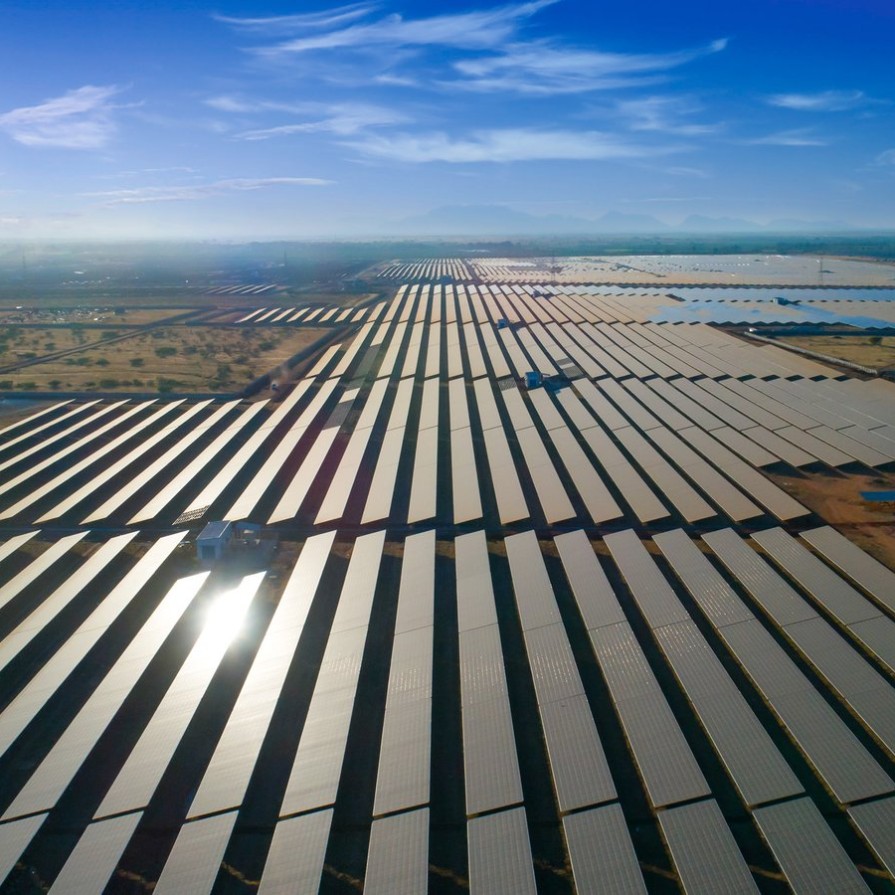
India's Energy Transformation: From Coal to Solar Dominance
In a remarkable shift that could reshape global energy dynamics, India is undertaking one of the most ambitious energy transitions in history. Just a decade ago, the Indian government seemed resolute on utilizing coal to drive industrialization, with large-scale solar energy virtually unheard of beyond a few micro-grids serving remote villages and rooftop installations. As recently as 2015, the Modi administration aimed to double domestic coal production to approximately 1.5 billion tons by 2030. However, the nation's energy landscape has undergone a dramatic metamorphosis in a remarkably short period.
While most industrial powers built their modern economies on coal and oil, India is now attempting to leapfrog this high-emission pathway by rapidly scaling up domestic solar installations at extremely low costs. In fact, India is on track to become the first major country in history to primarily use solar energy to fuel economic industrialization rather than fossil fuels.
The Solar Energy Boom in India
Today, India is experiencing a solar energy explosion, having surpassed the United States to become the world's second-largest market for solar power additions, trailing only China. Driven by large-scale projects and generous government subsidies, India added a record 44 GW of solar capacity in the 2025/2026 fiscal year, bringing its total installed solar capacity to 154 GW, ranking third globally after China and the United States.
India's solar sector is growing at an extraordinary pace, with an annual capacity addition rate of 40% CAGR (Compound Annual Growth Rate), and is projected to double its installed capacity by 2030.
| Year | Installed Capacity (GW) | Global Ranking |
|---|---|---|
| 2025/2026 | 154 | 3 |
| Projected 2030 | 308 | 2 |
Declining Coal Dependence
Although coal still accounts for 70% of India's electricity generation, this percentage is expected to drop below 50% by 2035 as plans to build new coal-fired power plants cease and cheaper solar alternatives gain dominance. The International Energy Agency (IEA) now predicts that solar energy will meet approximately half of India's enormous electricity demand by 2030.
Drivers of Solar Energy Growth
The rapid expansion of solar energy in India is propelled by multiple factors including declining solar costs, favorable geographical conditions, generous government subsidies, and protective policies for domestic production. The massive Khavda solar park, situated in the desolate Rann of Kutch salt desert, spans over 726 km² near the India-Pakistan border. This facility is expected to become the world's largest solar farm with a capacity of 30 GW - enough to power 25 million American households.
Government Policies Encouraging Solar Energy
The Indian government has implemented numerous policies to promote large-scale solar development, including the Production Linked Incentive (PLI) scheme to boost domestic manufacturing of high-efficiency solar modules, and the Green Energy Open Access Rules, which allow large consumers with approved loads of 100 kW or more to easily purchase green power directly from solar developers.
Simultaneously, India has transformed from an import-dependent market into a domestic manufacturing center that now exports solar panels. To guard against geopolitical factors and reduce dependence on imports from China, the country has implemented the Approved Models and Manufacturers (ALMM) framework, a crucial regulatory framework introduced by India's Ministry of New and Renewable Energy (MNRE) to verify the quality, authenticity, and origin of solar components.
Challenges in the Solar Energy Journey
Despite this progress, India faces significant challenges in its ambitious solar energy transition. The country's power grid has struggled to keep pace with increased solar production. Last year, nearly 40% of solar power generated in western desert regions couldn't reach major industrial and residential centers primarily due to inadequate transmission lines.
Areas like Phalodi and Jaisalmer have faced power curtailments during daylight hours, leaving approximately 4.3 GW of capacity stranded. Consequently, developers such as Adani, NTPC, and JSW have been forced to reduce production during peak hours to protect grid stability.
Fortunately, New Delhi is implementing a $100 billion program to rapidly expand the national grid by an additional 30% by 2032 through multiple initiatives. New transmission lines, including Green Energy Corridors, are being constructed to transport electricity from solar-rich states like Rajasthan and Gujarat to major industrial and residential centers.
Investments in Energy Storage
The government is also making substantial investments in energy storage to convert excess solar power for evening use. Rajasthan is building a 5,000 MW Battery Energy Storage System to reduce grid congestion and meet peak demand, while India aims to develop over 100 GW of Pumped Hydro Storage (PHS) by 2047. Projects such as the 500 MW Kundah pumped storage facility in Tamil Nadu, along with new developments in Madhya Pradesh and those by Tata Power, are expected to play a central role in balancing the nation's rapidly growing solar energy fleet.
Global Implications
India's energy transition extends beyond its borders, carrying profound implications for global climate goals and sustainable development. By demonstrating that a major economy can rapidly shift from fossil fuels to renewable energy while maintaining economic growth, India is providing a model for other developing nations.
The country's approach combines ambitious targets with practical implementation strategies, addressing both generation and grid infrastructure challenges. This comprehensive methodology offers valuable insights for other nations undertaking similar energy transitions.
As India continues to expand its solar capacity and improve its grid infrastructure, the nation is not only transforming its own energy landscape but also contributing significantly to global efforts to combat climate change and promote sustainable development.
| Energy Source | Current Share (%) | Projected Share by 2030 (%) |
|---|---|---|
| Coal | 70 | 45-50 |
| Solar | ~15 | ~45-50 |
| Other Renewables | ~15 | ~10-15 |
India's energy revolution represents a paradigm shift in how developing nations can approach industrialization and economic growth while prioritizing environmental sustainability. The country's commitment to solar energy, despite significant challenges, demonstrates that ambitious climate goals can be pursued alongside economic development objectives.