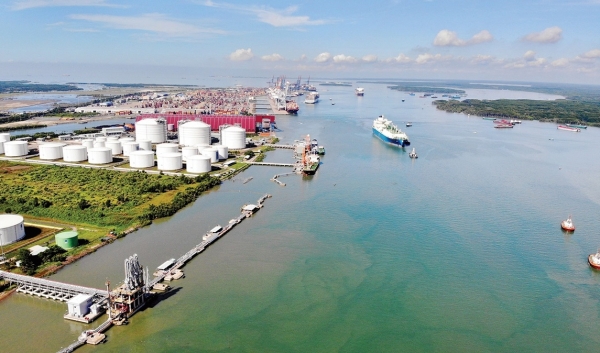
Petrovietnam: The National Energy Shield
After more than half a century of formation and development, Vietnam's oil and gas industry has transformed into a diverse energy sector, with the Vietnam Oil and Gas Group (Petrovietnam) playing a central role. From traditional oil and gas exploration and production activities, Petrovietnam has continuously expanded into renewable energy fields such as offshore wind, Liquefied Natural Gas (LNG), and hydrogen, affirming its position as one of the most important pillars in the national energy system.
The Journey of Transformation from Oil and Gas to Comprehensive Energy
Petrovietnam was established on September 3, 1975, shortly after the country's reunification. From its early days with the main mission of exploring, exploiting, and processing oil and gas, the corporation has continuously grown to become one of Vietnam's leading enterprises.
In the context of the world's strong shift to clean and renewable energy, Petrovietnam has proactively implemented strategies to diversify its business fields. The group not only focuses on traditional oil and gas but also expands to new energy types, aligning with global sustainable development trends and ensuring national energy security.
Traditional Oil and Gas Sector - A Solid Foundation
Oil and gas remain Petrovietnam's main business, contributing significantly to the state budget. The corporation is currently operating at 24 oil and gas fields nationwide and abroad, with an output of millions of tons of oil equivalent annually.
Petrovietnam's oil and gas exploration and production activities not only help ensure energy security but also generate substantial foreign exchange, contributing to the country's socio-economic development.
Offshore Wind Power - Great Potential
With a coastline of over 3,260 km and significant wind energy potential, Vietnam is becoming an attractive destination for offshore wind power projects. Petrovietnam has been investing heavily in this sector with projects such as Bac Lieu wind power, Ca Mau wind power, and many others in the preparation phase.
Offshore wind power not only helps reduce carbon emissions but also contributes to energy diversification, reducing dependence on fossil fuels. Petrovietnam aims for offshore wind to account for a significant portion of the country's total electricity output by 2030.
LNG - An Important Transitional Energy Source
Liquefied Natural Gas (LNG) is considered an important transitional energy source in the shift to renewable energy. Petrovietnam has built and operates Vietnam's first LNG plant in Ba Ria - Vung Tau province, with a capacity of 1 million tons per year.
The corporation is also implementing other LNG projects such as Soc Trang LNG power plant, Long An LNG, and other LNG projects across the country to meet Vietnam's growing energy demand in the coming period.
Hydrogen - The Energy of the Future
Petrovietnam is researching and developing hydrogen energy, considered the clean energy of the future. The corporation has established a Steering Committee for hydrogen development and built a roadmap for hydrogen development in Vietnam, aiming to become one of the leading countries in the region in this field.
Hydrogen energy not only has great potential in reducing carbon emissions but can also be used in various industries, from transportation to industrial production.
| Energy Type | Potential in Vietnam | Role in Petrovietnam's Strategy |
|---|---|---|
| Traditional Oil and Gas | Abundant resources, gradually depleting | Core business, ensuring short-term energy security |
| Offshore Wind Power | High potential, approximately 160 GW | Increasingly significant share in energy structure |
| LNG | Supply from imports and domestic production | Important transitional energy source |
| Hydrogen | Not yet commercially exploited | Future energy, focused on long-term development |
Energy Security - A Measure of National Sovereignty
Energy security has become one of the decisive factors in a country's sovereignty in the context of geopolitical changes and global energy transition. Petrovietnam, as the leading enterprise in the energy sector, is striving to ensure national energy security through energy diversification.
The corporation not only focuses on ensuring stable energy supply but also emphasizes developing clean energy and reducing carbon emissions, contributing to implementing Vietnam's commitment at COP26 to achieve net zero emissions by 2050.
Challenges and Opportunities
Despite many achievements, Petrovietnam still faces numerous challenges in the new context. The depletion of domestic oil and gas resources, volatile energy prices, and global energy transition pressures are major challenges the corporation needs to overcome.
However, these challenges also bring many opportunities for Petrovietnam to innovate, create, and develop new energy types. With strong financial resources, extensive experience, and high-quality human resources, Petrovietnam has the capability to overcome challenges and seize opportunities.
Strategic Position in the National Energy System
Petrovietnam is not just an economic enterprise but plays a strategic role in the national energy system. The corporation is one of the largest taxpayers to the state, making a significant contribution to the country's socio-economic development.
Additionally, Petrovietnam is the leading unit in training high-quality human resources for the oil and gas and energy sectors, contributing to building the technological foundation and human resources for Vietnam's energy industry in the future.
International Cooperation
Petrovietnam continuously expands international cooperation in the energy sector. The corporation has signed numerous cooperation agreements with major global energy corporations such as ExxonMobil, Rosneft, PTT, etc., to jointly explore and exploit oil and gas and develop renewable energy projects.
International cooperation not only helps Petrovietnam access advanced technology but also expands markets, enhances competitiveness, and elevates Vietnam's position internationally.
Vision for 2045
According to its development strategy until 2045, Petrovietnam aims to become a multi-industry, multi-product national energy corporation with international competitiveness. The corporation sets a goal for sustainable development, balancing traditional oil and gas exploitation with renewable energy development.
By 2045, Petrovietnam expects to become one of the leading energy corporations in the region, making a significant contribution to ensuring national energy security and implementing Vietnam's sustainable development commitments.
Energy security is not just an economic issue but also relates to national security. Petrovietnam, as the national energy shield, is continuously striving to ensure a stable, safe, and sustainable energy supply for the country, contributing to Vietnam's prosperous and independent development on the international stage.