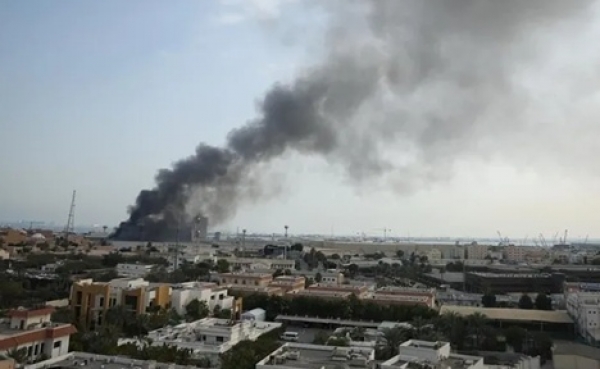
Middle East Tensions Escalate: Iran Targets US Military Bases in Gulf Region
In a significant development that has heightened geopolitical tensions in one of the world's most volatile regions, Iran has taken direct aim at American military installations throughout the Persian Gulf. As of July 10, the Islamic Republic has implemented a series of military maneuvers and strategic deployments that explicitly target US military assets in the region, marking a dramatic escalation in the already fraught relationship between the two nations.
Current Situation Assessment
The current standoff represents one of the most serious confrontations between Washington and Tehran in recent years. Against the backdrop of increasingly deteriorating diplomatic relations, Iran has initiated a coordinated military campaign designed to demonstrate its capability and resolve in defending what it perceives as its strategic interests in the Gulf region. These developments come amid heightened tensions that have seen both nations engage in a series of tit-for-tat military and diplomatic maneuvers over the past several months.
According to multiple defense analysts, Iran's recent military activities appear to be more than routine exercises. The scale, timing, and explicit targeting of US installations suggest a calculated strategy to test American resolve while simultaneously attempting to establish a new balance of power in the strategically vital waterway.
Detailed Iranian Military Actions
Iran's military posture has evolved significantly in recent weeks, with several key developments indicating a deliberate strategy of confrontation:
- Strategic Military Deployment: Iranian Revolutionary Guard Corps have established forward positions in close proximity to key US military installations throughout the Gulf. These deployments include specialized units capable of asymmetric warfare, suggesting Iran's strategy may involve both conventional and unconventional tactics.
- Missile and Air Defense Systems: Advanced missile systems, including the domestically developed Fateh-110 and Zolfaghar ballistic missiles, have been positioned at strategic locations. These systems, with ranges capable of covering most US bases in the region, represent a direct threat to American military assets.
Iran has conducted extensive naval exercises in the Strait of Hormuz and surrounding waters, demonstrating its ability to potentially disrupt global oil shipments. These exercises have included simulated attacks on naval vessels and the practice of mining strategic waterways. - Unmanned Systems Deployment: Iranian forces have deployed various unmanned aerial vehicles (UAVs) and maritime drones, both for surveillance and potential attack capabilities, significantly enhancing their reconnaissance and strike options.
US Military Response and Posture
In response to Iran's provocations, the United States has significantly bolstered its military presence in the region. The Pentagon has confirmed the deployment of additional naval assets, including guided-missile destroyers and a carrier strike group, to the Fifth Fleet's area of operations. Furthermore, the US Air Force has increased rotational fighter jet deployments and enhanced air defense capabilities at key regional bases.
Defense officials have issued explicit warnings to Tehran, stating that any attacks on US personnel or assets would be met with "overwhelming and decisive force." Secretary of Defense Austin has emphasized America's "ironclad commitment" to protecting its forces and interests in the region while maintaining diplomatic channels remain open.
Regional and International Reactions
The escalating tensions have drawn reactions from across the international community. Key regional allies of the United States, including Saudi Arabia, the UAE, and Israel, have expressed concern over the situation and reaffirmed their support for America's security posture in the Gulf.
Meanwhile, European nations have urged restraint from both sides, with the EU's foreign policy chief calling for "de-escalation and dialogue." China and Russia, while not directly intervening, have criticized what they perceive as American "provocations" in the region, suggesting a potential diplomatic split on how to address the crisis.
Historical Context and Previous Incidents
The current standoff must be understood within the broader context of decades of hostility between Iran and the United States. Since the 1979 Islamic Revolution and the subsequent hostage crisis, the two nations have maintained a fraught relationship marked by periodic crises. More recently, the US withdrawal from the Iran nuclear deal in 2018 and the subsequent "maximum pressure" campaign have significantly worsened tensions.
Previous incidents, including the downing of a US drone by Iranian forces in 2019, the attack on Saudi oil facilities (which Iran was accused of orchestrating), and the assassination of Iranian General Soleimani by US forces in early 2020, have established a pattern of tit-for-tat escalations that have repeatedly brought the region to the brink of open conflict.
Economic and Strategic Implications
The heightened tensions in the Gulf have significant implications for global energy markets, with approximately 20% of world oil shipments passing through the Strait of Hormuz. Any disruption to this vital waterway could trigger substantial price increases and economic instability worldwide.
Strategically, the confrontation represents a test of American hegemony in the Middle East versus Iran's regional ambitions. The outcome of this standoff could reshape the balance of power in one of the world's most strategically important regions, potentially influencing everything from global security architecture to energy markets for years to come.
Expert Analysis and Future Scenarios
Military analysts suggest several potential scenarios for the coming weeks:
- De-escalation Path: Diplomatic intervention, possibly through third-party mediators or backchannel communications, could lead to a reduction in tensions and a return to a more stable deterrence-based relationship.
- Limited Conflict Scenario: A miscalculation or deliberate provocation could lead to a limited exchange of strikes between Iranian and US forces, potentially resulting in casualties but stopping short of full-scale war.
- Regional Escalation: Any significant conflict could draw in other regional actors, including Israel, Saudi Arabia, and various Iranian proxy groups throughout the Middle East, potentially creating a wider regional conflagration.
- Global Energy Crisis: Disruption of Gulf oil exports could trigger a global energy crisis, with severe economic consequences worldwide.
Comparative Analysis of Military Postures
| Factor | Iran's Position | US Position |
|---|---|---|
| Primary Objectives | Regional dominance, US withdrawal from Gulf, lifting of sanctions | Deterrence of Iranian aggression, protection of allies, freedom of navigation |
| Military Assets Deployed | Revolutionary Guard naval forces, ballistic missiles, UAVs, coastal defense systems | |
| Strategic Advantages | Proximity to targets, asymmetric warfare capabilities, knowledge of local terrain | Technological superiority, global power projection, extensive alliance network |
| Red Lines | Direct US attack on Iranian territory, assassination of leadership | Attack on US personnel or assets, disruption of international shipping |
| Escalation Threshold | Perceived existential threat to regime survival | Casualties to US forces, significant damage to assets |
Diplomatic and Political Dimensions
The military standoff is accompanied by a complex diplomatic chess match. The United States maintains that all options remain on the table while simultaneously signaling openness to diplomacy. Iran, however, has demanded the lifting of all sanctions before any meaningful negotiations can occur—a condition that Washington has consistently rejected.
Domestically, both governments face political constraints that limit their flexibility. In Iran, hardline factions have gained influence, making compromise more difficult. In the United States, political divisions have complicated the formulation of a coherent Iran policy, with different factions advocating for approaches ranging from engagement to more aggressive confrontation.
Humanitarian and Security Considerations
Beyond the strategic calculations, the potential human cost of any escalation is substantial. The Gulf region is home to millions of civilians, and any conflict would likely result in significant civilian casualties. Furthermore, the destruction of critical infrastructure, including desalination plants and oil facilities, could have long-term humanitarian consequences for the entire region.
Security experts have expressed particular concern about the potential for asymmetric attacks by Iranian proxy groups against civilian or soft targets throughout the region and beyond, including Europe and potentially even the continental United States.
Conclusion and Outlook
The current confrontation between Iran and the United States represents one of the most dangerous flashpoints in contemporary international relations. While both sides have expressed a desire to avoid direct conflict, the trajectory of events suggests a high risk of miscalculation or unintended escalation.
The international community faces the challenge of preventing a wider conflict while addressing legitimate security concerns on both sides. Diplomatic efforts, while currently limited, may offer the best path toward de-escalation, though significant political obstacles remain.
As the situation continues to evolve, the world watches with concern, fully aware that the resolution of this crisis will have profound implications for global security, economic stability, and the future of international relations in the 21st century.
MiddleEast #Iran #UnitedStates #PersianGulf #Geopolitics #MilitaryTensions #EnergySecurity